General articles are free for 24 hours after publish.
Butuan City Grapples with Dual Water Crisis: Shortage and Contamination Fears
Butuan City in the Philippines is facing a dual water crisis: a shortage in supply and the risk of contamination from rationed water. The city is urging residents to ensure safe water handling and storage.
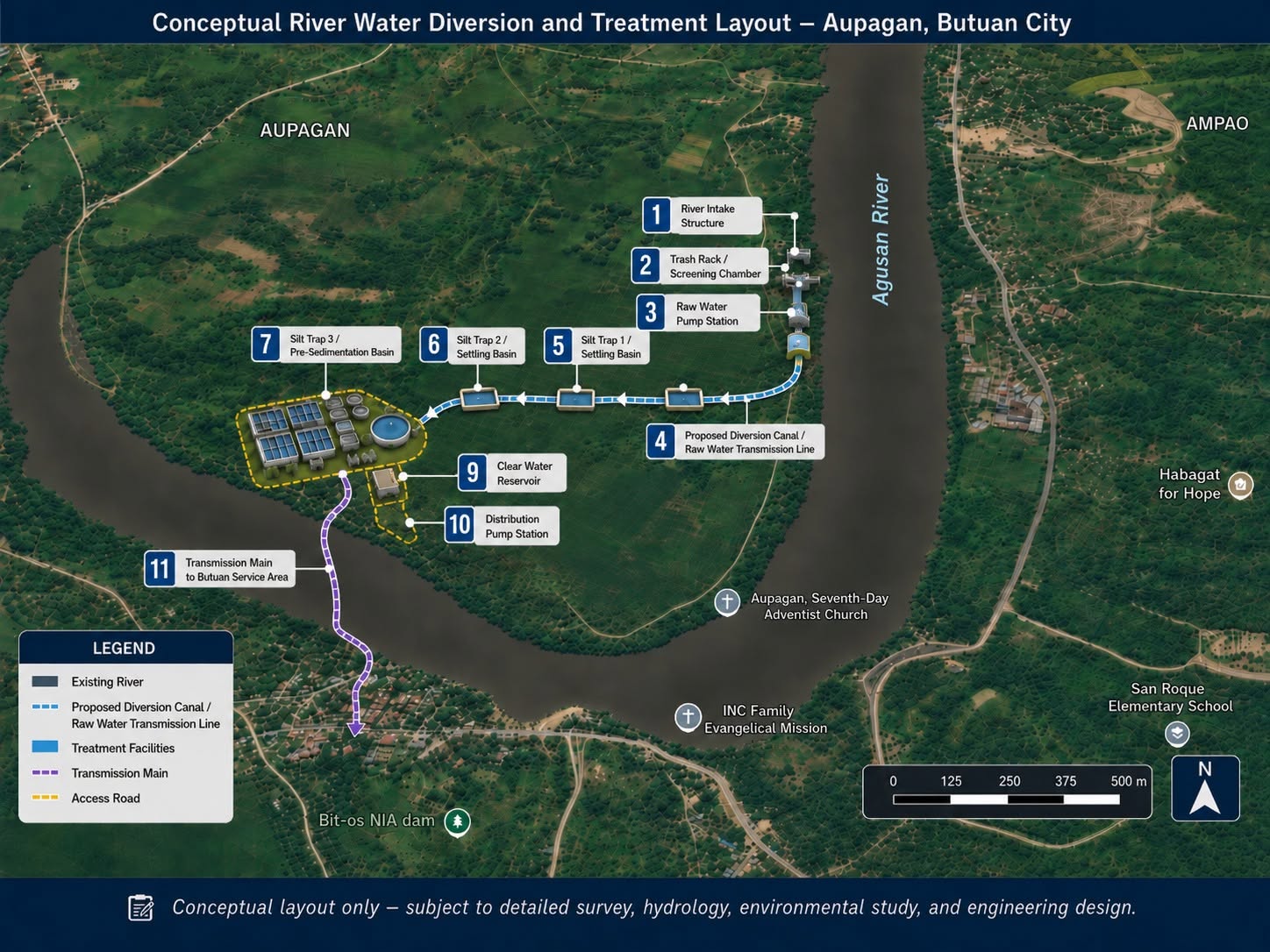
Butuan City, the capital of Agusan del Norte, is confronting a dual water crisis: the immediate threat of waterborne diseases and the long-term challenge of securing an additional water source as its main system struggles to meet growing demand. Mayor Lawrence Fortun has directed the City Health Board to provide barangays with guidelines for proper cleaning of water-storage containers and safe handling of rationed water to prevent illnesses. The city government reminds residents that water distributed through the Butuan City Water District’s (BCWD) rationing program should not be used for drinking, even after filtration. The rationed supply is designated solely for washing, laundry, cleaning, and other household purposes. BCWD reported a significant drop in daily water production, from the normal 55 million liters to approximately 41.89 million liters. This has resulted in low-pressure or no-water service for about 91,425 residents. Consequently, the city government declared a state of calamity on September 5, expanding emergency rationing and response measures. The City Health Board advises residents to store water in clean, covered containers that are regularly washed to prevent contamination. For drinking water, the City Health Department recommends boiling it for five minutes and storing it in a clean container after cooling. However, they stress that boiling or filtering does not make rationed water safe for consumption when it's designated for domestic use only. Amid these public health concerns, a local forestry and mapping specialist, Reymar Ballescas, has proposed studying the Agusan River as a potential supplementary water source. Using an AI-generated map, he identified a possible site for a surface-water treatment facility in the Aupagan plains, near a bend in the Agusan River. The concept involves diverting, treating, and distributing river water to nearby communities for bathing, washing, cleaning, and other household uses, thereby reducing demand on the higher-quality water from the Taguibo watershed. Ballescas, however, emphasizes that his map represents only his "spatial imagination" and is not an engineering proposal. While he identifies himself as a forester, GIS specialist, and independent consultant, he acknowledges a lack of technical expertise in designing water treatment facilities. Any attempt to tap the Agusan River would necessitate extensive hydrological, engineering, environmental, and public health studies. Authorities would need to assess the river’s seasonal flow, water quality, potential contamination, treatment requirements, pumping and storage needs, land availability, electricity costs, and the impact on consumer rates. Ballescas also noted concerns over potential mercury and other contaminants associated with mining activities upstream in the Agusan River Basin, particularly in areas of Davao de Oro. He highlighted the need for a proper treatment system and regular water quality monitoring. Publicly accessible records indicate that BCWD has previously conducted broader feasibility studies for water supply development and treatment projects, but available information does not identify the Agusan River as a proposed source. Source: Inquirer NewsInfo
Original source
Inquirer NewsInfo