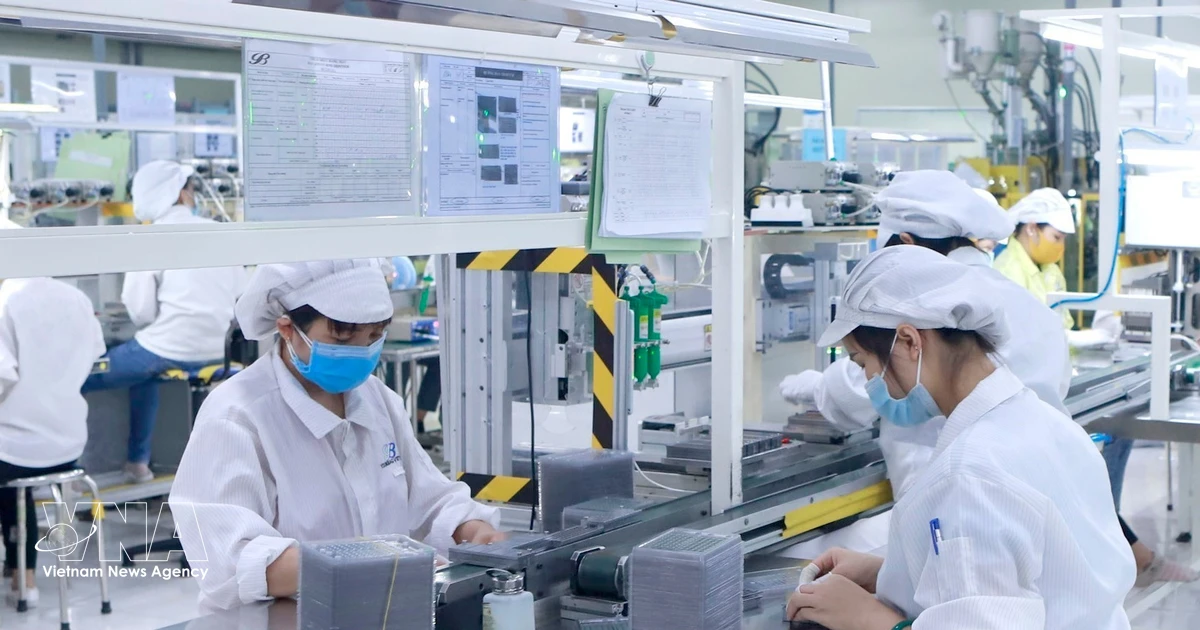
Vietnam Pivots from Low-Cost Base to High-Value Tech Hub
Economy
2026年7月2日
4
VietnamPlus English

Vietnam Pivots from Low-Cost Base to High-Value Tech Hub

AI サマリー

Vietnam is transitioning from a low-cost manufacturing base to a high-value tech hub, with GNI per capita projected to surpass the upper-middle-income threshold by 2025. International financial institutions forecast robust economic growth, supported by ambitious FDI targets and infrastructure development.

Vietnam is pivoting from a low-cost manufacturing base to a high-value technology hub, according to analyses from international financial institutions. The World Bank projects Vietnam's gross national income (GNI) per capita to reach US$4,970 in 2025, surpassing the threshold for upper-middle-income economies at US$4,636. This aligns with the WB's forecast that Vietnam will remain one of the fastest-growing economies in the region, expanding by 6.3% in 2026 and 7.7% in 2027. This transition is further supported by clear policy signals from the Party regarding the foreign-invested sector. Politburo Resolution No. 10-NQ/TW (2026–2030) sets ambitious targets to attract US$200–300 billion in registered FDI during this period, averaging US$40–50 billion annually, with disbursed capital expected to reach US$150–200 billion, or US$30–40 billion each year. This strategy is part of Vietnam's efforts to enhance global economic integration and foster domestic industrial development. Infrastructure investment is also accelerating to support economic growth. In Ho Chi Minh City, construction is underway for the underground ST10 (Pham Van Bach) station, part of the city's expanding transport network. Vietnam Airlines has also restored five routes connecting Da Lat with major cities, improving domestic travel convenience. Furthermore, Vietnam's e-commerce market continues its robust growth of around 20–25% annually, emerging as one of Southeast Asia's most dynamic markets. Improvements in the legal framework, enhanced consumer trust, and a fair competitive environment are expected to make e-commerce a key driver of Vietnam's digital economy. Meanwhile, Vietnam's crude steel output is forecast to reach 27 million tonnes in 2026, signaling improved domestic production capacity and strengthened market management measures. Exports of agricultural, aquatic, and forestry products remain strong, with livestock products showing a remarkable 34.6% increase. International financial institutions note that Vietnam's growth is underpinned by further gains in new orders, supporting a 14th consecutive month of rising output. According to the Vietnam National Authority of Tourism, the country welcomed approximately 10.6 million international visitors in the first five months of 2026, up nearly 15% year-on-year. These developments indicate Vietnam's strategic evolution from a low-cost production base to an economy poised to lead in technological innovation and high-value industries, crucial for sustainable growth and enhanced international competitiveness.

多角的分析

経済的影響

ベトナム経済は、低コスト生産拠点としての強みを活かしつつ、高付加価値産業へのシフトを加速させている。これは、世界銀行が予測する一人当たりGNIの着実な増加と、地域内でも突出した経済成長率に裏付けられている。特に、外資誘致目標の大幅な引き上げは、技術移転と産業高度化への強い意志を示す。鉄鋼生産の増加や農産物輸出の堅調さも、国内産業基盤の強化と多様化を示唆しており、経済全体のレジリエンスを高めていると考えられる。しかし、FDI実行ベースの目標達成には、法制度の整備やインフラ投資のさらなる進展が不可欠となるだろう。

投資家心理

ベトナムは、高成長と構造転換の可能性から、投資家にとって魅力的な市場であり続けている。特に、テクノロジーハブへの転換は、新たな投資機会を創出する。外資誘致目標の大幅な引き上げは、新規参入や事業拡大を検討する企業にとって追い風となる。一方で、法制度の整備、特にEコマース分野における消費者信頼と公正な競争環境の確立は、長期的な投資リスクを低減させる上で重要となる。インフラ投資の進捗状況は、物流コストや事業運営の効率性に直結するため、投資判断における重要な要素となるだろう。

社会的影響

ベトナムの一人当たりGNIの増加は、国民生活水準の向上に寄与すると期待される。高付加価値産業へのシフトは、より高度なスキルを持つ労働者の需要を高め、教育・訓練システムへの投資を促進する可能性がある。Eコマースの成長は、消費者の利便性を向上させる一方で、デジタルデバイドや消費者保護に関する新たな課題を生む可能性もある。また、インフラ投資の進展は、都市部を中心に生活環境の改善をもたらす一方で、地方との格差拡大に注意が必要である。観光客の増加は、地域経済の活性化に貢献するが、持続可能な観光開発が求められる。

市民の声

ベトナム国民にとって、一人当たりGNIの増加は、生活水準の向上と購買力の増強を意味する。高付加価値産業への転換は、より良い雇用機会とキャリアパスの拡大につながる可能性がある。Eコマースの普及は、消費者に多様な商品とサービスへのアクセスを提供するが、オンライン詐欺や個人情報保護への懸念も高まるだろう。インフラ整備は、通勤時間の短縮や物流の効率化に貢献し、日常生活の利便性を向上させる。しかし、地域間の開発格差や、産業構造の変化に伴う雇用への影響も、国民が直面する現実的な課題となる。

背景・歴史的文脈

ベトナムは、1986年のドイモイ(刷新)政策以降、計画経済から市場経済への移行を進め、製造業を中心とした輸出主導型の経済成長を遂げてきた。特に、低賃金を武器に、アパレルや電子機器の生産拠点として、世界経済に組み込まれてきた。近年、米中貿易摩擦などを背景としたサプライチェーン再編の動きの中で、ベトナムは、単なる低コスト生産拠点から、より付加価値の高い産業、特にテクノロジー分野へのシフトを国家戦略として位置づけている。これは、経済の持続可能性を高め、国際競争力を強化するための重要な転換点である。

原文ソース

VietnamPlus English

原文を読む