Cambodia's Deputy PM Urges Japanese Investors to Expand, Highlighting Digital Shift and Cybercrime Crackdown
Security
2026年7月6日
5
AKP Cambodia
Relations
🇰🇭Cambodia🇯🇵Japan🌐United Nations / ASEAN

Cambodia's Deputy PM Urges Japanese Investors to Expand, Highlighting Digital Shift and Cybercrime Crackdown

AI サマリー

Cambodia's Deputy Prime Minister has urged Japanese investors to expand their presence, citing the nation's digital economic transition and intensified efforts against cybercrime. He highlighted a young workforce and preferential policies, underscoring bilateral cooperation.

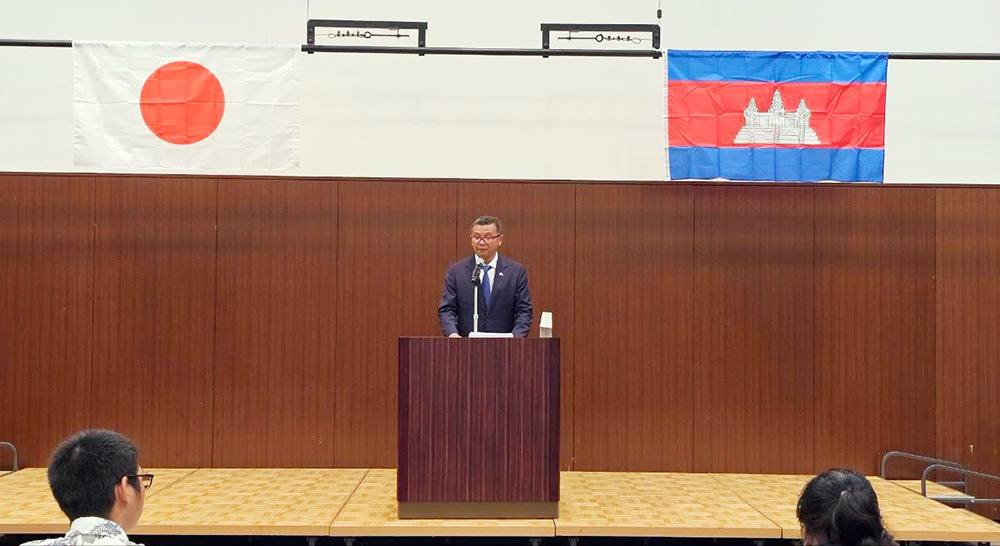
AKK Phnom Penh, July 06, 2026— Cambodian Deputy Prime Minister and Minister of Education, Youth and Sport H.E. Dr. Hang Chuon Naron has called on Japanese businesses to expand investment in Cambodia, highlighting the country's transition to a technology-driven economy and a rigorous domestic crackdown on online scams. Speaking at a public forum in Iwaki, Fukushima Prefecture, Dr. Hang Chuon Naron, delivered a lecture titled "The Future of Cambodia and Cambodia-Japan Partnership," aimed at strengthening bilateral cooperation and driving foreign direct investment. The event was attended by local leaders, investors, business executives, and academics. The Deputy Prime Minister emphasised that Japan remains a foundational partner in Cambodia’s development. He cited major infrastructure projects—such as the Kizuna Bridge—alongside extensive roads, ports, and education initiatives backed by the Japan International Cooperation Agency (JICA) as enduring symbols of the bilateral alliance. "Over the past three decades, Cambodia has achieved remarkable progress in peace, economic growth, poverty reduction, and educational reform," H.E. Dr. Hang Chuon Naron said. "Cambodia is now transitioning from a labour-intensive economy to one based on knowledge, technology, and innovation." To support this shift, he noted that approximately 60 percent of Cambodia's population is under the age of 35, representing a vital workforce for emerging sectors including artificial intelligence (AI), engineering, and the digital economy. The Royal Government of Cambodia is currently restructuring higher education curricula to better align academic output with private-sector demand. Addressing potential investors, the Minister urged Japanese firms to explore high-value-added industries such as advanced agriculture, food processing, green energy, and infrastructure development. He highlighted Cambodia’s Special Economic Zones (SEZs), which offer tax incentives and streamlined administrative procedures designed to optimize the foreign investment climate. In a move to reassure international partners regarding security concerns, H.E. Dr. Hang Chuon Naron underscored Cambodia’s intensifying campaign against transnational crime. He stated that the Royal Government of Cambodia is taking strict law enforcement measures to crack down on online scam operations, working in close coordination with international agencies to safeguard social security and maintain a transparent, secure business environment for foreign investors. By K. Rithy Reak

多角的分析

経済的影響

カンボジアは、労働集約型経済から知識・技術集約型経済への転換を目指しており、特にデジタル経済へのシフトは、新たな成長エンジンとして期待されている。若年層の人口構成比率の高さは、この移行を支える人的資本として魅力的である。特別経済区(SEZs)における税制優遇や簡素化された手続きは、外国直接投資(FDI)を誘致するための重要なインセンティブとなる。しかし、この移行が国内の産業構造や雇用にどのような影響を与えるか、また、デジタル化の恩恵が国民全体に行き渡るかについては、さらなる注視が必要である。特に、教育カリキュラムの改革が民間セクターの需要にどれだけ迅速に対応できるかが、経済発展の鍵となる。

投資家心理

日本企業にとって、カンボジアは依然として魅力的な投資先である。長年にわたるJICAを通じたインフラ投資や教育支援は、両国間の信頼関係の基盤を築いてきた。副首相が強調したデジタル経済への移行は、AI、エンジニアリング、グリーンエネルギーといった先端分野での新たなビジネスチャンスを示唆している。また、サイバー犯罪対策の強化は、投資環境の安定化に寄与する。しかし、投資家は、ASEAN地域における他の新興国との競争、国内のインフラ整備の進捗、そして法制度の透明性や執行力について、慎重な評価を行う必要がある。

社会的影響

カンボジアの人口の約60%が35歳未満という若年層の多さは、将来の労働力として大きな可能性を秘めている一方で、教育と雇用のミスマッチが社会的な課題となる可能性もはらむ。高等教育カリキュラムの改革は、若者が将来のデジタル経済で活躍できるスキルを習得するための重要な一歩であるが、その効果が具体的に現れるまでには時間を要する。また、サイバー犯罪、特にオンライン詐欺の取り締まり強化は、社会の安全と信頼性を高める上で不可欠である。これは、国内の一般市民が被害に遭うことを防ぐだけでなく、国際的なビジネスパートナーからの信頼を得るためにも重要である。

市民の声

カンボジア国民、特に若年層にとっては、デジタル経済への移行は新たな雇用機会の創出や所得向上の可能性を意味する。教育改革が進み、AIやエンジニアリングといった分野で活躍できる人材が増えれば、より付加価値の高い仕事に就く機会が増えるだろう。しかし、デジタル化の恩恵が一部の層に偏る可能性や、伝統的な産業に従事する人々の生活への影響も懸念される。サイバー犯罪対策の強化は、詐欺被害から国民を守る上で歓迎されるべき動きだが、その法執行が公平かつ透明に行われることが求められる。

背景・歴史的文脈

カンボジアは、1990年代初頭の内戦終結以降、経済復興と民主化の道を歩んできた。日本は、その初期段階からインフラ整備(例:キズナ橋)や開発援助を通じて、カンボジアの復興を支援してきた重要なパートナーである。近年、カンボジア政府は、経済構造の高度化を目指し、労働集約型産業から知識・技術集約型産業への転換を推進している。特に、デジタル経済への移行は、ASEAN地域における競争力を高めるための戦略として位置づけられている。同時に、近隣諸国からのサイバー犯罪の流入や国内での詐欺被害が増加したことを受け、政府は法執行機関の強化と国際協力による取り締まりを強化している。これは、国内の治安維持と、外国からの投資を呼び込むための安全なビジネス環境整備という二重の目的を持つ。

原文ソース

AKP Cambodia

原文を読む
Cambodia's Deputy PM Urges Japanese Investors to Expand, Highlighting Digital Shift and Cybercrime Crackdown | NEWS-BRAIN