Philippines Launches First National Policy on Nature-based Solutions
Environment
2026年7月2日
5
BusinessWorld Nation

Philippines Launches First National Policy on Nature-based Solutions

AI サマリー

The Philippines' Department of Environment and Natural Resources (DENR) has launched the nation's first Nature-based Solutions (NbS) policy, integrating natural approaches into climate, biodiversity, and disaster risk reduction programs. This aims to enhance ecosystem conservation and adaptive capacity in the disaster-prone country.

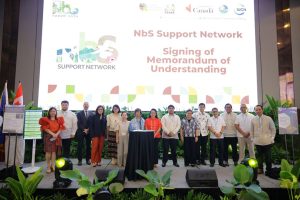
The Department of Environment and Natural Resources (DENR) officially launched the country's first national policy on Nature-based Solutions (NbS) on June 30. This policy mandates the integration of nature-based approaches into climate change mitigation, biodiversity conservation, and disaster risk reduction programs. The DENR, with support from Forest Foundation Philippines, the Government of Canada, the United Nations Development Programme (UNDP), and the NbS Support Network, unveiled the policy during the 3-day USBONG: Transdisciplinary Forum on Nature-based Solutions. The policy establishes a national framework for integrating nature-based approaches into government plans and programs, while strengthening coordination among government agencies, local governments, civil society organizations, communities, and the private sector. The Philippines is one of the world's most disaster-prone countries, facing frequent floods, droughts, typhoons, and earthquakes. These risks are expected to intensify as climate change progresses, according to a joint climate risk profile by the Asian Development Bank (ADB) and the World Bank. ADB's 2025 Asia-Pacific Climate Report notes that about 75% of the region's gross domestic product (GDP) depends on nature, making economies more vulnerable as ecosystems deteriorate. "Existing programs and initiatives are already there across the country, in government agencies, local governments, civil society organizations, and communities. The challenge is no longer creating new initiatives. The challenge is connecting them," said Steven Laranjo, Disaster Risk Reduction Technical Officer of the Philippine Red Cross, during the forum. It was also emphasized that traditional practices of forest management and coastal restoration, long implemented by indigenous communities in regions like Visayas, form the basis of this policy. The policy aligns with national laws, including the Climate Change Act and the Indigenous Peoples' Rights Act, as well as international commitments such as the Paris Agreement and the National Adaptation Plan. DENR Acting Secretary Juan Miguel T. Cuna stated, "The NbS policy unifies our efforts to connect and strengthen action across sectors. It gives us a national standard for recognizing, supporting, and scaling nature-based approaches across our climate, biodiversity, and disaster risk reduction programs." The policy encourages investments from local governments, communities, and the private sector, while promoting diversified funding sources, including payment for ecosystem services, to support long-term implementation. Furthermore, the NbS Support Network has been established to provide technical guidance, support the design and implementation of NbS projects, convene stakeholders, promote knowledge sharing, and demonstrate high-integrity NbS on the ground. Through the Philippines-Canada Partnership on Nature-based Solutions for Climate Adaptation (PCP4NbS), Forest Foundation Philippines provides grants to community-based organizations to demonstrate NbS for climate resilience while advancing discussions on the biodiversity-climate-gender nexus. — Kaizzer Angela Marie V. Manuba

多角的分析

経済的影響

フィリピン経済は自然資本への依存度が高く、生態系の劣化はGDPに直接的な影響を与える。今回のNbS政策は、環境保全と経済的持続可能性を結びつける試みであり、生態系サービスへの支払い(PES)などの新たな収益源創出の可能性を秘めている。しかし、その効果は民間投資の呼び込みや、地方自治体・地域社会の実施能力に大きく依存する。過去には、環境保全プロジェクトへの資金調達が課題となる事例も多く、長期的な財政的持続可能性の確保が鍵となる。

投資家心理

NbS政策は、環境・社会・ガバナンス(ESG)投資の観点から、フィリピンにおける新たな投資機会を示唆している。特に、再生可能エネルギー、持続可能な農業、生態系回復プロジェクトへの関心が高まる可能性がある。しかし、投資家は、政策の実施状況、透明性、そして収益性に関するリスクを慎重に評価する必要がある。過去のインフラ開発プロジェクトにおける遅延や、汚職のリスクなども考慮に入れるべき要因である。

社会的影響

フィリピンは自然災害に脆弱な国であり、NbS政策は地域社会のレジリエンス向上に不可欠である。特に、沿岸部のコミュニティや農業従事者は、洪水や台風の被害を軽減する恩恵を受けることが期待される。しかし、政策の実施にあたっては、先住民コミュニティの伝統的知識の尊重と、彼らの権利の保護が重要となる。過去には、開発プロジェクトが地域住民の生活や文化に影響を与えた事例もあり、包摂的なガバナンスが問われている。マニラ首都圏のような都市部でも、緑地の保全や水害対策としてNbSの導入が期待される。

市民の声

多くのフィリピン国民、特に地方や沿岸部に住む人々は、気候変動による自然災害の直接的な影響を受けている。このNbS政策は、彼らの生活基盤を守り、より安全な環境を提供する可能性を秘めている。しかし、政策の効果が地域社会にまで具体的に届くか、そしてそれが財政的に持続可能であるかが、国民の生活実感として問われることになる。過去の災害からの復興プロセスで、支援が十分に行き渡らなかった経験を持つ人々もおり、今回の政策が実質的な改善に繋がるかが注目される。

背景・歴史的文脈

フィリピンは、地理的な位置から台風銀座と呼ばれるほど自然災害が多い国である。過去数十年にわたり、大規模な台風、洪水、地震が繰り返され、甚大な被害をもたらしてきた。これにより、国家レベルでの防災・減災策の重要性が常に叫ばれてきた。近年の気候変動の進行は、これらの自然災害の頻度と強度を増大させており、従来のハードインフラ中心の対策に加え、生態系を活用した「自然を基盤とした解決策(NbS)」への関心が高まっていた。今回の政策導入は、こうした長年の課題と、国際社会の気候変動対策へのコミットメント(パリ協定など)が結実したものである。

原文ソース

BusinessWorld Nation

原文を読む