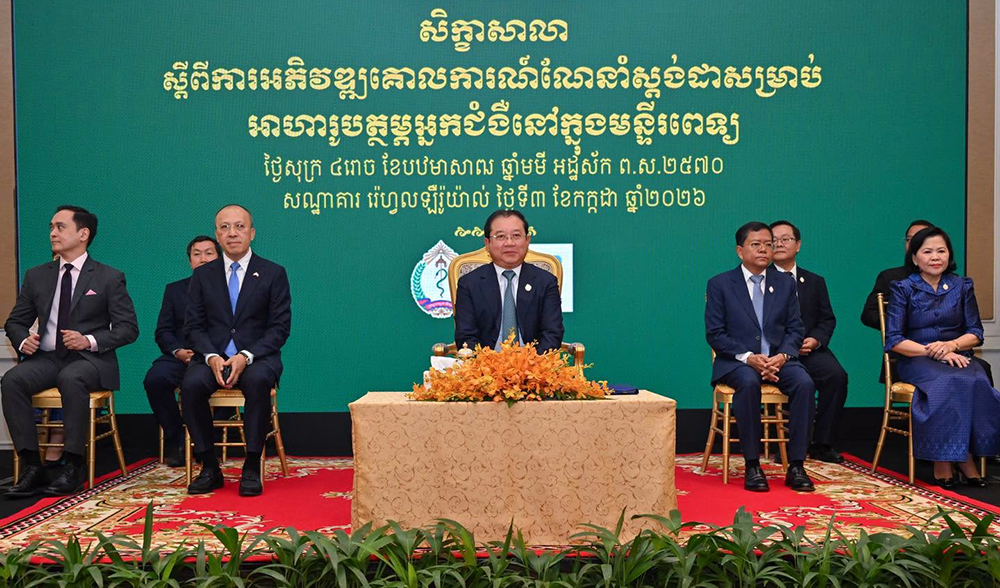
Cambodia Enhances Hospital Nutrition Standards to Improve Patient Recovery and Reduce Healthcare Costs
Cambodia's Ministry of Health hosted a workshop on standardizing hospital nutrition, aiming to improve patient nutritional status and treatment efficacy. This initiative is expected to reduce hospital stays, lower readmission rates, and decrease healthcare costs.
The Ministry of Health hosted a workshop on developing standardization guidelines for hospital nutrition to enhance the quality and effectiveness of patient care on July 3, 2026. Professor Chheang Ra, the Minister of Health, stated that improving hospital nutrition is crucial for ensuring all patients receive adequate nourishment, which significantly contributes to more effective treatment. This event marks a significant step in elevating the quality, efficiency, effectiveness, and safety of healthcare services in Cambodia. Hospital nutrition is continuously given high priority to reduce the risk of complications such as hospital-acquired infections, prolonged hospital stays, increased readmission rates, and the overall financial burden on both patients and the healthcare system. Therefore, a structured approach to hospital nutrition is a necessary measure to mitigate these issues. Minister Chheang Ra highlighted that malnutrition, encompassing over-nutrition, under-nutrition, improper diets, and irregular meal times, hinders patient recovery and increases healthcare costs. Consequently, enhancing hospital nutrition standards ensures every patient receives appropriate nourishment, leading to higher treatment success rates. The Minister emphasized that nutritional provision is an integral part of treatment, contributing to shorter hospital stays and saving lives. He also noted the critical role of nutrition in treatment and the importance of establishing national nutritional standards to reduce healthcare expenditures and improve treatment efficacy. He further stressed that effective nutritional management requires collaboration among various professionals, including doctors, nurses, nutritionists, and food technicians, and that consistent nutritional care from admission to discharge is essential. Furthermore, the Minister provided key recommendations for the roadmap development team, including the implementation of Standard Operating Procedures (SOPs) for nutritional assessment and evaluation upon patient admission using internationally recognized tools, the strengthening of multidisciplinary teams comprising specialists, nurses, nutritionists, and food technicians for assessment and personalized meal planning, the modernization of hospital food services to improve quality and hygiene while ensuring adequate nutritional value and energy content, the continuous training of medical staff on therapeutic nutrition to deepen their understanding of malnutrition consequences and management strategies, and the integration of nutritional assessments into the Hospital Information System (HIS) for real-time patient data tracking. The workshop was attended by approximately 200 participants, including Mr. Lim Tarryrith, Advisor to the Prime Minister of the Kingdom of Cambodia and US-ASEAN Business Council representative, Dr. Jose Rodolfo V. Dimaano Jr., Head of Medical Affairs, Asia Pacific at Abbott, as well as senior officials from the Ministry of Health, national and international guests, faculty, and students. Source: AKP Khmer
多角的分析
病院食の標準化は、入院期間の短縮や再入院率の低下を通じて、医療費全体の削減に貢献する可能性がある。これは、医療システムへの財政的負担を軽減し、限られた医療資源をより効率的に配分することを可能にする。また、栄養失調の改善は、患者の早期回復を促し、社会復帰を早めることで、労働力損失の低減にも寄与しうる。
病院食の質向上と標準化は、医療インフラへの投資、特に食事提供サービスや関連技術(HIS統合など)への投資機会を生み出す可能性がある。国際的な基準に準拠したサービス提供は、国内外からの医療ツーリズムの誘致にも繋がりうる。Abbottのようなグローバル企業が参加していることは、国際的な基準導入への意欲と、それに伴うビジネスチャンスの存在を示唆している。
病院食の標準化は、患者の回復に不可欠な栄養を、経済状況や地域に関わらず、全ての入院患者が公平に受けられるようにすることを目指す。これは、医療格差の是正に繋がる可能性がある。また、栄養不足が引き起こす合併症や長期入院のリスク低減は、患者とその家族の精神的・経済的負担を軽減する。具体的には、地方からプノンペンなどの大都市の病院に入院した患者が、出身地での食生活との違いに戸惑うことなく、適切な栄養管理を受けられるようになることが期待される。
今回の病院食の標準化は、カンボジア国民全体の健康増進に繋がる重要な一歩である。特に、病気で入院する人々にとって、適切な栄養は回復の鍵となる。これまで、病院食の質や量にばらつきがあった可能性があり、それが治療の遅れや合併症の原因となっていたかもしれない。今回の取り組みにより、より多くの人々が、安心して質の高い医療を受けられるようになると期待される。これは、国民の生活の質向上に直接的な影響を与える。
背景・歴史的文脈
カンボジアでは、長年の紛争と貧困により、公衆衛生システムが脆弱な状態にあった。近年、経済発展に伴い医療インフラの整備が進められているが、特に地方部では医療サービスの質にばらつきが見られる。栄養失調は依然として国民の健康を脅かす課題であり、特に子供や高齢者、病人に影響が大きい。保健省は、医療サービス全体の質向上を目指し、国際機関や民間企業と連携して、様々な分野での標準化や能力開発を進めている。病院食の改善は、こうした広範な医療改革の一環として位置づけられる。
原文ソース
AKP Khmer