General articles are free for 24 hours after publish.
Philippines Seeks $100M ADB Loan for Manila, Pasig Waste Management
The Philippines is seeking a $100 million loan from the Asian Development Bank (ADB) to tackle solid waste management challenges in Manila and Pasig. The Advancing Circular Urban Pathways Project (ACUP) aims to establish viable investment models for waste collection, recycling, and value recovery.
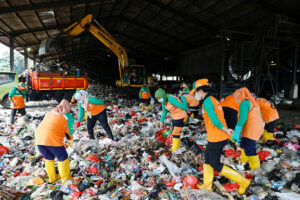
The Philippines is seeking a $100 million loan from the Asian Development Bank (ADB) to address solid waste management challenges in Manila and Pasig through the Advancing Circular Urban Pathways Project (ACUP). The ADB stated that ACUP aims to establish viable investment models for waste collection, recycling, and value recovery. "ADB’s investment in city-level segregation, collection, and sorting infrastructure will close the viability gap that currently limits private sector participation, which is concentrated mainly in end-of-life recycling facilities," it said. "The proposed project will prioritize high-risk riverbank communities, ring-fence local waste infrastructure investments through service and performance-based financing, de-risk private sector’s exposure to uncertain feedstock risk, and catalyze future circular economy investments," it added. ACUP will help address the needs of the cities of Manila and Pasig, which together account for 2.6 million residents and generate 2,400 tons of municipal solid waste (MSW) annually. "The two cities were selected based on their strategic location along the Pasig River, high waste generation volumes, infrastructure readiness, revenue potential, and strong demonstration and replication value," the ADB noted. Rapid population growth, accelerating urbanization, changing consumption patterns, and capacity constraints of local government units have led to persistent challenges in managing MSW in the Philippines. According to the ADB, approximately 74% of the Philippines’ total annual plastic waste becomes environmental pollution. "The country has become one of the world’s leading contributors to marine plastic pollution, with approximately 20% of the 2.7 million tons of plastic waste generated annually leaking into the marine environment," it added. — Justine Irish D. Tabile
Original source
BusinessWorld Economy