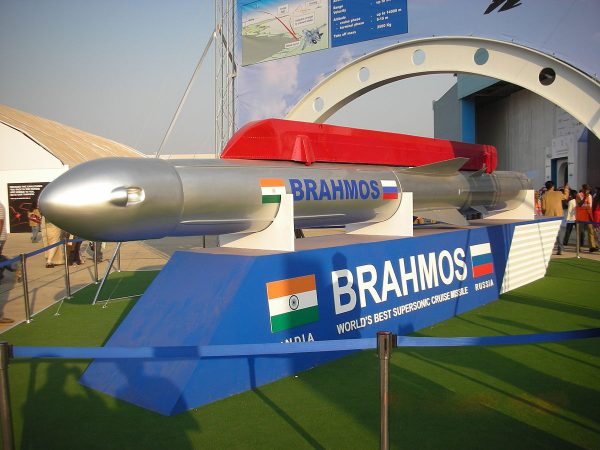
BrahMos Missile: UAE in Talks for India-Russia Jointly Developed Weapon
The United Arab Emirates (UAE) is reportedly in talks with India to acquire the BrahMos supersonic cruise missile, jointly developed by India and Russia. This move could expand the missile's footprint into West Asia, following interest from Southeast Asian nations. Russia is also reportedly considering inducting the missile to replenish its inventory depleted by the Ukraine war.
The BrahMos supersonic cruise missile, jointly developed by India and Russia, is reportedly in advanced talks for potential acquisition by the United Arab Emirates (UAE). This development signals a potential expansion of the missile's reach into West Asia, following its growing popularity among Southeast Asian nations grappling with defense budget constraints and China's expanding maritime assertiveness. India is understood to be in discussions with the UAE not only for the BrahMos but also for its Akashdeep air defense command-and-control system. The UAE's interest in the BrahMos comes at a critical juncture, with recent regional conflicts highlighting evolving security challenges in West Asia. Despite possessing a sophisticated air and missile defense network, including THAAD and Patriot systems, Abu Dhabi's long-range conventional precision strike capabilities are limited, primarily relying on the subsonic Black Shaheen missile. The acquisition of the BrahMos would provide the UAE with a credible anti-access and area-denial (A2/AD) capability, enhancing its conventional deterrence posture against both maritime and land targets. The missile could also serve as a crucial supplementary strike option, bolstering offensive capabilities even if airbases face disruptions, as demonstrated by recent conflict-related damage to UAE air facilities. Meanwhile, Russia, a co-developer of the BrahMos, is also reportedly considering inducting the missile onto its naval platforms. The ongoing conflict in Ukraine has significantly depleted Russia's missile inventory, creating an urgent need to replenish stocks. The BrahMos, with its proven effectiveness against warships, could serve to supplement Russia's existing arsenal of indigenous cruise missiles. Initially conceived as a joint export program, the BrahMos has evolved significantly, incorporating India's indigenous guidance systems, software, and extended-range capabilities, especially after India's accession to the Missile Technology Control Regime (MTCR) in 2016. Russia, as a co-developer and MTCR member, holds a unique position and could potentially field extended-range variants exceeding 400 km, with future iterations possibly reaching 800 km. However, India's defense export ecosystem still faces challenges in establishing an extensive network of overseas maintenance hubs and logistical support architecture, unlike established exporters like the US and France. This limitation can create uncertainties for prospective buyers like the UAE, Philippines, and Vietnam regarding integration with existing defense systems and the timely availability of critical spare parts during crises.
多角的分析
ブラフモス・ミサイルの輸出拡大は、インドの防衛産業にとって重要な収益源となり得る。特に、インドは防衛輸出の増大を目指しており、ブラフモスのような先進的な兵器の輸出成功は、その目標達成に大きく貢献する。UAEのような高付加価値市場への輸出は、インド経済への直接的なプラス効果に加え、関連産業への波及効果も期待できる。ロシアにとっても、ウクライナ戦争で消耗した兵器在庫を補うための輸入・共同生産は、経済的負担を軽減しつつ、軍事力を維持する手段となる。
ブラフモス・ミサイルの輸出拡大は、インドの防衛関連企業、特にブラフモス・エアロスペースの株主にとってポジティブなニュースである。UAEやその他の国々からの需要増加は、企業の収益性と将来の成長見通しを改善させる。ロシアによる導入検討は、共同開発プログラムの持続可能性と技術的発展への投資をさらに促す可能性がある。ただし、インドの防衛輸出におけるサポート体制の課題は、長期的な投資リターンに影響を与えるリスク要因として考慮する必要がある。
ブラフモス・ミサイルの輸出は、インドの防衛産業の国際的な地位向上に寄与する一方、国内の防衛関連技術者の育成や、防衛産業クラスターの発展を促進する可能性がある。UAEのような国々への輸出は、地域安全保障のバランスに影響を与える可能性があり、その動向は国際社会の注視を集める。また、ミサイル技術の拡散という側面から、地政学的な緊張を高めるリスクも内在している。インド国内では、防衛輸出による経済効果と、技術移転に伴う安全保障上の懸念との間で、社会的な議論が生じる可能性もある。
UAE市民は、地域情勢の不安定化を受け、自国の防衛力強化に関心を高めている。ブラフモスのような先進的なミサイルの導入は、国民の安全保障への安心感につながる可能性がある。一方、ミサイル購入にかかる巨額の費用が、他の公共サービスへの支出に影響を与えるのではないかという懸念も生じうる。インド市民にとっては、自国の防衛産業の発展と輸出による経済効果は誇りとなりうるが、同時に、軍事技術の国際的な拡散がもたらす潜在的なリスクについても認識する必要がある。
背景・歴史的文脈
ブラフモス・ミサイルは、インドのヒンドゥスタン航空機製造会社(HAL)とロシアのNPOマシノストロエニヤが1998年に設立したブラフモス・エアロスペース社によって共同開発された。当初は、インド海軍の艦船への搭載を主眼に、ロシアのP-800オニキス・ミサイルをベースに開発が進められた。ミサイル技術管理体制(MTCR)の加盟国ではないインドと、加盟国であるロシアの間での技術移転の制約から、当初の射程は290kmに制限されていた。しかし、インドが2016年にMTCRに加盟したことで、射程延長や多用途化が可能となり、インド空軍や陸軍向けの派生型も開発された。近年、インドは防衛輸出を拡大する政策を推進しており、ブラフモスはフィリピンへの輸出が決定するなど、国際市場で注目を集めている。
原文ソース
The Diplomat Indonesia