Vietnam Seeks New Growth Frontiers Through Science, Technology, and Innovation
Technology
2026年7月28日
6
VnExpress

General articles are free for 24 hours after publish.

Vietnam Seeks New Growth Frontiers Through Science, Technology, and Innovation

Share
AI Summary

Facing the limits of its traditional extensive growth model, Vietnam is positioning science, technology, innovation, and digital transformation as new drivers of growth. The development of new frontiers like oceans, underground, and outer space, alongside managing non-physical spaces such as the digital realm, is deemed urgent.

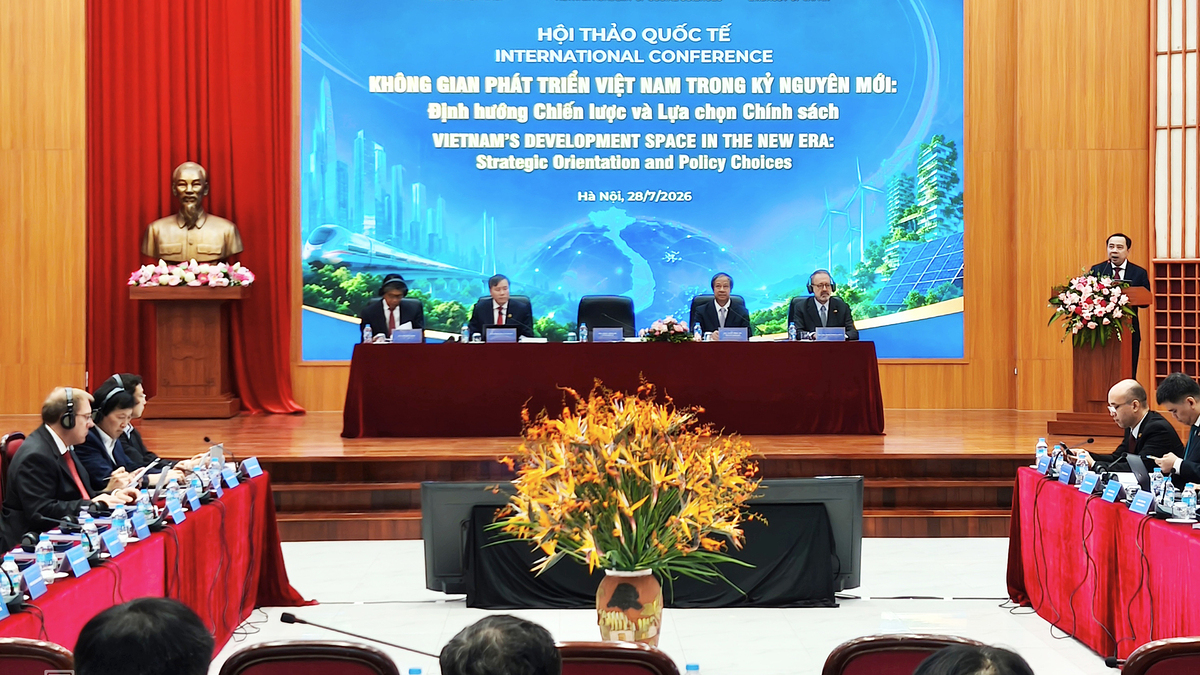
Vietnam needs to explore new development spaces through science, technology, and innovation, according to experts. At the international symposium "Vietnam's Development Space in the New Era: Strategic Direction and Policy Choices" held in Hanoi on July 28, Minister of Science and Technology Vũ Hải Quân stated that after 40 years of Đổi mới (Renovation), Vietnam's extensive growth model is approaching its limits. He emphasized the need to shift thinking "from administrative maps to development maps" to enter a new development phase. The minister explained that science, technology, innovation, and digital transformation are not just supporting tools but "core elements" for creating new development spaces, essential for revitalizing traditional spaces and exploring new ones. Oceans and deep seas can enhance their value through the application of science and technology, such as accurate resource assessment, offshore renewable energy development, and marine biotechnology. Meanwhile, underground spaces, low-altitude spaces, and outer space are "new frontiers" requiring technology and data-driven exploration. To create these spaces, the minister proposed transitioning from a mindset of "prohibiting what cannot be managed" to management based on standards, regulations, and risk levels, and expanding controlled experimentation mechanisms for new technologies. Professor Lê Văn Lợi, President of the Vietnam Academy of Social Sciences, stated that development space in the new era should not be narrowly defined by geography or administrative boundaries. While a nation's space is defined by its borders, a people's development space is expanded by their vision, organizational capacity, creativity, and connectivity. Professor Hồ Sĩ Quý, former Director of the Institute of Social Sciences Information, also opined that success depends on the ability to identify, create, and manage various spaces simultaneously, especially non-physical ones. The challenge for Vietnam is to effectively manage traditional spaces such as administrative, territorial, marine, and regional economic spaces, while simultaneously mastering non-physical spaces like digital, cyber, supply chains, and data. As a lesson from the world, Professor Claudio Dordi from Bocconi University pointed out that expanding development space always comes with new governance challenges. AI can enhance productivity but also lead to misinformation; digital platforms broaden business opportunities but also increase the influence of certain enterprises. Digital transformation promotes trade but also entails cybersecurity risks. He analyzed that the challenge for Vietnam in expanding development space lies in balancing the protection of public interests with innovation. "Risks will weaken development. Conversely, if overprotected, regulations will hinder innovation, investment, competition, and technological progress," he said, adding that Vietnam can learn from the European Union's (EU) experience to handle this harmoniously. In addition to institutional lessons, experts noted that the expansion of new development spaces needs to be linked with planning and human resources. Mr. Moriyasu Kunihiro, an expert from Japan's Ministry of Land, Infrastructure, Transport and Tourism, shared that Japan integrates disaster risk reduction into urban planning, viewing investment in underground space as an investment in city competitiveness. Meanwhile, Professor Suh Juong Hae from the Korea Development Institute (KDI) assessed that AI should not only be seen as a productivity enhancement tool but as infrastructure serving the common good. He stated that alongside technological development, countries need to invest to ensure all citizens have the capacity to access and use AI, to avoid the risk of a segment of the workforce, especially young people, being left behind in the digital economy. Source: VnExpress

0

Original source

VnExpress

原文を読む