General articles are free for 24 hours after publish.
USABC Visit Boosts Hopes for Cambodia-US Trade and Investment
A visit by a delegation from the US-ASEAN Business Council (USABC) to meet with senior Cambodian government officials has raised hopes for increased bilateral trade and investment. The delegation, comprising US companies from sectors like healthcare, manufacturing, and energy, is expected to contribute to Cambodia's economic growth.
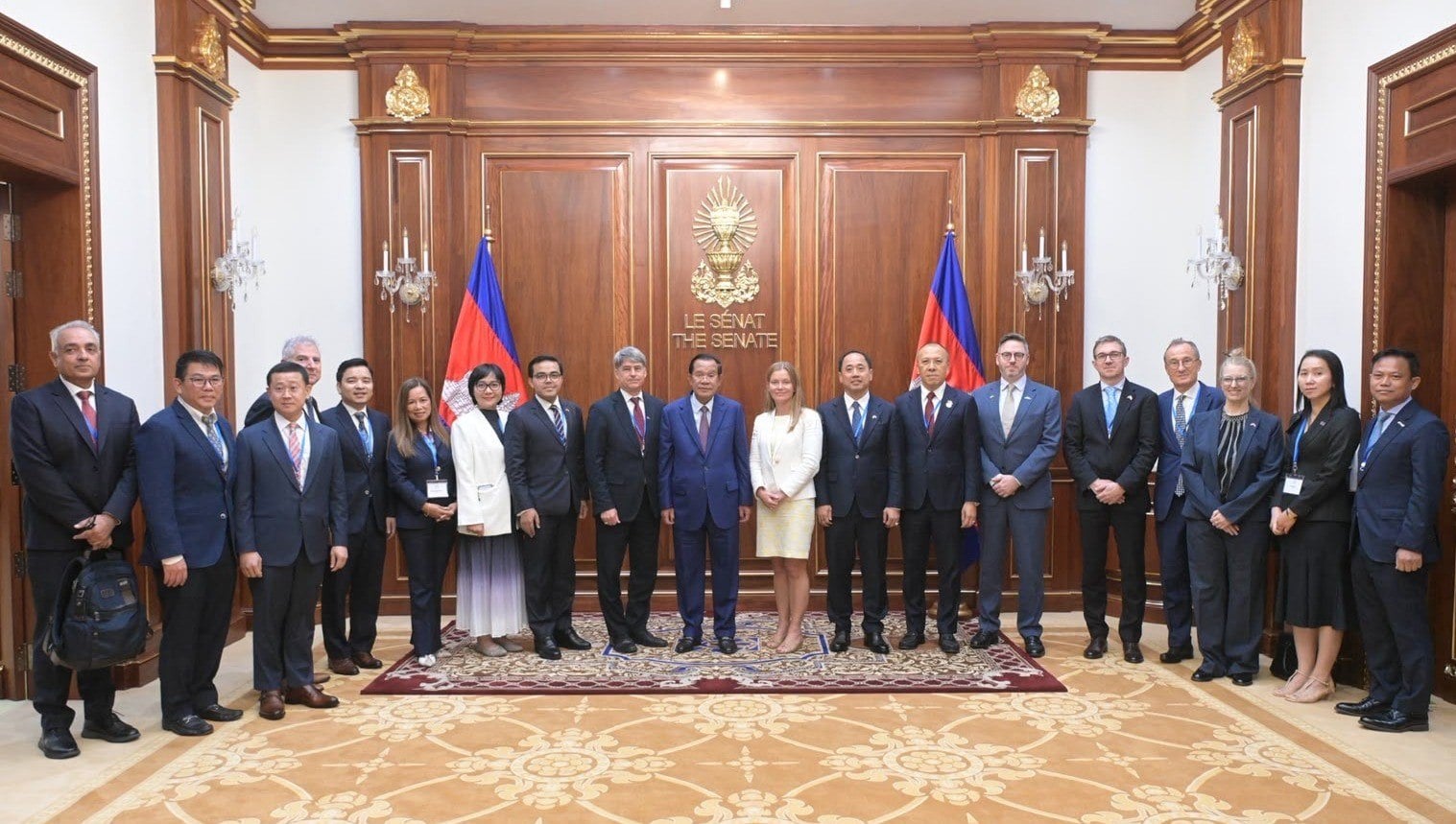
Hopes are high that Cambodia-US trade relations and investment will gather steam, following a visit by a delegation from the US-ASEAN Business Council (USABC), which met with several senior Cambodian government leaders. The US Embassy in Phnom Penh described it as an honour to host the USABC delegation during its July 21-22 annual visit to Cambodia. According to the embassy, the visit helped connect leading American companies with senior government officials. “This visit is focused on expanding trade and investment, increasing market access, and creating new opportunities for US businesses that contribute to Cambodia’s economic growth,” noted an embassy statement. Led by ambassador Brian McFeeters, the delegation includes representatives from companies operating in the healthcare, manufacturing, energy, financial services, digital technology and hospitality industries. According to the embassy, these companies represent the best of American industry, setting global standards for quality, innovation, transparency and regulatory compliance. When American companies invest or do business in Cambodia, they create jobs, develop local talent and strengthen the communities in which they operate, it added. Delegation members and embassy staff are meeting with senior government officials, including Prime Minister Hun Manet, Senate president Hun Sen, Deputy Prime Minister Sun Chanthol and officials responsible for commerce, health, energy, tourism and technology. “Conversations are centred on practical steps to expand bilateral trade, strengthen the business environment and open new opportunities for US investment and trade. The delegation is also exploring cooperation in healthcare, transportation and logistics, digital trade, energy and critical minerals, while ensuring fair market access and responsible supply chains,” said the embassy. “The delegation includes leaders in their industries who represent the best of American innovation, investment and entrepreneurship. Many of these companies have been doing business in Cambodia for years, while others are exploring new opportunities. Together, they reflect the growth of the US-Cambodia commercial relationship,” added embassy chargé d’affaires Aleks Zittle. The embassy noted that the growing presence of American businesses could create more opportunities for Cambodian workers and enterprises, provide Cambodian consumers with high-quality products and services, and further strengthen economic ties between the two countries. Trade and investment between Cambodia and the US has continued to improve steadily, with the US maintaining its position as Cambodia’s second-largest trading partner after China. According to the General Department of Customs and Excise (GDCE), bilateral trade reached $7.48 billion in the first half of 2026, up 31.4% from the same period in 2025. Exports to the US amounted to $7.17 billion, up 29.8%, while imports were $307.4 million, up 86.4%. Cambodia Chamber of Commerce vice-president Lim Heng told The Post on July 22 that the US is a major export market for the kingdom, with many companies currently producing goods for export there. Most exports to the US consist of garments, travel goods, footwear, electrical and electronic components, and bicycles. Meanwhile, Cambodia primarily imports automobiles, electronic equipment, machinery, high-tech products and pharmaceuticals from the US. “The US export market is expected to continue improving following the visit of the USABC delegation, which is meeting with senior government leaders and exploring Cambodia’s investment potential and opportunities for direct investment,” Heng explained.
Original source
Phnom Penh Post