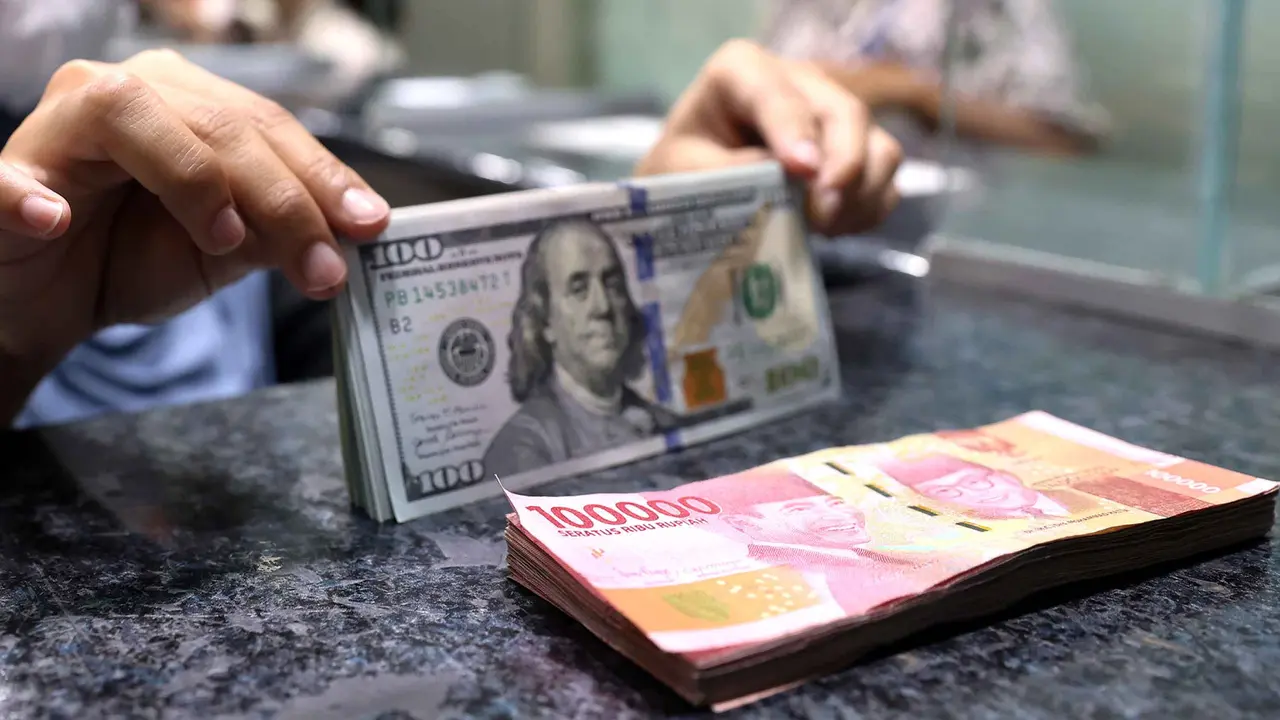
Rupiah Nears 18,000 Against Dollar as Market Awaits Fed Minutes
The Indonesian Rupiah is trading near the 18,000 mark against the US Dollar, with markets adopting a cautious stance ahead of the US Federal Reserve's meeting minutes. Domestic factors like the trade deficit and foreign capital outflows are also pressuring the Rupiah.
The Indonesian Rupiah traded flat at 17,995 per US Dollar on Tuesday (7/7/2026) at the opening of trading, with market participants adopting a cautious stance as they awaited the release of the US Federal Reserve's (The Fed) meeting minutes. Both global developments and domestic sentiments, including the trade balance deficit and Bank Indonesia's foreign exchange reserves data, were being closely watched by investors. Rully Nova, an analyst at Bank Woori Saudara, predicted that the Rupiah would remain under pressure despite a tendency for the US Dollar Index to weaken. "The Rupiah is expected to remain under pressure today, potentially weakening in the range of 17,950-18,020, influenced by global factors. Although the dollar index is weakening, market participants remain cautious in anticipating the release of The Fed's meeting minutes on Thursday, July 9, US time," Rully was quoted as saying by Antara. According to him, market attention is focused on The Fed's minutes, which are expected to provide clues regarding the direction of US interest rate policy in the coming months. At its previous meeting, The Fed reaffirmed its commitment to keeping inflation at 2%. However, recent developments in the US labor market have begun to shift investor expectations regarding the central bank's next moves. Rully explained that weaker-than-expected nonfarm payrolls (NFP) data could lead The Fed to be more flexible in determining its future monetary policy direction. This could prompt the US central bank, under Governor Kevin Warsh, to provide more adaptive forward guidance regarding interest rate prospects. Domestically, market participants are also observing several economic indicators that are seen as influencing the Rupiah's movement. One such indicator is Indonesia's trade balance, which recorded a deficit of US$1.61 billion. Furthermore, the outflow of foreign capital from the Indonesian stock market since early July has also contributed to negative sentiment, amounting to approximately Rp2.73 trillion. Investors are also awaiting data on Indonesia's foreign exchange reserves, scheduled to be announced by Bank Indonesia on Tuesday afternoon. "Foreign exchange reserves are expected to decline again due to BI's intervention in the forex market, but they will still be at an adequate ratio, above the level covering more than 5 months of imports and government debt payments," Rully said. Despite the anticipated decline, Indonesia's foreign exchange reserves are considered to remain at a strong level, capable of supporting the stability of the Rupiah exchange rate and meeting the needs for import financing and government foreign debt obligations.
多角的分析
インドネシア・ルピアの対ドルでの下落圧力は、米国の金融政策の不透明性という外部要因と、国内の貿易赤字および海外からの資金流出という内部要因が複合的に作用している。特に、貿易赤字の継続は、外貨獲得機会の減少と外貨準備高の圧迫に繋がり、ルピアの基盤を弱める。FRBの利上げサイクルの終了や利下げへの転換期待はドル安要因となり得るが、米国のインフレ動向や雇用統計がそれを左右するため、市場はFRB議事録に注視している。インドネシア銀行(BI)による為替介入は短期的なルピアの下支えにはなるものの、根本的な貿易構造の改善や投資環境の整備が、長期的なルピアの安定には不可欠である。
投資家は、米国連邦準備制度理事会(FRB)の金融政策の方向性に関する手がかりを求めており、FRB議事録の公表を待つ間は、インドネシア資産への新規投資には慎重な姿勢を取ると考えられる。特に、米国の金利動向はグローバルな資本の流れに直接影響するため、インドネシアのような新興国市場からの資金流出リスクを高める。国内の貿易赤字や株式市場からの資金流出といったネガティブなニュースは、投資家心理をさらに冷え込ませる要因となる。FRBがタカ派的な姿勢を維持する、あるいはインフレ懸念が再燃するような内容であれば、ルピアはさらに下落し、インドネシア株式市場への影響も避けられないだろう。逆に、ハト派的な兆候が見られれば、一時的な安心感からポートフォリオのリスクオンが進む可能性もある。
ルピア安は、輸入品価格の上昇を通じてインドネシア国民の生活に直接的な影響を与える。特に、エネルギーや食料品など、輸入に依存する物資の価格上昇は、家計の負担を増大させる。これは、低所得者層にとってより深刻な問題となる。また、海外からの投資の停滞や資金流出は、国内の雇用創出や経済成長の鈍化に繋がり、若年層の将来への不安を増幅させる可能性がある。政府が貿易赤字の是正や外貨準備高の維持に努める一方で、国民生活への影響を緩和するための的確な政策が求められる。SNS上では、物価上昇に関する不満や政府への政策提言などが活発に交わされることが予想される。
ルピア安は、ジャカルタ市民の生活に直接的な打撃を与えます。特に、ガソリン価格や日用品の価格上昇は、日々の通勤や家計を圧迫します。以前から物価の上昇は続いていましたが、ルピア安がさらにそれを加速させるのではないかという不安が広がっています。政府は為替介入を行っているようですが、根本的な解決にはなっていないと感じています。海外からの投資が滞ると、新しい仕事の機会も減るのではないかと心配です。特に若い世代は、将来への希望を見出しにくくなるかもしれません。
背景・歴史的文脈
インドネシア・ルピアは、歴史的に新興国通貨として、グローバルな金融市場の変動や国内経済のファンダメンタルズの影響を受けやすい通貨である。特に、1997-98年のアジア通貨危機では、ルピアは急激な下落を経験し、インドネシア経済に甚大な被害をもたらした。この経験から、インドネシア銀行(BI)は外貨準備高の維持と為替レートの安定化に注力してきた。しかし、近年では、米国の金融政策の引き締めや、インドネシア自身の貿易赤字の拡大、海外からの直接投資の鈍化などが、ルピアの圧迫要因となっている。特に、2020年以降のパンデミックからの経済回復過程においても、グローバルなサプライチェーンの混乱やインフレ圧力は、インドネシア経済の不安定要因として常に意識されてきた。
原文ソース
Liputan6