Vietnam Links Foreign Investment Strategy to National Development
Vietnam has unveiled a new policy positioning foreign direct investment (FDI) as a crucial component of its national economy, aiming for qualitative improvements and strategic development. The focus shifts from mere capital inflow to technology transfer and integration into global value chains.
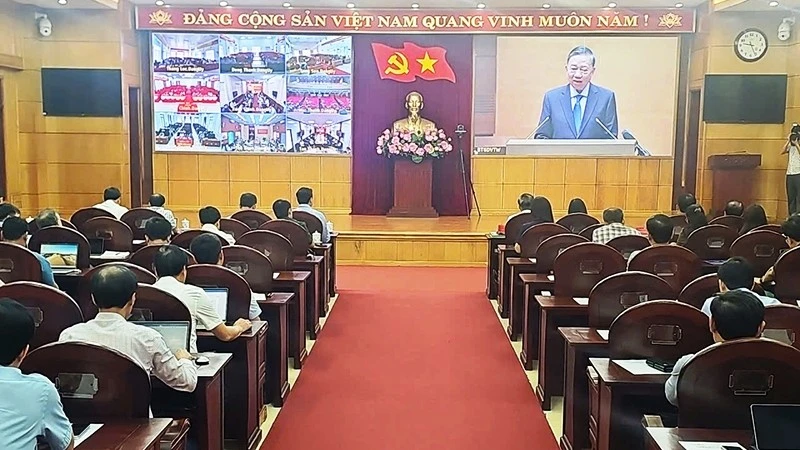
On the morning of June 30, over 47,000 officials, party members, civil servants, and workers in Thanh Hoa province participated in a learning session on the new Resolution No. 10-NQ/TW from the Politburo concerning foreign-invested economic sectors. This resolution emphasizes that foreign investment is a vital part of Vietnam's national economy and aims to align its development closely with national strategy. After nearly 40 years of "Doi Moi" (Renovation) and opening up, foreign direct investment (FDI) has become a significant driver of Vietnam's economy, contributing to economic restructuring, innovation in growth models, the formation of key industries, and export market expansion. This has enabled Vietnam to deepen its integration into global production networks and value chains. The new resolution seeks to shift the mindset from merely attracting capital to developing a strategic national investment foundation. It also aims to redirect focus from attracting investment based on administrative boundaries to attracting it through industrial clusters, value chains, and innovation ecosystems. Key criteria for attraction will now include quality, efficiency, technology transfer, participation in supply chains, and added value, moving beyond mere investment volume. The policy also signals a transition from upfront incentives to support linked to the fulfillment of commitments. Vietnam plans to develop a synchronized foreign investment ecosystem, integrated with the development of domestic enterprises, capital markets, international financial centers, free trade zones, economic zones, high-tech parks, innovation centers, and logistics, data, and energy infrastructure. This will encourage foreign investors to establish regional headquarters and centers for research, development, design, and services. The Vietnamese state recognizes and protects the intellectual property rights, ownership of assets, capital, income, and other legitimate rights and interests of foreign investors. It commits to ensuring a transparent, stable, and consistent investment and business environment with low compliance costs and high predictability, aligning with international practices to enhance regional and global competitiveness. Mechanisms will be in place for dialogue and timely reception and processing of investor proposals and complaints based on the principle of harmonizing interests. Investment disputes will be handled according to law, encouraging parties to pursue reconciliation through commercial mediation and arbitration. The conference also featured discussions from localities and foreign investors. General Secretary and President To Lam delivered a directive speech emphasizing strengthened Party leadership, enhanced state governance, improved national coordination efficiency, and the promotion of proactivity and creativity at the local level. He stressed the need for unified strategies, planning, criteria, and supervision mechanisms, with actual contributions serving as the primary measure for attracting, managing, and utilizing foreign investment.
多角的分析
ベトナム政府は、外国直接投資(FDI)の質的向上と戦略的連携を重視する新方針を打ち出した。これは、過去の量的拡大から、技術移転、グローバルバリューチェーンへの参画、高付加価値産業の育成へと重点を移す動きであり、ベトナム経済の構造改革を加速させる狙いがある。特に、イノベーションエコシステムや地域統括拠点の整備を促すことで、単なる製造拠点から、より高度な機能を持つ拠点へと進化させることを目指している。これは、近年の地政学リスクの高まりや、サプライチェーン再編の動きに対応するための戦略的な一手と言える。
今回の新方針は、外国投資家にとって、より透明で予測可能な投資環境と、国際標準に準拠した法制度の整備を期待させるものだ。特に、知的財産権の保護や紛争解決メカニズムの強化は、投資リスクを低減させる要因となる。しかし、単なる資本導入から質への転換は、より高度な技術や経営ノウハウを持つ投資家にとって機会となる一方、低コスト労働力に依存してきた一部の投資家にとっては、事業再編や撤退を迫られる可能性も示唆している。今後は、具体的な優遇措置や支援策の内容が、投資判断の鍵となるだろう。
外国投資の質的向上は、ベトナム国内の労働者のスキルアップや、より高度な雇用機会の創出につながる可能性がある。例えば、研究開発や設計部門での雇用が増えれば、若年層や専門職にとって新たなキャリアパスが開ける。一方で、地方の行政区分単位での誘致から産業クラスターやバリューチェーンへの重点移行は、地域間の投資格差を拡大させる懸念もある。また、イノベーションエコシステムの構築は、ハノイやホーチミンなどの大都市圏に人材や資源が集中する傾向を強める可能性があり、地方の発展とのバランスが課題となる。
今回の新方針は、将来的にベトナム国民の生活水準向上に寄与する可能性がある。外国投資による高度な技術やノウハウの導入は、国内産業の競争力強化につながり、より質の高い製品やサービスの提供、さらには高賃金の雇用機会の増加が期待できる。特に、若年層にとっては、国際的な企業でのキャリア形成や、新たな技術分野での活躍の機会が増えるかもしれない。しかし、地方によっては、投資の恩恵が限定的になる可能性もあり、地域間の経済格差が懸念される。
背景・歴史的文脈
ベトナムの一党体制下における経済政策は、1986年の「ドイモイ(刷新)」政策以降、市場経済原理を導入し、対外開放を進めてきた。特に外国直接投資(FDI)は、経済成長の重要な柱として位置づけられ、1990年代以降、急速に増加した。当初は、安価な労働力を背景とした製造業の誘致が中心だったが、近年は、中国の台頭や地政学リスクの高まりを受け、サプライチェーンの多様化を目指す動きの中で、ベトナムへの投資が注目されている。今回の政治局決議は、こうした国際情勢の変化と、ベトナム経済の持続的成長のために、FDIの質的転換が不可欠であるとの認識に基づいている。
原文ソース
Nhan Dan