General articles are free for 24 hours after publish.
Tri Le Village in Vietnam Revitalizes Traditional Non La Craft with Sustainable Community Tourism
Tri Le Village, on the outskirts of Hanoi, Vietnam, is successfully revitalizing its traditional Non La (conical hat) craft and community tourism through a project supported by the International Organization of La Francophonie (OIF). This initiative is becoming a new model for regional revitalization and cultural heritage preservation.
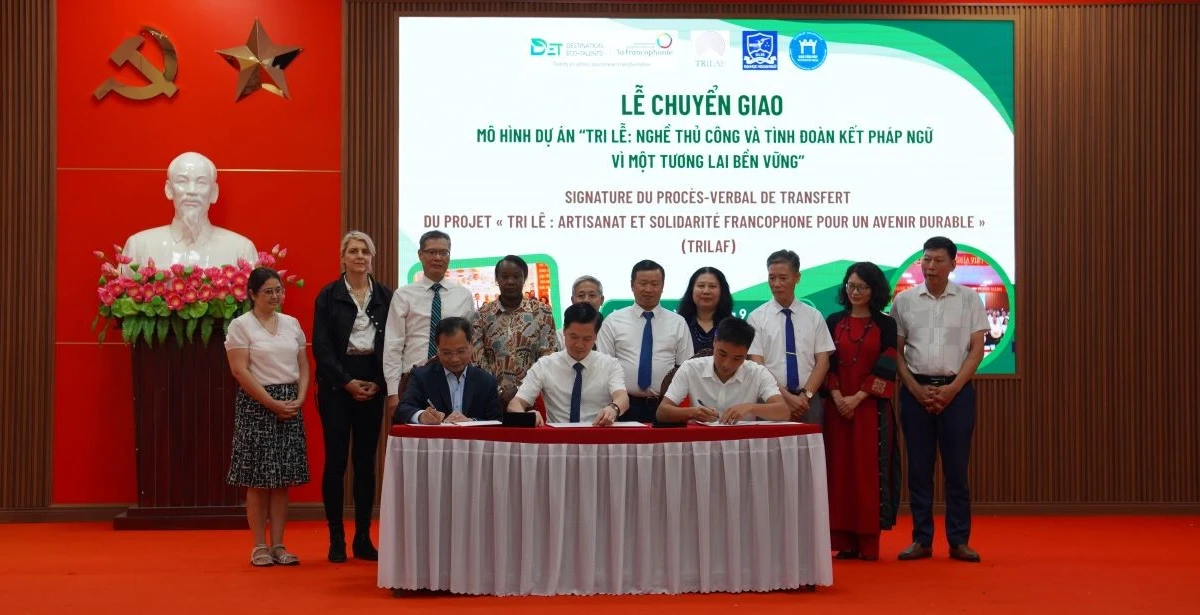
Tri Le Village, located on the outskirts of Vietnam's capital, Hanoi, is successfully reviving its traditional Non La (conical hat) manufacturing and establishing a sustainable community tourism model. The "TRILAF" project, supported by the International Organization of La Francophonie (OIF) and Hanoi University of Foreign Languages (part of Vietnam National University), has led to the revitalization of the local economy and the preservation of valuable cultural heritage. For a long time, Tri Le Village's Non La production has been a time-honored tradition. However, in the face of urbanization and globalization, the craft struggled to find a new direction to maintain and develop its heritage value. In this context, the "TRILAF" project, implemented from September 2025 to August 2026, brought together local residents, educational institutions, tourism businesses, and experts to promote traditional crafts and aim for a sustainable future. During the project, faculty and students from Hanoi University of Foreign Languages actively participated in over 500 activities, including translation, multilingual content creation, public relations, and experiential exchanges. As a result, a multilingual traditional museum was established, welcoming over 300 visitors. Community tourism products and experiential programs were also developed. More than 200 students participated in the project, and six tourist tours were piloted. Additionally, 21 digital content pieces were produced, and collaborations with five travel agencies were established. This initiative goes beyond merely restoring Non La production; it has redefined Tri Le Village's Non La craft as a resource for culture, education, and community tourism. Residents of Tri Le Village are beginning to recognize the importance of not only making hats but also telling the story behind them – the artisans' skills, the memories of their homeland, and the cultural identity nurtured over historical periods. The project promotes sustainable tourism development, creating opportunities for women and youth to actively participate in hosting tourists, promotion, local cuisine, and product development. Furthermore, efforts are underway to facilitate skill transfer and heritage education through interactions between artisans, students, and tourists, as well as to establish exhibition spaces showcasing the traditional hat-making culture. This project achieved success with the support of the "Ecotourism Destinations" initiative launched by the Francophone Institute for Sustainable Development. Moving forward, further development is anticipated, with a focus on promoting green tourism and developing local specialty products (OCOP) to attract both domestic and international tourists to Tri Le Village's traditional Non La industry.
Original source
Nhan Dan