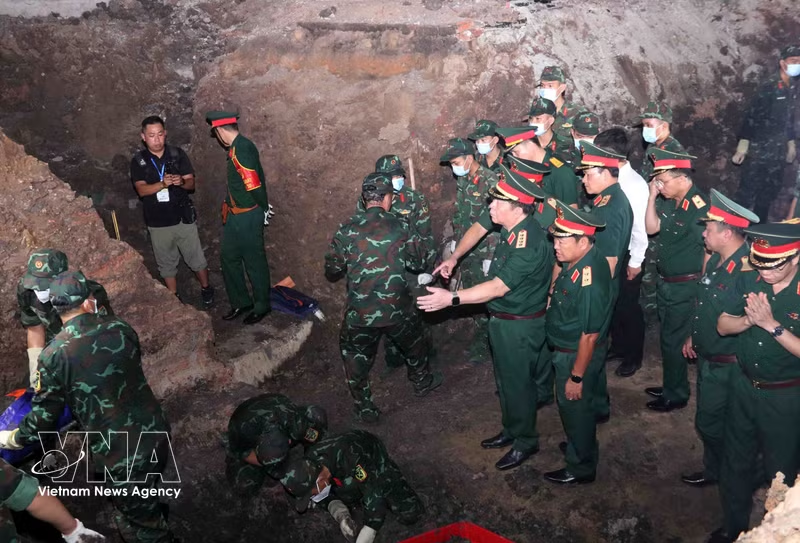
Vietnam Pushes Forward Martyrs' Remains Search as 'Sacred Mission'
Vietnam is advancing its campaign to search for and identify the remains of fallen soldiers, characterizing it as a "sacred mission." The 500-day initiative embodies the national tradition of remembering those who sacrificed and emphasizes efforts to implement Party policies and fulfill the aspirations of the people, especially the families of the deceased.
This article requires PRO
This article is outside the free access window or is a special report. PRO unlocks it and the full archive.
Related articles
- iPhone 18 Pro Sees First Price Cut in Vietnam Weeks After Launch
Retailers in Vietnam have begun offering price cuts on the iPhone 18 Pro less than three weeks after its launch, as supply for Apple's latest model stabilizes. These discounts are initiated by individual sellers rather than Apple.
- Vietnam National Assembly Focuses on Legal Framework and Economic Growth, Engages in Parliamentary Diplomacy
Vietnam's National Assembly is advancing legal reforms in oil and gas, amending technology and telecommunications laws, and boosting investment attraction. Concurrently, it emphasizes parliamentary diplomacy in international forums, signaling a commitment to global issue resolution.
- Taiwanese Firms Expand AI Investment in Southeast Asia, Vietnam's Role Eyed
Taiwanese companies, including TSMC, are increasing their AI-related investments in the US and Southeast Asia, sparking interest in potential spillover effects for Vietnam. For Vietnam, a rapidly growing economy, AI investments could represent a significant new growth opportunity.
- Vietnam's Traditional Woodblock Printing Faces Future Through Young Artisans and Digitalization
The traditional woodblock printing craft of Thanh Liễu in Hải Phòng, Vietnam, with a history of nearly 600 years, faces challenges to its survival. However, through the innovative efforts of young artisans and the utilization of digital platforms, the craft is finding new avenues for continuation.