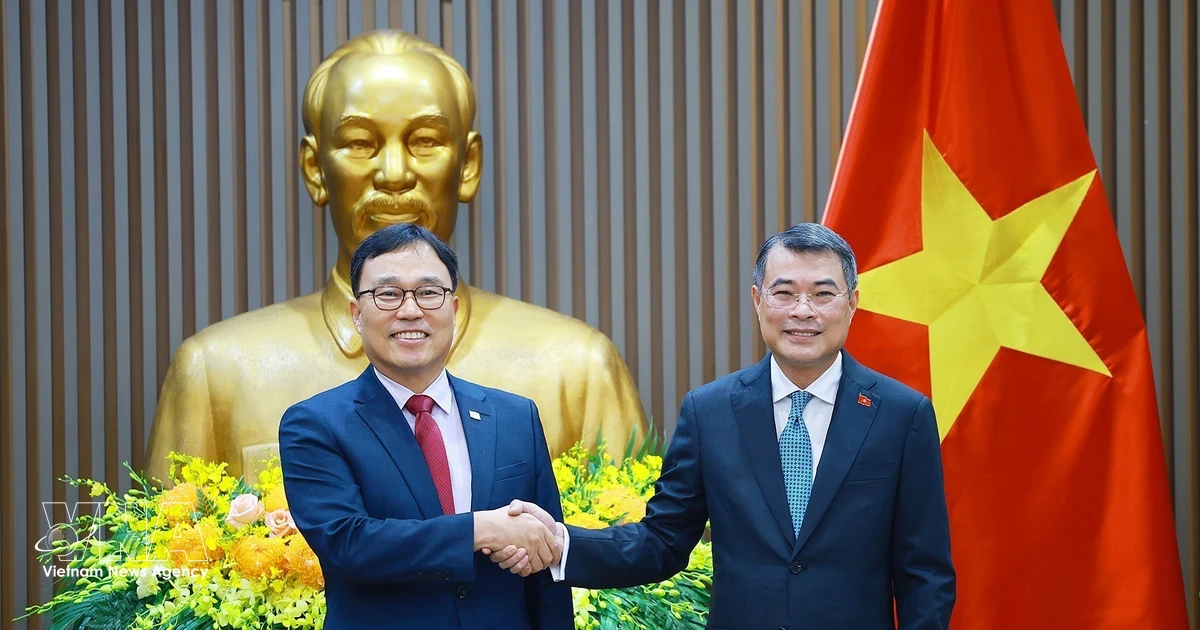
Vietnam–RoK Trade Target: PM Calls for Stronger Cooperation Towards $100 Billion
Economy
2026年6月29日
5
VietnamPlus English
Relations
🇻🇳Vietnam🇰🇷South Korea

Vietnam–RoK Trade Target: PM Calls for Stronger Cooperation Towards $100 Billion

AI サマリー

Vietnamese Prime Minister Le Minh Hung has urged enhanced cooperation with the Republic of Korea (RoK) to achieve a bilateral trade target of $100 billion. Key areas of focus include workforce training in semiconductors and AI, and expanding market access for Vietnamese agro-forestry-fishery products.

Prime Minister Le Minh Hung has called for stronger cooperation between Vietnam and the Republic of Korea (RoK) to further deepen their Comprehensive Strategic Partnership and achieve a bilateral trade target of US$100 billion. NA Chairman Tran Thanh Man credited outgoing Ambassador of the Republic of Korea to Vietnam Choi Young Sam with driving bilateral ties forward, pointing to expanded parliamentary and people-to-people exchanges that have added depth to the Vietnam-RoK Comprehensive Strategic Partnership. He also noted the RoK’s four-decade transformation into a developed economy fueled by sci-tech, innovation and digitalisation, expressing expectations for expanded cooperation to further accelerate Vietnam’s own innovation drive. In economic and financial cooperation, Deputy Minister of Finance Cao Anh Tuan praised Ambassador Choi’s contributions during his tenure. Furthermore, Vietnam urged Canada to open its market wider to Vietnamese goods, particularly agro-forestry-fishery products, while extending cooperation in training quality workforce in artificial intelligence, quantum technology, and semiconductors. Cooperation at the university level is also advancing, with Sung Eun-hyun, Vice President of Hoseo University (RoK), stating that the school is turning itself into a specialised semiconductors and AI training hub while seeking to expand cooperation with Vietnamese universities and colleges. Vietnam also reiterated its commitment to offering all possible support to foreign investors, including those from Australia, for long-term business development, signalling its intent to diversify economic relations and foster growth. In terms of diplomacy, a member of the Standing Board of the Vietnam–Cambodia Friendship Association Central Committee stressed the need to strengthen coordination among Party diplomacy, State diplomacy and people-to-people diplomacy. Diplomacy is increasingly expected to directly create new opportunities, conditions, and drivers for development, aiming to enhance national competitiveness, innovation capacity, international integration, and Vietnam’s position in global value chains. Moreover, Vietnam highlighted the significance of its representation at the International Tribunal for the Law of the Sea (ITLOS) for the 2026-2035 term, particularly given the complex situation in the East Sea, marked by overlapping maritime claims and disputes. Prime Minister Le Minh Hung reiterated the view that Vietnam must create a new breakthrough in its institutional framework and legislation, turning them into a growth driver. This reflects the policy priority of accelerating economic development within Vietnam's one-party system. Regarding relations with Japan, Deputy Prime Minister Le Tien Chau highly valued Special Advisor to the Japan-Vietnam Parliamentary Friendship Alliance Takebe's more than three decades of contributions to promoting Vietnam-Japan friendship and cooperation, particularly in people-to-people exchanges, local-level cooperation, education, and human resource development, with the Vietnam-Japan University (VJU) project standing out as a flagship initiative.

多角的分析

経済的影響

ベトナムは、韓国との貿易目標1000億ドル達成に向け、農林水産物や、AI・半導体分野での人材育成協力の拡大を求めている。これは、ベトナムが製造業中心から、より高付加価値の技術産業へと経済構造を転換させようとする戦略と合致する。韓国の先進技術やノウハウを取り込むことで、ベトナムの産業高度化と輸出競争力強化を目指す動きである。特に、半導体分野は世界的なサプライチェーン再編の中で、ベトナムが新たな拠点として浮上する可能性を秘めており、人材育成はその基盤となる。カナダへの市場開放要請も、輸出先の多角化と貿易黒字の拡大を狙ったもので、経済成長を維持するための積極的な外交戦略の一環と見られる。

投資家心理

ベトナムは、韓国をはじめとする外国投資家に対し、長期的なビジネス展開を支援する姿勢を明確にしている。これは、安定した投資環境を提供することで、直接投資(FDI)をさらに呼び込み、経済成長の原動力としたい意図の表れである。特に、半導体やAIといった先端技術分野への投資は、ベトナムの産業構造転換を加速させる上で重要視されている。投資家にとっては、ベトナム政府の支援策や、韓国との協力によって生まれる新たなビジネスチャンスが魅力となる可能性がある。一方で、制度的枠組みや法制度の「新たな飛躍」が、投資環境のさらなる改善にどう繋がるかが注目される。

社会的影響

ベトナム政府は、大学レベルでの韓国との協力拡大を通じて、半導体・AI分野における専門人材の育成を目指している。これは、将来の経済成長を支える人的資本の強化という社会的な課題に取り組むものである。また、外交活動が単なる関係拡大に留まらず、直接的な発展の機会創出を目指すという方針は、国民生活の向上や国際社会におけるベトナムの地位向上に繋がることを期待させている。東シナ海における国際法廷での代表権確保は、国家の主権と安全保障に関わる重要な問題であり、国民の関心も高い。ベトナム日本大学(VJU)のような教育分野での協力は、両国間の人的交流を深め、将来世代の国際感覚を育む上で貢献すると考えられる。

市民の声

ベトナム市民にとって、政府が掲げる貿易目標や産業高度化の取り組みは、将来的な雇用機会の増加や所得向上に繋がる可能性を秘めている。特に、AIや半導体といった先端技術分野での人材育成は、若年層にとって魅力的なキャリアパスとなるだろう。しかし、これらの目標達成には、教育制度の改革や、国民一人ひとりのスキルアップが不可欠となる。また、東シナ海情勢の安定は、国民の安全・安心な生活基盤を確保する上で重要であり、政府の外交努力が注視される。日本との教育分野での協力は、より質の高い教育機会の提供や、国際的な視野を持つ人材育成に貢献すると期待される。

背景・歴史的文脈

ベトナムと韓国は、1992年の国交樹 Normalization 以来、急速に関係を深化させてきた。特に2001年の包括的パートナーシップ、2009年の戦略的パートナーシップ、そして2022年の包括的戦略的パートナーシップへの格上げは、両国関係の発展段階を示している。韓国はベトナムにとって主要な投資国であり、ベトナムは韓国にとって東南アジアにおける重要な貿易相手国である。ベトナムの一党体制は、長期的な国家戦略の策定と実行を可能にし、韓国との経済・技術協力の推進を後押ししている。東シナ海を巡る国際情勢の複雑化は、ベトナムが外交的にバランスを取りながら、自国の利益を最大化しようとする姿勢を強めていることを示唆している。

原文ソース

VietnamPlus English

原文を読む