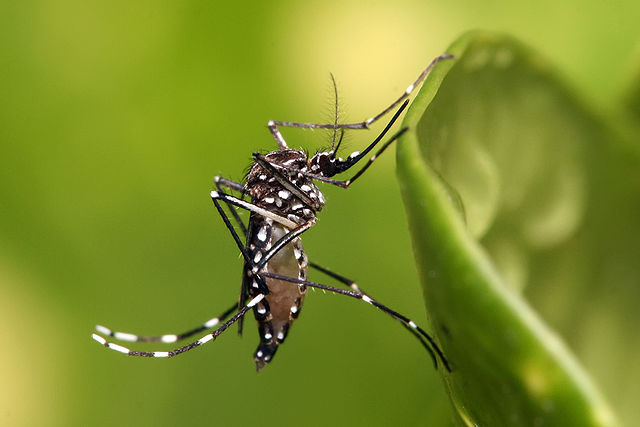
Deforestation's Toll: Indonesian Forest Mosquitoes May Shift to Humans
A study in Brazil reveals that deforestation can alter mosquito diets, potentially leading them to target humans. Similar concerns are rising in Indonesia, highlighting potential public health impacts.
The destruction of forests is not only causing large animals to lose their homes but is also changing the behavior of small insects like mosquitoes. A recent study from the Atlantic Forest in Brazil has revealed a worrying scientific phenomenon: wild mosquitoes are now beginning to target human blood as their primary food source. This phenomenon is triggered by the shrinking of natural habitats due to human activities. The Atlantic Forest is known as one of the world's biodiversity hotspots. However, due to human expansion and deforestation, only a third of its original area remains, in the form of isolated forest fragments. This loss of habitat triggers a domino effect: mammals, birds, and amphibians, which were usually the natural hosts, meaning the blood source for forest mosquitoes, are now becoming extinct or migrating. When their natural "food" disappears, these mosquitoes are forced to adapt to survive. The easiest and most abundant option around them is none other than humans. To prove this behavioral shift, a team of researchers from the Oswaldo Cruz Institute and the Federal University of Rio de Janeiro conducted an experiment in two nature reserves surrounded by human settlements. They set up light traps and collected 1,714 mosquitoes from 52 different species. Their main focus was on female mosquitoes with distended abdomens from feeding on blood. In the laboratory, scientists used sophisticated DNA analysis techniques to trace the origin of the blood in the mosquitoes' stomachs. The results were surprising! Out of the accurately identified samples, a large majority, 18 out of 24, contained human blood. The rest were only small mixtures of blood from dogs, rodents, birds, and amphibians. Even mosquitoes were detected carrying a mixture of amphibian and human blood, proving this shift in behavior. This phenomenon could pose new public health challenges in countries like Indonesia, which possess vast tropical rainforests. In areas experiencing increasing deforestation, there is concern that the increased contact between humans and wildlife will raise the risk of mosquito-borne diseases. The shift in mosquito diets is not merely an ecological change but holds the potential to directly impact human health and safety.
多角的分析
森林破壊による蚊の食性変化は、直接的な経済的損失をもたらすものではないが、間接的な経済的影響は大きい。蚊が媒介する感染症(デング熱、マラリア、ジカ熱など)の蔓延は、医療費の増大、労働生産性の低下、観光業への打撃につながる。特に、経済発展途上にあるインドネシアのような国では、これらの感染症対策に多大なリソースを割く必要が生じ、他の開発分野への投資を圧迫する可能性がある。また、感染症の流行は、国内外からの投資家や観光客の心理にも影響を与え、経済活動全体にブレーキをかけるリスクを孕む。
投資家にとって、蚊の食性変化は直接的な投資リスクとはなりにくいが、間接的な影響は無視できない。感染症の蔓延は、特定の地域や産業(観光、農業など)における事業継続性を脅かす可能性がある。例えば、観光地での感染症アウトブレイクは、旅行需要の急減を招き、関連企業の収益を直撃する。また、労働者の健康問題は、サプライチェーンの混乱や生産性の低下を引き起こし、製造業やサプライヤーにも影響を及ぼす。長期的な視点では、気候変動とそれに伴う生態系の変化が、投資環境全体に不確実性をもたらす要因の一つとして認識されるべきである。
森林破壊による蚊の食性変化は、地方コミュニティや都市近郊住民の生活に直接的な影響を与える。特に、森林に隣接する地域や、衛生インフラが不十分な地域では、蚊に刺される機会が増え、感染症のリスクが高まる。これは、子供たちの健康や学校への通学、住民の日常生活の質を低下させる。また、蚊の媒介する病気の蔓延は、医療システムへの負担を増大させ、特に貧困層や医療アクセスが限られる人々にとって、健康格差を拡大させる要因となりうる。住民は、日常生活における蚊よけ対策の強化や、感染症予防への意識向上が求められる。
ブラジルの研究結果は、インドネシアの市民にとっても他人事ではない。森林破壊が続くインドネシアでは、都市部でも蚊の活動が活発化し、デング熱などの感染症が慢性的な問題となっている。今回の研究は、その原因の一つが森林破壊による生態系の変化にある可能性を示唆しており、市民の健康への懸念を一層深める。特に、蚊の媒介する感染症は、子供や高齢者など抵抗力の弱い人々にとって深刻な脅威となるため、政府による森林保護政策の強化と、感染症対策の拡充が求められている。市民自身も、蚊の繁殖源をなくすための環境美化や、蚊よけ対策の徹底が重要となる。
背景・歴史的文脈
森林破壊と蚊の行動変化に関する研究は、地球規模での環境問題と公衆衛生の関連性を示唆している。ブラジルのアトランティック・フォレストは、過去数十年にわたり、農業開発、都市化、違法伐採などにより、その面積が大幅に減少してきた。この環境変化は、多くの野生生物の生息地を奪い、絶滅の危機に瀕させている。蚊のような昆虫も例外ではなく、本来の宿主が減少したことで、生存戦略として人間への依存度を高める可能性が指摘されてきた。この現象は、インドネシアにおいても、パーム油農園の拡大や木材産業などによる森林伐採が進む中で、同様の懸念が生じる土壌がある。
原文ソース
Mongabay Indonesia