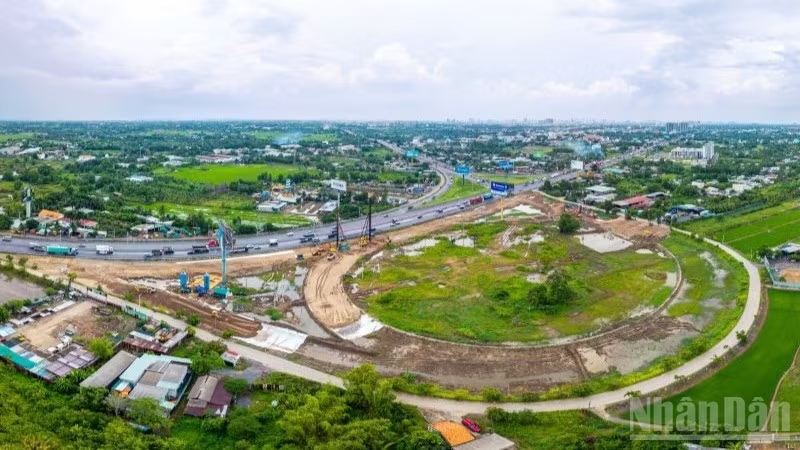
Vietnam Accelerates North-South Expressway Expansion and Improvement Plans
The Vietnamese government is accelerating plans to expand and upgrade its North-South Expressway network, prioritizing the eastern section with a target completion by the end of 2030. This initiative aims to enhance domestic logistics efficiency and foster economic growth.
This article requires PRO
This article is outside the free access window or is a special report. PRO unlocks it and the full archive.
Related articles
- Ho Chi Minh City: Large Dredging Rig Collapses, Causing Major Traffic Gridlock
A large drilling rig used for the Xuyen Tam canal renovation project collapsed in Ho Chi Minh City, blocking the major Bui Huu Nghia street. The incident caused a massive traffic jam during the evening rush hour, prompting authorities to cordon off the site for clearance.
- Vietnam and Panama Forge Ties as Gateways Between Southeast Asia and Latin America
Vietnamese Party General Secretary and President Lam welcomed Panamanian President Mulino's official visit, expressing optimism for renewed momentum in bilateral ties. The visit aims to revive exchanges and foster a more substantive and effective relationship.
- Vietnam Proposes Coastal Van Phong Airport to Boost Economic Zone
A proposal for Van Phong Airport in Vietnam's Khanh Hoa Province aims to enhance connectivity to the Van Phong Economic Zone. The project, utilizing coastal waters, is envisioned as Vietnam's first 'offshore' airport, expected to stimulate regional economic growth.
- Vietnam Secures 200 Driverless Metro Trains from Alstom, 117 to be Assembled Domestically
Vietnam's Vingroup has signed a landmark contract with French firm Alstom for 200 driverless metro trains for Hanoi. Crucially, 117 of these trains will be assembled in Vietnam, marking a significant technology transfer. This deal aims to bolster domestic rail autonomy and modernize the country's industrial ecosystem.