India-New Zealand Strengthen Ties with First PM Visit in 40 Years
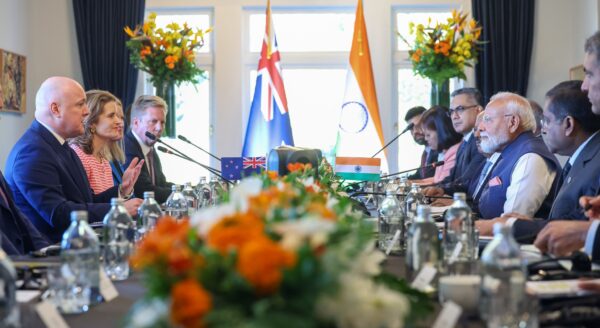
Indian Prime Minister Narendra Modi visited New Zealand for the first time in 40 years, meeting with Prime Minister Christopher Luxon. The two nations signed the "India-New Zealand Strategic Partnership: Roadmap to 2030," agreeing to deepen cooperation across economy, immigration, and security.
Indian Prime Minister Narendra Modi made an official visit to New Zealand from July 10-11, 2026. This marks the first visit by an Indian prime minister to the country in 40 years, since the tenure of Rajiv Gandhi. Modi's visit followed New Zealand Prime Minister Christopher Luxon's trip to India in March 2025, and the timely reciprocal visits by the leaders of both nations culminated in the signing of a strategic partnership agreement: the "India-New Zealand Strategic Partnership: Roadmap to 2030." During the visit, the two sides signed 10 agreements spanning a wide range of areas of mutual interest and cooperation. The visit is seen as an attempt to compensate for a shortfall in diplomatic footwork from the Indian side and to bridge economic and strategic gaps between the two countries. New Zealand's Ministry of Foreign Affairs and Trade considers India a strategic priority, and Modi received a warm welcome in Auckland. Economic interests are a key driver of this renewed engagement. The India-New Zealand Free Trade Agreement, signed in April 2026 and awaiting ratification, aims to increase bilateral trade from the current approximately US$2.4 billion to NZ$7 billion (about US$4 billion). New Zealand seeks better access to the Indian market for products like apples, kiwifruit, and Manuka honey, while India aims to protect its dairy sector. Furthermore, the agreement expands cooperation in agriculture, food technology, and skills mobility. Notably, it includes the Kiwifruit Action Plan and a pathway for 5,000 skilled Indian workers to work in New Zealand annually. While migration provisions have sparked domestic debate in New Zealand, the economic agenda is ambitious, with New Zealand pledging US$20 billion in investment in India over 15 years. The second rationale concerns diaspora engagement. New Zealand is home to an estimated 300,000 people of Indian origin, and engaging with the diaspora is a key element of the Modi government's foreign policy. The visit, occurring amidst rising domestic concerns in New Zealand over recent migration provisions, is also believed to aim at mitigating this situation. Third, it represents an advancement of India's "Act East Policy" and its integration into a broader Indo-Pacific strategy. While New Zealand is geographically part of the East Asia-Pacific region, its diplomatic and institutional integration has historically been weaker compared to other regional partners. Prime Minister Modi's visit is an effort to incorporate this key player, New Zealand, more meaningfully into India's Indo-Pacific strategy. Fourth, and arguably most significant, is the strategic rationale. Amid growing uncertainty about reliance on the United States, India is reorienting its Indo-Pacific approach to emphasize the agency of states directly affected by regional developments, even as U.S. centrality declines. Recent Chinese ballistic missile tests in the South Pacific underscore the security pressures facing the entire region, including New Zealand, highlighting the importance of strategic cooperation between India and New Zealand. Source: The Diplomat Indonesia
多角的分析
インド・ニュージーランド間の貿易額は現在比較的小規模だが、自由貿易協定(FTA)の批准により大幅な拡大が見込まれる。特にニュージーランドは、農産物(リンゴ、キウイ、マヌカハニー)のインド市場へのアクセス拡大を期待しており、これはニュージーランド経済の特定セクターに恩恵をもたらす。一方、インドは国内の小規模農家保護の観点から乳製品分野で慎重な姿勢を維持しており、FTA交渉におけるインドの国内産業保護策が、この協定の真の経済的影響を左右する可能性がある。さらに、ニュージーランドによるインドへの200億米ドルの投資約束は、インドのインフラ開発や製造業の成長を後押しする可能性があるが、その実行にはインド国内の投資環境や規制緩和の進展が鍵となる。
今回のモディ首相の訪問と戦略的パートナーシップの締結は、インド・ニュージーランド間の投資環境にプラスの影響を与えると期待される。特に、ニュージーランドからのインドへの200億米ドルの投資公約は、インドの成長分野(インフラ、製造業、再生可能エネルギーなど)への新たな資本流入を示唆しており、投資家にとって魅力的な機会となりうる。しかし、インドの複雑な規制、土地所有権に関する制約、そして一部セクターにおける保護主義的な政策は、投資実行におけるリスク要因として依然として存在する。ニュージーランドからの技能労働者受け入れ拡大は、両国間の人的資本の流動性を高め、新たなビジネス機会を生み出す可能性がある。
インド系住民約30万人が暮らすニュージーランドにおいて、モディ首相の訪問はディアスポラとの連携を強化する一方で、国内の移民政策に対する議論を再燃させる可能性がある。特に、技能労働者の受け入れ拡大は、ニュージーランド国内の労働市場や社会インフラへの影響について、国民の間で懸念を生じさせる可能性がある。これは、多文化主義を重視するニュージーランドの政治的・社会的な文脈において、デリケートな問題となりうる。また、両国間の文化交流やスポーツを通じた連携強化は、国民間の相互理解を深める機会を提供するだろう。
今回のモディ首相の訪問は、インド系住民にとっては自国のリーダーとの繋がりを再確認する機会となる一方、ニュージーランド国民、特に移民政策に関心を持つ層からは、国内への影響を懸念する声が上がる可能性がある。技能労働者受け入れの拡大は、一部の職種においては労働力不足の解消に繋がるかもしれないが、国内の労働者の雇用機会や賃金水準への影響を懸念する声も想定される。また、両国間の貿易拡大による物価への影響や、ニュージーランドからのインドへの投資が国内経済にどう還元されるかといった点も、一般市民の関心事となるだろう。
背景・歴史的文脈
インドとニュージーランドの関係は、地理的な距離や人口規模の違いから、これまで比較的限定的であった。しかし、インドの「東方政策」から「東方行動政策(Act East Policy)」への進化、そしてより広範なインド太平洋戦略への移行に伴い、インドは地域内の多様なパートナーとの関係強化を模索してきた。2025年3月のラクソン首相のインド訪問は、この関係強化の兆しであり、今回のモディ首相の訪問は、40年ぶりの要人往来という歴史的な節目となった。これは、インドが地域における影響力を拡大し、米国中心の秩序から多極化する世界秩序への適応を図る中で、ニュージーランドのような戦略的要衝との関係を深化させる必要性を認識していることを示している。
原文ソース
The Diplomat Indonesia