Biz groups: Swift execution key to reaching Sona targets
Politics
2026年7月29日
5
Inquirer Business

General articles are free for 24 hours after publish.

Biz groups: Swift execution key to reaching Sona targets

Share
AI Summary

Philippine business groups largely welcomed President Marcos' State of the Nation Address (Sona) agenda, emphasizing that 'swift and consistent execution' is crucial for success with less than two years left in his term.

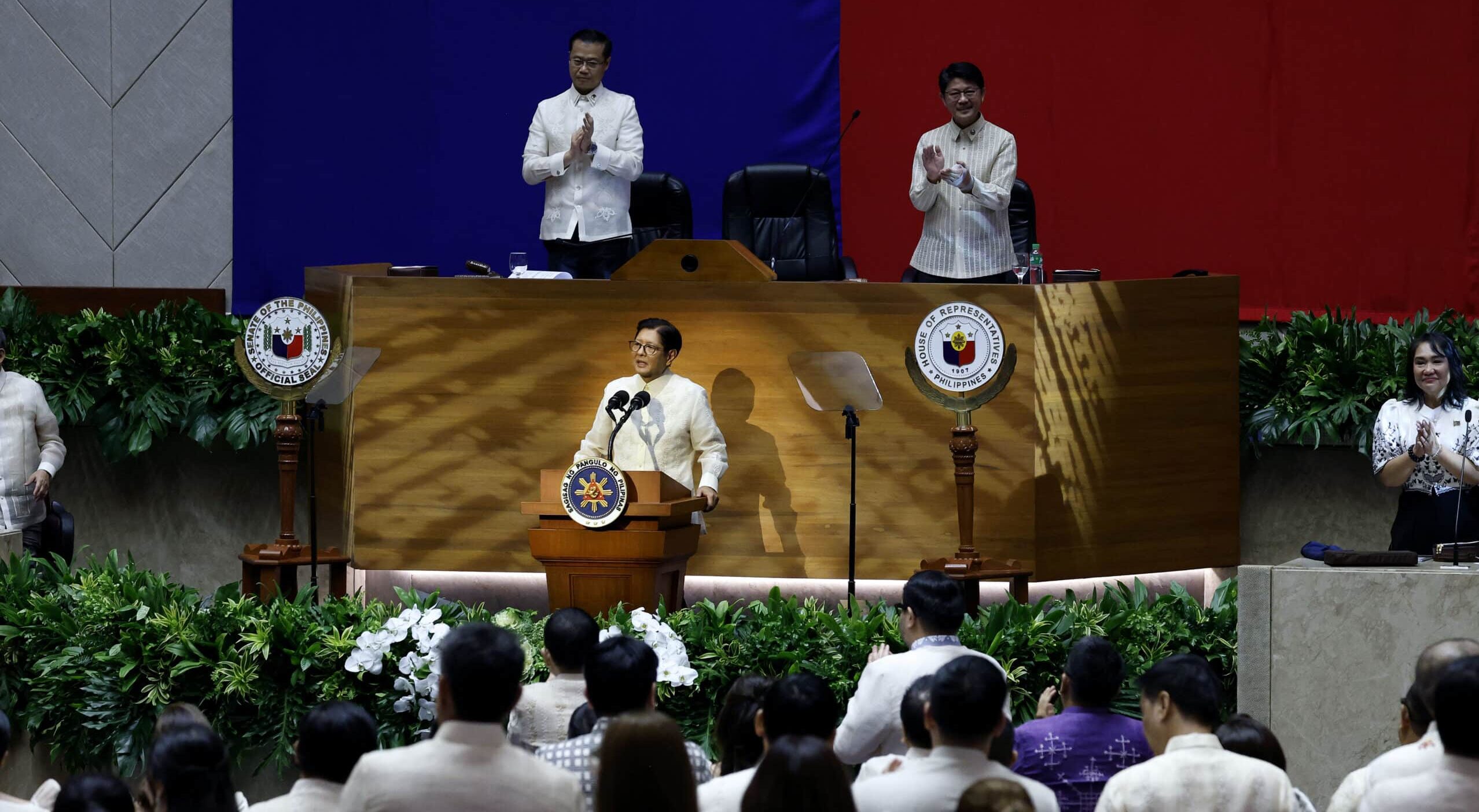
MANILA, Philippines — Major business groups in the Philippines largely welcomed the economic agenda laid out by President Marcos in his State of the Nation Address (Sona), emphasizing that "swift and consistent execution" of his promises is crucial, especially with less than two years remaining in his term. In separate statements on Monday, the groups acknowledged that the President had provided a clearer roadmap for his administration's economic priorities. However, they stressed the importance of implementation, with a focus on lowering operational costs, cutting red tape, and ensuring reforms translate directly to tangible benefits on the ground. "This Sona laid down benchmarks for accountability and competitiveness," said Elizabeth Lee, chair of the Federation of Philippine Industries, an umbrella group of the country’s leading manufacturers. "The priority now shifts to swift execution—lowering operational costs, cutting red tape, and ensuring reforms translate directly to the factory floor." Management Association of the Philippines (MAP) president Donald Lim echoed that view, calling on Congress to help translate Marcos’ agenda into tangible measures. "The challenge now is execution. Businesses are looking for clear implementation timelines, policy consistency, and close collaboration between government and the private sector." Among the President’s proposals that resonated with business groups were measures to lower the cost of doing business. As the Philippines still grapples with a national energy emergency, Marcos pushed for the removal of electricity system loss charges passed on to consumers. They also welcomed measures aimed at cushioning smaller businesses from rising costs, such as the proposal that small enterprises should no longer be required to pay the minimum corporate income tax, while urging Congress to exempt workers earning up to P350,000 a year. "The Sona leaned more toward immediate socioeconomic concerns, which reflects the realities many Filipinos face today," Lim noted. "We hope this is complemented by a stronger emphasis on long-term economic reforms." Beyond the economy, business groups also welcomed the President’s emphasis on fighting corruption. In the opening minutes of his Sona, Marcos vowed that even members of his own family and political allies would not be spared from his administration’s anti-corruption drive. Philippine Chamber of Commerce and Industry (PCCI) president Ferdinand Ferrer said it was unsurprising that the President chose to begin with what he described as the country’s “hottest topic,” referring to alleged corruption in flood control projects, an issue Mr. Marcos first raised in last year’s Sona. According to Ferrer, this showed that he recognized the “gravity of the situation.” For Lee, tackling corruption also goes beyond governance and is critical to the country’s economic agenda. "This anti-corruption drive rests entirely within the government’s power, and its success will be decisive in boosting investor confidence, improving national credit ratings, and restoring trust in public institutions." While business groups largely welcomed the President’s Sona, some said they had hoped for more details on how the administration plans to strengthen the country’s competitiveness. "[I] wanted to hear more on the economic agenda and how the Philippines could remain competitive and streamline business processes, especially within the Asean (Association of Southeast Asian Nations) who are also going after the same investments," Ferrer said. He also called for greater clarity on the administration’s plans for ease of doing business, regulatory certainty, food and energy resilience, education reforms, and collaboration with foreign partners. Lim, meanwhile, noted the absence of tourism in the President’s speech. Even with those concerns, the business groups still welcomed the direction he outlined for the remainder of his term. "This Sona gave the business community a clearer sense of where public investment and reform efforts are heading," said Florian Gottein, executive director of the European Chamber of Commerce of the Philippines (ECCP). "What will make the difference over the next two years is steady implementation, predictable rules, and continued consultation between the government and the private sector," ECCP president Diana Edralin added. Source: Inquirer Business

0

Original source

Inquirer Business

原文を読む