Vietnam Promotes Sustainable Development Through Rural Tourism Leveraging Cultural Heritage
Culture
2026年7月15日
5
Nhan Dan
Relations
🇻🇳Vietnam🇹🇭Thailand

Vietnam Promotes Sustainable Development Through Rural Tourism Leveraging Cultural Heritage

AI サマリー

Vietnam is fostering sustainable development and revitalizing local economies through rural tourism centered on the traditional weaving of the Thai ethnic group and Tay cultural spaces. Over 600 rural tourism models generate more than 25 trillion VND annually, contributing to the establishment of diverse livelihoods.

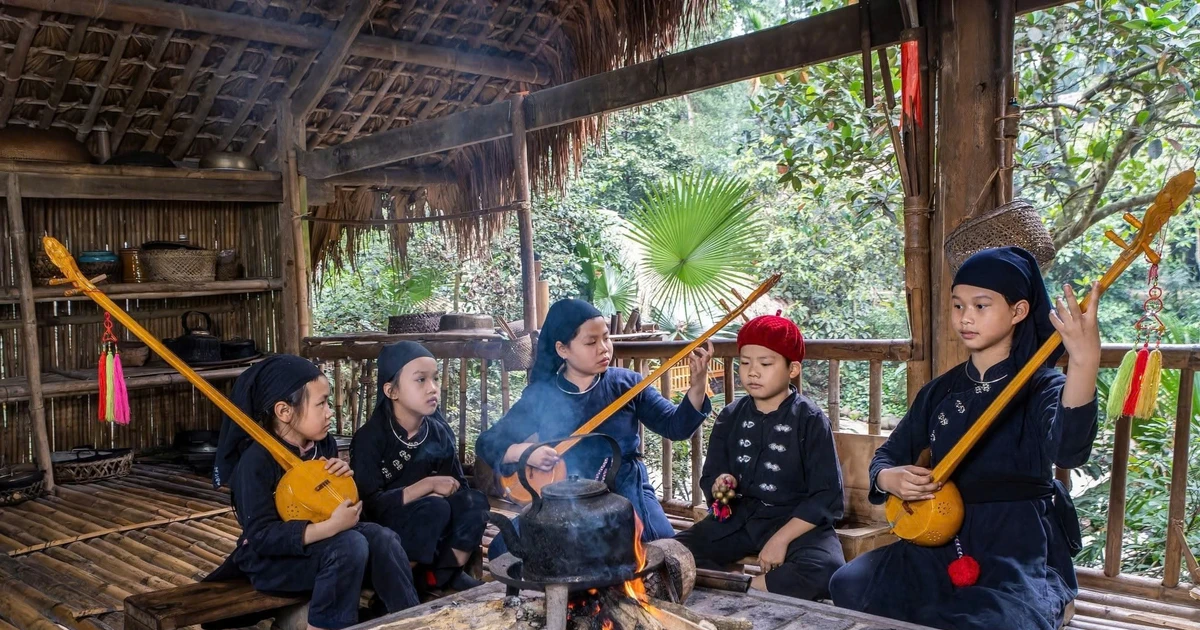
Rural tourism leveraging unique cultural heritage is becoming a new driving force for sustainable development across Vietnam. Notably, the traditional weaving industry of the Thai ethnic group in Chau Tien commune, Nghe An province, and the cultural space of the Tay ethnic group in Thai Hai village, Thai Nguyen province, are highlighted as successful examples. Currently, over 600 rural tourism models are operational nationwide, generating annual revenues exceeding 25 trillion VND (approximately $1 billion USD). This significantly contributes to diversifying livelihoods in many rural areas. In Chau Tien commune, Nghe An province, the traditional weaving of the Thai ethnic group forms the backbone of the local economy. Residents have developed new products such as bags, wallets, and souvenirs, and offer programs allowing tourists to participate in experiences like dyeing, silkworm rearing, and weaving. This initiative provides stable employment, especially for women, who earn an average monthly income of 3 million VND (approximately $130 USD). Currently, about 150 cooperative members and over 50 households are involved in mulberry cultivation, silkworm rearing, and weaving. According to Sam Thi Bich, Director of the Hoa Tien Brocade Weaving Craft Village Cooperative, the cooperative offers tourists brocade products and cultural stories of the Thai people, with local cultural values gaining wider recognition. The Chairman of the People's Committee of Chau Tien commune, Nguyen Tien Hung, stated that the locality's greatest advantage is its relatively intact natural forest area. Based on this, a project "Preserving the Cultural Values of the Thai Ethnic Group in Conjunction with Tourism Development" has been established. To develop community tourism sustainably, Chau Tien commune is focusing on investing in infrastructure, improving transportation, and training local human resources. Many young people are participating in tourism vocational training courses, gradually forming a local tourism workforce. In the future, the commune plans to develop experiential activities such as brocade weaving, forest exploration, living with locals, enjoying cuisine, and evening cultural programs to extend tourist stays and enhance their experiences. In Thai Hai village, Thai Nguyen province, community tourism is being developed by leveraging the traditional cultural space of the Tay ethnic group. Tourists can experience life in the village, stilt houses, cuisine, Then singing, Dan Tinh music, and other preserved local cultural aspects. Upon arriving at Thai Hai village, visitors are first invited to experience the ritual of 'hand washing at the village well,' a cultural practice symbolizing the washing away of daily worries to enter a peaceful village space. After this ritual, tourists can immerse themselves in the tranquil environment of traditional stilt houses, amidst the sounds of birds, the wind, and the slow pace of village life. According to Nguyen Thi Thanh Hai, Director of the Thai Hai Ecological Stilt House Village Conservation Area, what makes Thai Hai attractive is not just its landscape or ancient stilt houses, but its local cultural life. The people here live together, work together, and preserve the traditional customs of the Tay ethnic group. Regarding the tourism development orientation of Thai Nguyen province, Nguyen Chu Thu, Deputy Director of the Department of Culture, Sports, and Tourism, stated that with the goal of developing tourism into an important economic sector, Thai Nguyen has been concentrating resources and implementing comprehensive solutions. Thai Nguyen continues to promote investment attraction, especially for the development of resort-entertainment tourism in the Nui Coc Lake area and unique cultural resort tourism. According to Nguyen Xuan Dai, Chief of the Office of the Central Coordination Office for National Target Programs, in the upcoming phase, alongside building smart rural areas and developing the economy on the foundation of science, technology, and digital transformation, priority will be given to preserving and developing traditional craft villages and villages; developing OCOP products towards quality, uniqueness, multi-value, and environmental friendliness, linked to local potential and cultural values; and developing rural tourism, community tourism, eco-tourism, and agricultural experience tourism. According to the Ministry of Agriculture and Rural Development, in the period 2026-2030, coordination among ministries and sectors in building mechanisms and policies for OCOP products as well as rural tourism will be strengthened. Source: Nhan Dan

多角的分析

経済的影響

ベトナムの農村観光は、伝統文化と地域資源を組み合わせることで、新たな経済成長の柱となりつつあります。特に、タイ族の織物やタイ族の文化空間といったユニークなアセットは、付加価値の高い観光体験を提供し、地域経済の活性化に直結しています。25兆ドンという収益は、農村部における所得向上と雇用創ち、ひいては貧困削減にも貢献する可能性を秘めています。OCOP製品開発との連携も、地域経済の多角化を促進する重要な要素です。

投資家心理

ベトナムの農村観光セクターは、未開拓のポテンシャルを秘めており、特に文化遺産や体験型観光に関心を持つ投資家にとって魅力的な市場となり得ます。インフラ整備や人材育成への政府の投資は、投資環境の改善を示唆しています。ただし、地方部におけるインフラの未整備や、文化体験の質を維持・向上させるための継続的な支援体制の構築は、投資リスクとして考慮する必要があります。長期的な視点での持続可能なビジネスモデルの構築が求められます。

社会的影響

農村観光は、地域住民、特に女性に新たな雇用機会と収入源をもたらし、生活水準の向上に貢献しています。タイ族の織物組合では、月平均300万ドンの収入が報告されており、これは地方部における重要な所得増加です。また、タイ族の文化空間では、伝統文化の継承と地域住民との共生が図られています。しかし、観光客の増加に伴う文化や環境への影響、地域住民と観光事業者間の利益配分といった課題も生じうるため、持続可能なコミュニティ観光のあり方が問われています。

市民の声

タイハイ村の「村の井戸での手洗い」のようなユニークな文化体験は、都市部からの訪問者にとって日常からの解放感を提供し、地方の静けさと伝統文化への没入感を深めます。チャウティエン県では、伝統工芸品が観光客に評価されることで、地域住民の誇りやアイデンティティの再確認にも繋がるでしょう。しかし、観光客の増加による生活環境の変化や、伝統文化の商業化に対する懸念も、一部の住民の間で生じる可能性があります。

背景・歴史的文脈

ベトナムでは、1986年のドイモイ(刷新)政策以降、市場経済化が進み、農村部でも経済発展と貧困削減が重要な課題となった。近年、政府は伝統文化の保護と活用を重視し、持続可能な開発目標(SDGs)達成に向けた取り組みを強化している。特に、地方の経済格差是正と地域活性化のため、農村観光は有力な政策手段として位置づけられている。タイ族やタイ族といった少数民族の文化遺産は、ベトナムの多様な文化を象徴するものであり、これらを観光資源として活用することは、国民統合と文化的多様性の尊重という観点からも重要視されている。

原文ソース

Nhan Dan

原文を読む