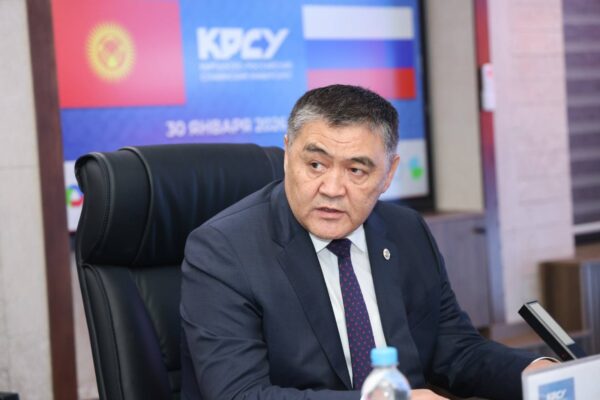
Kyrgyzstan: Tashiev Convicted in Coup Plot, Granted Probation Instead of Prison
Former Kyrgyz State Committee for National Security chief Kamchybek Tashiev has been convicted of plotting a coup but received a suspended sentence instead of prison time. This verdict, contrasted with the imprisonment or exile of Kyrgyz journalists and musicians for reporting on Tashiev's family's corruption, raises questions about the fairness of the justice system.
Kamchybek Tashiev, former head of Kyrgyzstan's State Committee for National Security, has been convicted of plotting a coup but received a suspended sentence instead of prison time. This verdict has sparked controversy, especially when contrasted with the imprisonment or exile of Kyrgyz journalists and musicians for reporting on Tashiev's family's corruption, raising serious questions about the fairness of Kyrgyzstan's justice and political system. The trial in Bishkek found Tashiev and several other former officials guilty of attempting a coup, under Article 326 of the Criminal Code, which pertains to "violent seizure or retention of power, as well as an attempt to violently change the constitutional order." Although initially sentenced to four years in prison, the judge replaced their jail terms with a three-year supervised probation, citing that the crime was not completed and considering the "personalities of the accused and their potential for rehabilitation without serving a prison sentence." The defendants who had been in custody were released, while Tashiev did not serve a single day in detention. The judge justified the change from jail time to probation by stating that it was not a completed crime but preparation for one. The court's statement further cited the "personalities of the accused and their potential for rehabilitation without serving a prison sentence" as reasons for probation. The trial, which began in mid-May, was initially closed to the public. It was reopened in mid-June at the defendants' request, but Tashiev reportedly shouted down a witness in front of the media, leading to the trial being reclassified thereafter. The "Letter of 75" matter relates to an appeal signed by 75 public figures urging Kyrgyz President Sadyr Japarov to call for an early presidential election. Notably, the letter framed Tashiev favorably, highlighting many of the Japarov administration's greatest successes, such as the final settlement of borders with Uzbekistan and Tajikistan, as initiatives spearheaded by the security chief. The mere suggestion that Tashiev would be an attractive presidential option is believed to have fractured the ruling tandem. He led the powerful State Committee for National Security, an organization with historical roots in the Soviet-era KGB, from May 2021 until his dismissal in February, just two days after the letter began circulating. Tashiev is not the first person accused of plotting a coup during the Japarov administration, though such charges are sometimes framed as "inciting mass unrest," as in the case of two Kloop cameramen sentenced to five-year prison terms in September 2025. That Tashiev—convicted of a coup plot—is spending his Fridays in the VIP section of a football stadium while Kyrgyz journalists and musicians sit in jail or exile for reporting on his family's corruption (reporting that the state effectively plagiarized to punish Tashiev, his family, and his wider network) says everything that needs to be said about the character of justice and politics in Kyrgyzstan. Kyrgyzstan has Central Asia's most tumultuous political record, with three revolutions in 35 years: 2005, 2010, and 2020. The 2020 revolution brought Japarov and his longtime ally Tashiev to power together, but that tandem is now broken. Japarov surely has his eyes on January 2027, when he will invariably seek re-election. The closing of the case against Tashiev is hardly the end of his existence as a political force. Source: The Diplomat Indonesia
多角的分析
タシエフ氏の判決は、キルギスの法制度の信頼性に対する懸念を生じさせ、外国からの投資家にとってリスク要因となり得る。法制度の予測可能性の低下は、直接的な投資意欲の減退につながる可能性がある。また、汚職報道が抑圧される環境は、経済の透明性を損ない、不正な経済活動を助長する懸念がある。
今回の判決は、キルギスにおける政治的リスクと法の支配の不確実性を示す事例として、投資家の間で懸念材料となる。特に、法制度が政治的影響を受けやすいという認識は、資本の流入を抑制する要因となりうる。タシエフ氏のような有力政治家の処遇が、その政治的影響力によって左右されると見られれば、長期的な投資判断において保守的な姿勢を取る投資家が増えるだろう。
タシエフ氏への執行猶予付き判決と、汚職報道で投獄されたジャーナリストやミュージシャンの状況との間には、深刻な社会的不平等が存在する。これは、一部の権力者には恩赦が与えられる一方で、真実を伝えようとする一般市民が不当な扱いを受けるという、社会の分断と不信感を深める。特に、表現の自由が制限される状況は、市民社会の健全な発展を阻害する。
キルギス市民、特にジャーナリストや活動家は、タシエフ氏のような権力者に対する司法の甘さと、自分たちへの厳しい処罰との乖離に不満を感じているだろう。彼らは、法の前の平等を期待しているが、現実は権力者には優しく、一般市民には厳しいという印象を抱いている可能性がある。これは、市民の政治への信頼を低下させ、社会的な不満を高める要因となる。
背景・歴史的文脈
キルギスは、2005年、2010年、2020年の3度の革命を経て、中央アジアで最も不安定な政治状況が続いている。2020年の革命で権力の座についたサディル・ジャパロフ大統領と、その長年の盟友であったカマチベク・タシエフ元国家安全保障委員長は、当初は強固な連携を見せていた。しかし、タシエフ氏が有力な政治的ライバルと見なされるようになり、ジャパロフ大統領が早期の権力固めを図る中で、両者の関係は冷却化した。今回のクーデター未遂事件とその後の執行猶予付き判決は、この政治的亀裂を象徴する出来事であり、ジャパロフ大統領の再選戦略の一環とも解釈できる。
原文ソース
The Diplomat Indonesia