General articles are free for 24 hours after publish.
Pakistan Assumes SCO Presidency Amidst Geopolitical Shifts
Pakistan has assumed the rotating presidency of the Shanghai Cooperation Organization (SCO), with expectations high for its role in enhancing regional connectivity, trade, and counter-terrorism efforts. The promotion of new transit routes via Iran and Central Asia is a particular focus.
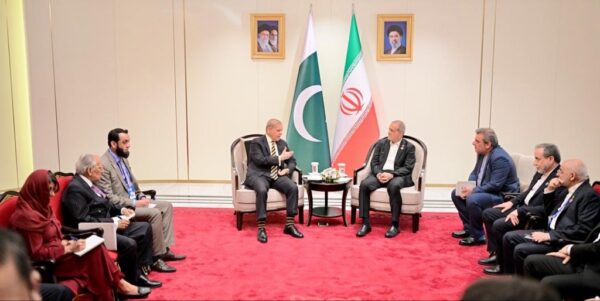
The annual summit of the Shanghai Cooperation Organization (SCO) held in Bishkek, Kyrgyzstan, from August 31 to September 1, 2026, brought together leaders from across Central Asia, as well as Chinese President Xi Jinping, Russian President Vladimir Putin, Indian Prime Minister Narendra Modi, Iranian President Masoud Pezeshkian, and Pakistani Prime Minister Shehbaz Sharif. This meeting took place amid significant geopolitical shifts in West Asia, marking the first major Eurasian multilateral gathering after the 2026 Israel-U.S. war on Iran and the subsequent Islamabad Memorandum ceasefire negotiations. Over more than 25 years, the SCO has evolved into a platform spanning Asia, the Middle East, and Eurasia. While member states often pursue divergent priorities, the grouping has delivered measurable benefits. For developing countries like this year's host Kyrgyzstan, the SCO has offered a practical framework for advancing transit connectivity, improving access to larger markets, particularly China, and coordinating regional security efforts. One example is the summit’s approval for the establishment of a permanent Bishkek Center, which is expected to begin operating with a practical role in coordinating law enforcement cooperation, facilitating the exchange of operational information, and conducting joint activities. For Kyrgyzstan, this represents the creation of a lasting SCO mechanism on its territory even after the end of its presidency. This year’s summit carried particular diplomatic weight for Iran. In the Bishkek Declaration, SCO leaders condemned military strikes on Iranian territory as violations of international law and the U.N. Charter that create serious risks to international peace and security. They also reaffirmed Iran’s right to develop and use nuclear technology for peaceful purposes without discrimination. While the declaration refrained from explicitly naming the attackers, securing consensus among member states was itself significant. This outcome arguably represents a continuation of the SCO’s main stance on the conflict. The moderate phrasing of the Bishkek Declaration on the war on Iran likely reflected strategic restraint by key players seeking to forge common ground. Pakistan reportedly sought to protect the stability of the Islamabad Memorandum ceasefire negotiations between Iran and the United States by avoiding explicitly naming the attackers. On the other hand, India likely aimed to protect its balanced posture toward Western partners by agreeing to a joint declaration that avoided singling out the U.S. and Israel. Similarly, Central Asian member states, which also maintain diplomatic relations with major powers, benefited from this moderated language. In this context, by focusing on core principles of sovereignty and non-aggression rather than naming specific actors, the SCO arguably demonstrated its capacity to build a functional consensus amid complex geopolitical fault lines. For Pakistan, this consensus arrives at a crucial time. The country has assumed the rotating chairmanship of the SCO Council of Heads of State for 2026–27. The presidency is the organization’s highest rotating leadership role, which lasts one year and culminates in the host country organizing the next Heads of State summit. This means Pakistan is going to steer the forum’s agenda at a time when its international profile has grown markedly. There are three main developments likely to shape the SCO under Pakistan’s presidency of the forum. First, Pakistan’s policymakers now likely view their role through the lens of a country that has already made a tangible impact in West Asia, particularly through its mediatory efforts between Iran and the United States in recent months. Moreover, they increasingly see Pakistan as a responsible player and key stakeholder in regional conflict resolution. This is a perspective that is likely to shape the SCO presidency under Pakistan and bring sharper focus to practical priorities such as regional connectivity, trade facilitation, energy cooperation, and counterterrorism-related issues. Pakistan has announced that it will host the 2027 SCO summit under the theme “Turning Vision into Action: Connectivity, Innovation and Shared Prosperity.” This suggests the country’s intention to leverage its chairmanship to prioritize shared development issues among member states. Second, Pakistan’s assumption of the presidency is going to elevate its role from coordinating economic or ministerial agendas to chairing the SCO’s primary strategic and security discussions. In this important position, Islamabad is unlikely to use the forum to confront or vilify India, as doing so would risk making the presidency appear divisive and could undermine the organization’s credibility at a delicate time. Instead, Pakistan is expected to prioritize developing consensus in an effort to ensure that bilateral tensions do not spill over into the SCO’s formal agenda or disrupt its proceedings. By keeping the focus on shared regional concerns rather than contentious bilateral issues, Islamabad would likely aim to protect the overall standing of the forum and avoid perceptions that the organization stalled or fractured under its leadership. That said, Pakistan is likely to use the opportunity to build consensus on issues such as river water sharing to ensure that water is not weaponized, as that would threaten regional stability. Third, Pakistan is likely to use its presidency to advance its connectivity-hub narrative. Islamabad has already repeatedly presented the China-Pakistan Economic Corridor (CPEC) as a flagship project aligned with SCO goals. Under Pakistan’s chairmanship, it can be expected to expand this framing by highlighting new routes via Iran and Central Asia that link the Belt and Road Initiative (BRI) to the Arabian Sea. This can allow Pakistan to showcase tangible regional benefits of SCO cooperation while reinforcing its strategic position as a key transit and logistics hub ahead of the 2027 summit in Islamabad. A key challenge for Pakistan’s incoming presidency will be fostering institutional alignment on major regional transport routes like CPEC. India has repeatedly expressed its reservations, even opposition, to the corridor’s path through Pakistan-administered Kashmir, which may complicate Islamabad’s efforts in the coming year to reach unanimous agreement within the forum. Moreover, persistent instability in Afghanistan and heightened Afghanistan-Pakistan border tensions could pose significant challenges to Islamabad’s chair agenda.
Original source
The Diplomat Indonesia