General articles are free for 24 hours after publish.
Ready-built factories gain from new manufacturing FDI wave
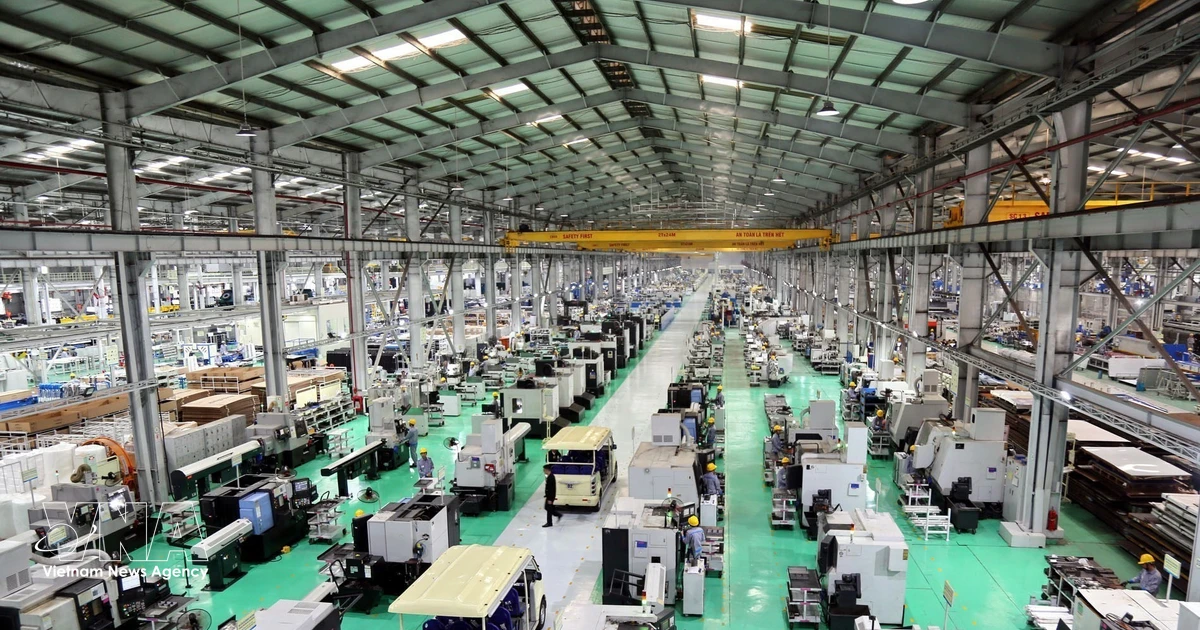
FDI continues to pour into Vietnam's manufacturing sector, with northern regions benefiting from well-developed industrial ecosystems for electronics and semiconductors. Ho Chi Minh City is shifting towards smart and eco-industrial park models to foster high-value chains.
Foreign direct investment (FDI) continues to pour into Vietnam's manufacturing, logistics, technology, and digital infrastructure sectors, reshaping property requirements for investors. Experts at Savills note that investment in electronics and semiconductors is particularly concentrated in northern localities, which have developed relatively complete manufacturing ecosystems, including industrial infrastructure, technical labor, and supplier networks. These northern regions have established manufacturing ecosystems that make them attractive locations for new investors. Meanwhile, Ho Chi Minh City is restructuring its industrial space towards smart and eco-industrial park models, prioritizing the development of high-value chains. This shift in FDI trends reflects the structural changes in Vietnam's economy. Under its one-party system, the Vietnamese government prioritizes economic growth and actively seeks foreign investment, aiming to enhance the manufacturing supply chain. Vietnam's position as a production relocation destination from China is expected to be further strengthened, partly due to geopolitical factors. The Vietnamese economy is also influenced by exchange rate fluctuations. The State Bank of Vietnam (SBV) set the exchange rate at 25,607 VND/USD on September 14, a measure to stabilize the domestic economy and respond to international financial market trends. Furthermore, Vietnam is seeking new funding sources to achieve its sustainable development goals. Diversifying funding from domestic and international capital markets is crucial, moving away from reliance on the state budget and conventional bank lending. The Vietnam-EFTA Free Trade Agreement, which brings together economies with complementary strengths, is expected to foster cooperation in areas such as technology, innovation, finance, and clean energy, facilitating Vietnamese businesses' deeper engagement in global markets. In the tourism sector, a survey by Hoteljob.vn found that nearly 90% of tourism businesses plan to recruit by 2026. Many companies, especially in Ho Chi Minh City, face labor shortages, particularly for frontline positions in housekeeping, engineering, food service, front office, and kitchens. This indicates a mismatch between increasing service demand due to economic growth and labor supply. In the automotive market, VinFast continues to maintain its leadership, with monthly deliveries exceeding 20,000 units for two consecutive months. This highlights the strong appeal of electric vehicles and the success of VinFast's market strategy. Source: VietnamPlus English
Original source
VietnamPlus English