General articles are free for 24 hours after publish.
Philippines: Village, Youth Elections Postponement Raises Concerns Over Democratic Participation
Further delays to the Philippines' village and youth council elections could dampen voter and candidate participation, entrench incumbent officials, and waste billions of pesos already spent on preparations, analysts warn. Concerns are also raised about undermining opportunities for local governance.
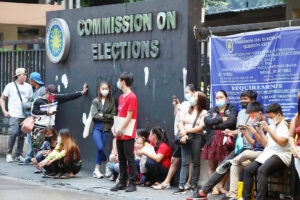
By Kaela Patricia B. Gabriel FURTHER DELAYS in the village and youth council elections could weaken voter and candidate participation, entrench incumbent officials and put at risk billions of pesos already spent on preparations, political analysts said. Hansley A. Juliano, a political science instructor at the Ateneo de Manila University, said postponing the Barangay and Sangguniang Kabataan Elections (BSKE) reflects a disregard for elections as regular democratic cycles and weakens the role of village and youth councils as avenues for local governance. “Over the past two decades, we have experienced multiple attempts at cancellations and delays of the BSKEs,” Mr. Juliano said in a Facebook Messenger chat. “In principle, these delays belie fundamental disrespect for the value of the BSKE as regular cycles, with multiple instances of the delays being justified along logistical or ‘national security’ concerns — as if the BSKEs do not represent valid spaces for governance delivery.” Eric Daniel C. de Torres, a University of the East political science professor, said regular elections are essential because villages are the country’s most basic political unit and the community’s first line of service delivery. “This is very important because of the deprivation on the part of the people to vote,” he said via Messenger. “The barangays and their officials are very important because they are the first line of service delivery in the community. They are considered to be the basic political unit in our country.” Mr. de Torres said a delay could benefit communities with high-performing local officials but it could be detrimental to villages whose officials have performed poorly. Mr. Juliano said postponement could deprive voters of the opportunity to choose their local leaders. He also noted that thousands of village candidates run unopposed, indicating weak electoral competition. “This is likely part of the reason why elections are being proposed to be delayed — either to further entrench incumbents and lengthen their stay in power, or to further discourage potential opposition since longer stays mean longer means to accumulate electoral resources and influence,” he said. The House of Representatives earlier approved on third and final reading House Bill No. 10971, while the Senate approved Senate Bill No. 2387 on second reading. Both measures seek to extend the terms of village and youth council officials to five years and postpone the Nov. 2 elections to the first Monday of November 2028. Commission on Elections Chairman George Erwin M. Garcia said at a forum in August that P8 billion had been spent in preparation for the elections. Mr. de Torres said the use of public funds should be considered in deciding whether to postpone the elections, given the competing needs of other government programs and social services. He added that the budget implications of the postponement had not received enough attention during congressional committee hearings. Mr. Juliano said the P8 billion already spent on the elections represents a substantial amount of public funds that could be wasted, particularly given the billions of pesos lost to anomalous flood control projects. “These are still countless amounts of public money that would be sent down the drain in the name of institutional inertia,” he said. Senate President Pro Tempore Vicente C. Sotto III opposed a reported request by Sangguniang Kabataan officials for additional funding during the budget hearing of the Department of the Interior and Local Government. He also said village and youth council officials could become “bolder” because of their extended stay in office until 2028. Senators Emmanuel Joel J. Villanueva, Ana Theresia N. Hontiveros-Baraquel, Paolo Benigno A. Aquino IV and Francis Pancratius N. Pangilinan also opposed the measure. The last village and youth council elections were held in November 2023. “The cycle needs to occur again, let whichever level of competition happen, and only then subject the new set of officers to the shift in new barangay terms,” Mr. Juliano said. “Breaking up de facto dynasties and noncompetitive races is ultimately the point of institutional reform, and elections happening are more part of that than not.”
Original source
BusinessWorld Nation