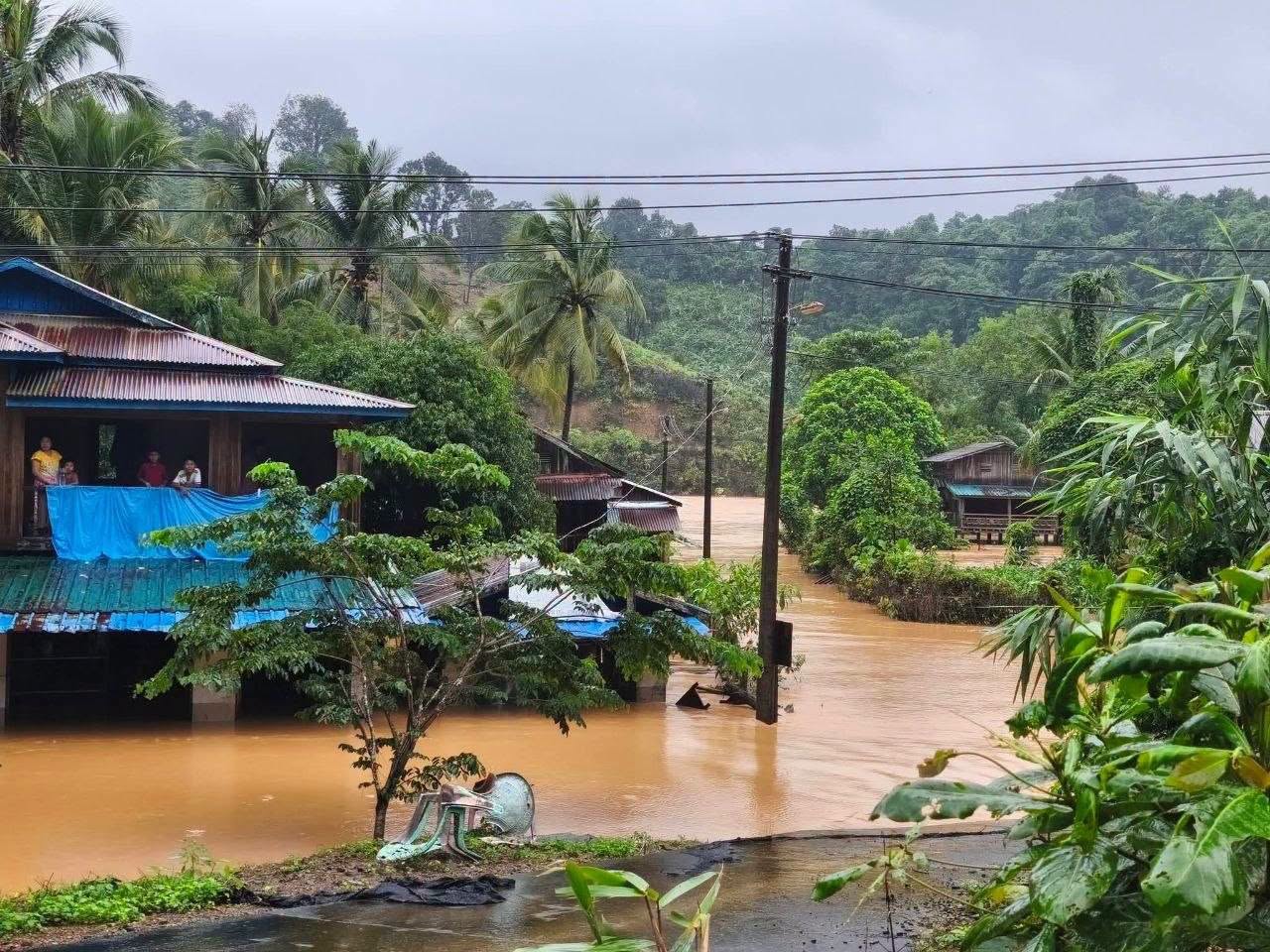
Rakhine State grapples with aftermath of severe floods amid relentless airstrikes
Nearly 100,000 displaced residents across Arakan State began returning to their homes on Monday as floodwaters slowly receded. However, the humanitarian crisis remains severe, compounded by continuous military bombardmen
Nearly 100,000 displaced residents across Arakan State began returning to their homes on Monday as floodwaters slowly receded. However, the humanitarian crisis remains severe, compounded by continuous military bombardments in the state’s southern Gwa Township. According to residents and local relief workers, at least five people were killed by the severe flooding triggered by heavy rainfall that began on July 6. Widespread flood damage and health risks While water levels have dropped in heavily impacted townships—including Mrauk-U, Minbya, Ponnagyun, Kyauktaw, Rathedaung, Maungdaw, and Buthidaung—the destruction left behind is extensive. Local aid organizations are urgently calling for food, clean water, medicine, and mosquito nets. Relief workers warn that the lack of clean drinking water has drastically increased the risk of waterborne and mosquito-borne diseases in the flood-affected communities. The disaster aligns with a July 9 warning from the Global Flood Awareness System (GloFAS), which cautioned that the torrential rains would trigger the worst flooding Arakan has seen in twenty years. A dual crisis in Gwa Township While floodwaters have receded in the north, Gwa residents are facing a dual crisis of persistent flooding and intense military bombardment. On Monday, July 13, the Myanmar Air Force conducted six bombing runs over areas near three villages in Gwa, dropping more than 50 bombs. While no casualties from this specific barrage have been reported yet, an unknown number of homes were destroyed. “Even when people were already suffering from floods, they did not stop attacking Gwa,” a resident told DVB on the condition of anonymity. The recent bombings follow a deadly week of escalation in the township: A strategic flashpoint Gwa has become a major military flashpoint following recent territorial gains by the Arakan Army (AA). The armed ethnic group seized control of Gwa in late 2024. Tensions in the immediate region escalated further on July 7, when the AA announced it had captured two regime outposts in neighboring Ayeyarwady Region’s Yegyi Township, located just 40 miles east of Gwa. As regime forces lose ground to the AA, it has increasingly relied on its air force and naval artillery to bombard civilian and resistance-held areas, creating a dire situation for residents already struggling to survive the region’s extreme weather.
多角的分析
アラカン州全域で約10万人の避難住民が月曜日に自宅に戻り始めた。 これは、洪水がゆっくりと後退したためである。この動きは直接の経済指標ではなくても、行政運営、地域の信頼、公共サービスの質を通じて企業活動や生活コストに波及する可能性があります。
投資家にとっては、個別ニュースの背後にある制度の安定性、情報公開、地域社会の反応が判断材料になります。短期の見出しだけでなく、継続的な変化を見る必要があります。
アラカン州全域で約10万人の避難住民が月曜日に自宅に戻り始めた。 これは、洪水がゆっくりと後退したためであるという事実は、ラカイン州の住民にとって制度の発表ではなく、日々の判断材料になります。住民がどこまで説明し、洪水を抱える人に情報が届くかが社会的な焦点です。
市民にとっては、このニュースが安全、雇用、教育、行政サービスなど身近な領域にどうつながるかが焦点です。生活者目線で具体的な影響を追う価値があります。
背景・歴史的文脈
DVBが伝えたこのニュースは、ミャンマーの行政運営や地域社会の変化を読むための小さなシグナルです。個別の発表や事件でも、制度、生活、対外関係のどこに影響するかを分けて見ることで、ニュースの意味が見えやすくなります。
原文ソース
DVB