General articles are free for 24 hours after publish.
Senate impeachment court sets Sept. 23 for oral arguments on voting threshold
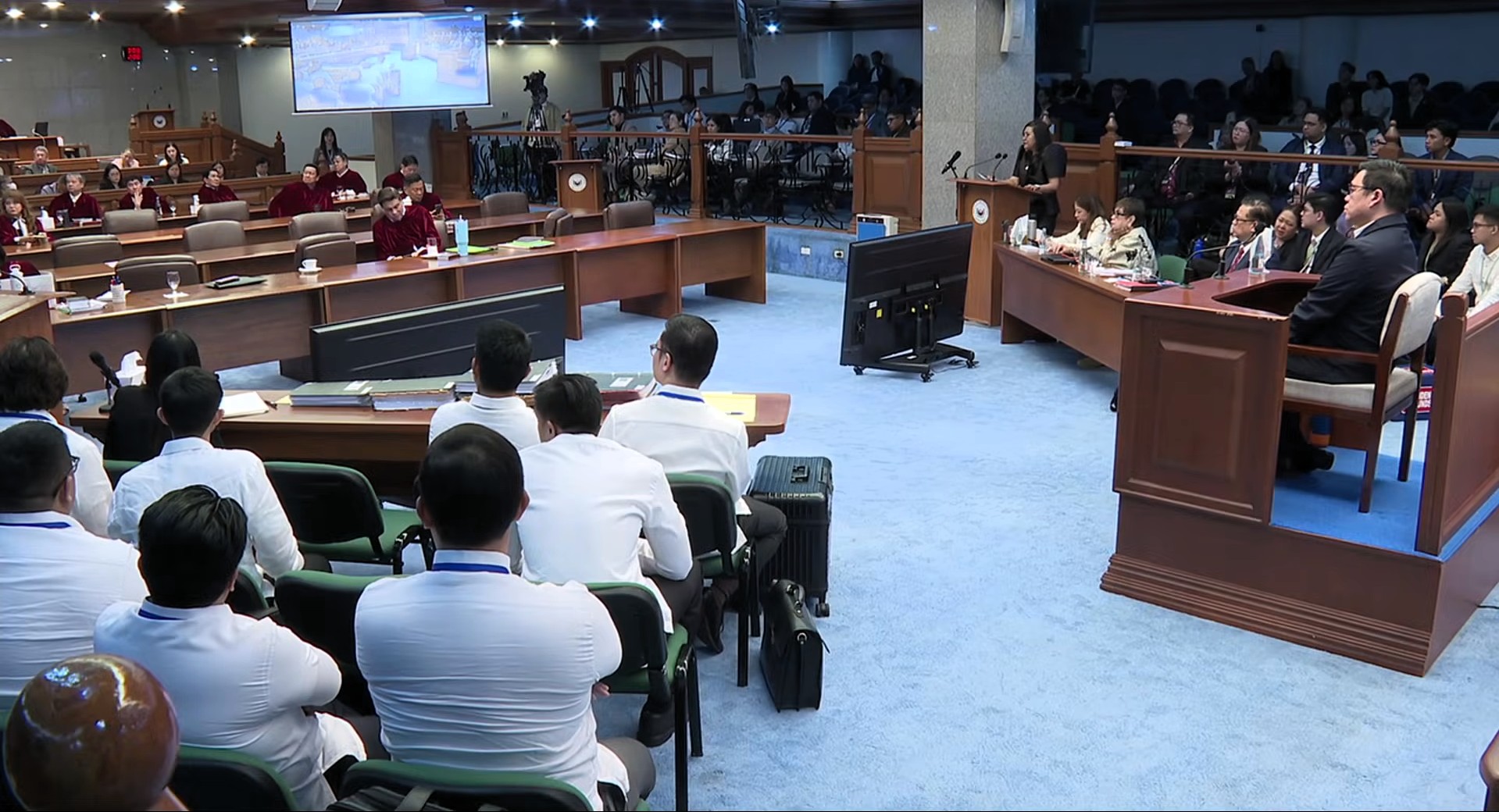
The Philippine Senate impeachment court announced it will hold oral arguments on September 23 regarding the voting threshold required to convict the Vice President. With several senator-judges absent, the interpretation of the constitutional "two-thirds of all Members" is at issue.
The Philippine Senate impeachment court has announced that it will hold oral arguments on September 23 regarding the voting threshold required to convict the Vice President in her impeachment trial. This comes after Senator-Judge Erwin Tulfo raised concerns about the interpretation of the constitutional "two-thirds of all Members" given the absence of several senator-judges. Tulfo highlighted that four senator-judges are currently unable to attend the trial: one is on medical leave abroad with an unknown return date, another is in hiding, and two are in the custody of the Sandiganbayan or the Bureau of Jail Management. He questioned which senators' votes would be valid if the final vote were to occur in the coming months. "The present reality, however, is that some of our members are beyond the coercive power or jurisdiction of the Senate. One is on medical leave abroad where the date of her return is still unknown. The other is in hiding. Two are under the custody of the Sandiganbayan or the Bureau of Jail Management," Tulfo said. "My question, Mr. Presiding Officer, is this, considering the changing calendar and expedited proceedings, if we were to cast our votes two or three months from now, or next month, or even tomorrow, who among our members can validly cast their votes in the final question?" Currently, Senators Jinggoy Estrada and Rodante Marcoleta are detained over separate plunder charges, while Senator Ronald “Bato” dela Rosa is in hiding amid an arrest warrant from the International Criminal Court. Senator Loren Legarda, meanwhile, has not been attending the trial for weeks now due to health concerns and is currently abroad. Presiding Officer Senator Francis Escudero stated that the court will first hear from amici curiae (friends of the court) on September 16 to weigh in on the voting threshold. The oral arguments between the defense and prosecution will follow a week later or on September 23, with each side given 15 minutes to present its position. Senator-judges are also scheduled to vote on the matter on the same day. The core of the debate lies in the interpretation of Article 11, Section 3, Paragraph 6 of the Constitution, which states: "The Senate shall have the sole power to try and decide all cases of impeachment. When sitting for that purpose, the Senators shall be on oath or affirmation. When the President of the Philippines is on trial, the Chief Justice of the Supreme Court shall preside, but shall not vote. No person shall be convicted without the concurrence of two-thirds of all the Members of the Senate." Tulfo answered in the affirmative when asked if he was seeking clarification on the phrase "all members." When the impeachment trial began on July 6, Escudero ruled that 16 affirmative votes of senator-judges are required to convict Duterte in her trial. Citing the 1987 Constitution, Escudero said that with the Senate composed of 24 members, a literal interpretation means conviction requires at least 16 affirmative votes. Tulfo also said that it must be clarified whether the senators who are detained will be allowed to vote or if their votes will be accepted by the court even though they are not attending the trial. Tulfo cited the Avelino v. Cuenco case, which he said, "considers only those members within the coercive jurisdiction of the Senate for purposes of determining the base and existence of a quorum." However, Senator Pia Cayetano countered Tulfo for citing the case in the context of the voting threshold. "That is not accurate, Your Honor. These 12 members of the Senate chose to use Avelino [vs] Cuenco for their own purposes to declare that there was a quorum. This body did not agree to that. The now-minority does not agree to that," Cayetano said. "There are many ways to interpret Supreme Court decisions, but let's not make it appear that it is jurisprudence or it is the rule in the Senate," she added. In the case of Avelino v. Cuenco, the Supreme Court (SC) found that an absolute majority of 12 out of 23 members could constitute a constitutional majority for quorum purposes. This ruling was used as a basis when Senator Sherwin Gatchalian was elected Senate President Pro Tempore and acting Senate President in June. Senator Robin Padilla called on his colleagues to uphold the Constitution amidst discussions on the voting threshold. "Ako po ay hindi nagmamagaling dito. Ako po ay ex-convict. Isa lang po ang gusto kong malaman ninyong lahat---hindi po ganyan kataas ang pinag-aralan ko. Pero ipaglalaban ko ang Konstitusyon na ito hanggang sa dulo ng aking buhay," he said. (I am not trying to act superior here. I am an ex-convict. There is only one thing I want you all to know---I am not highly educated. But I will fight for this Constitution until the very end of my life.) — RSJ, GMA News
Original source
GMA News Philippines