General articles are free for 24 hours after publish.
Vietnam Shifts Towards Sustainable Agriculture: Low-Emission Farming Models Gain Traction
Vietnam's agricultural sector is pursuing sustainable growth through the adoption of low-emission farming models. These models have demonstrated significant effectiveness and are widely supported by farmers, with future plans to promote the overall "greening" of agriculture through process standardization and investment facilitation.
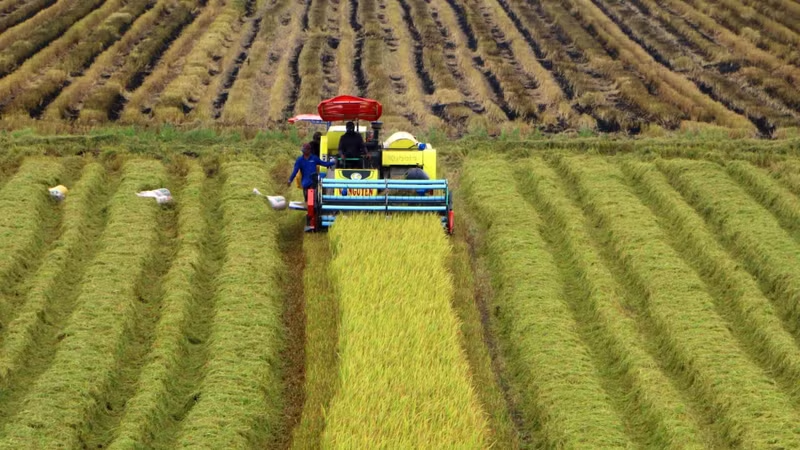
In Vietnam's agricultural sector, low-emission farming models are gaining widespread support from farmers due to their outstanding effectiveness. These models, particularly in rice cultivation, offer opportunities for sustainable restructuring that balances quality improvement with emission reduction. The cultivation industry is currently focusing on standardizing processes, addressing challenges, and unlocking investment resources, building upon past achievements. The aim is to gradually "green" the entire agricultural sector. This shift is a significant step for Vietnam, contributing to international environmental goals while enhancing domestic agricultural competitiveness and climate change adaptation capabilities. Low-emission cultivation reduces the use of chemical fertilizers and pesticides, and promotes efficient water resource utilization, thereby contributing to environmental load reduction. Furthermore, the production of high-quality agricultural products has the potential to increase farmers' incomes. The Vietnamese government has positioned this transition to sustainable agriculture as part of its national strategy, supporting its proliferation through investment in research and development, technical guidance for farmers, and the provision of incentives. In the future, this is expected to lead to an enhanced brand value for Vietnamese agricultural products in the international market.
Original source
Nhan Dan