General articles are free for 24 hours after publish.
US Pacific Islands Policy Blind Spot: China's Infrastructure Investments and Local Realities
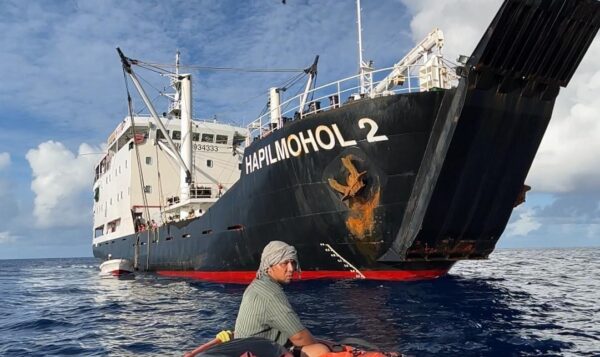
Amidst debates on US Pacific Islands policy, the author highlights the gap between local community needs and US policymaking through a personal experience on a China-donated transport ship. The article suggests that US engagement is not achieving desired outcomes, particularly as China advances infrastructure development in the region.
Amidst an active debate surrounding U.S. policy in the Pacific Islands, with some asserting a U.S. absence in the region, the author presents a firsthand account highlighting a significant disconnect between local community realities and U.S. policymaking. In May 2025, the author embarked on a journey aboard a China-donated cargo ship to Woleai Atoll in the Federated States of Micronesia (FSM). This multi-day trip, serving as the sole regular transport along the Yap island chain, involved sleeping and eating on deck alongside hundreds of Micronesian residents. The author's motivation stemmed from the U.S. Department of Defense's announcement of approximately $2 billion in infrastructure investments on Yap main island, coupled with reports of Chinese activity in Woleai. Despite assurances from U.S. government officials that all was well, the author, aware of U.S. government operations in other Pacific regions, harbored doubts and decided to investigate. Upon arriving in Woleai, the FSM President visited the island for the groundbreaking ceremony of a runway reconstruction project, undertaken by a Chinese state-owned company. This project, located just over 640 kilometers from Guam, appeared to catch many U.S. government stakeholders by surprise. Following this development, the commander of U.S. Pacific Command (PACOM) informed the FSM President of PACOM's intention to assess alternative locations in the region due to a breakdown in negotiations. This situation suggests that, despite the Trump administration's efforts to enhance engagement with Pacific Islands, desired outcomes may not be materializing. The author points to the underutilization of local community insights, such as those from the non-profit organization Habele, which provides books and scholarships to local children, and long-term regional experts like missionaries. Habele's founders have strong ties within the community, and missionaries, who were once regularly consulted by U.S. policymakers, now seem to have a diminished role. Considering the economic shifts that substantial investments might bring to an island like Yap, with a population of around 7,000, engagement with the local business community is also crucial. However, the extent to which these local realities and the knowledge of experienced individuals are incorporated into U.S. policy decisions remains questionable.
Original source
The Diplomat Indonesia