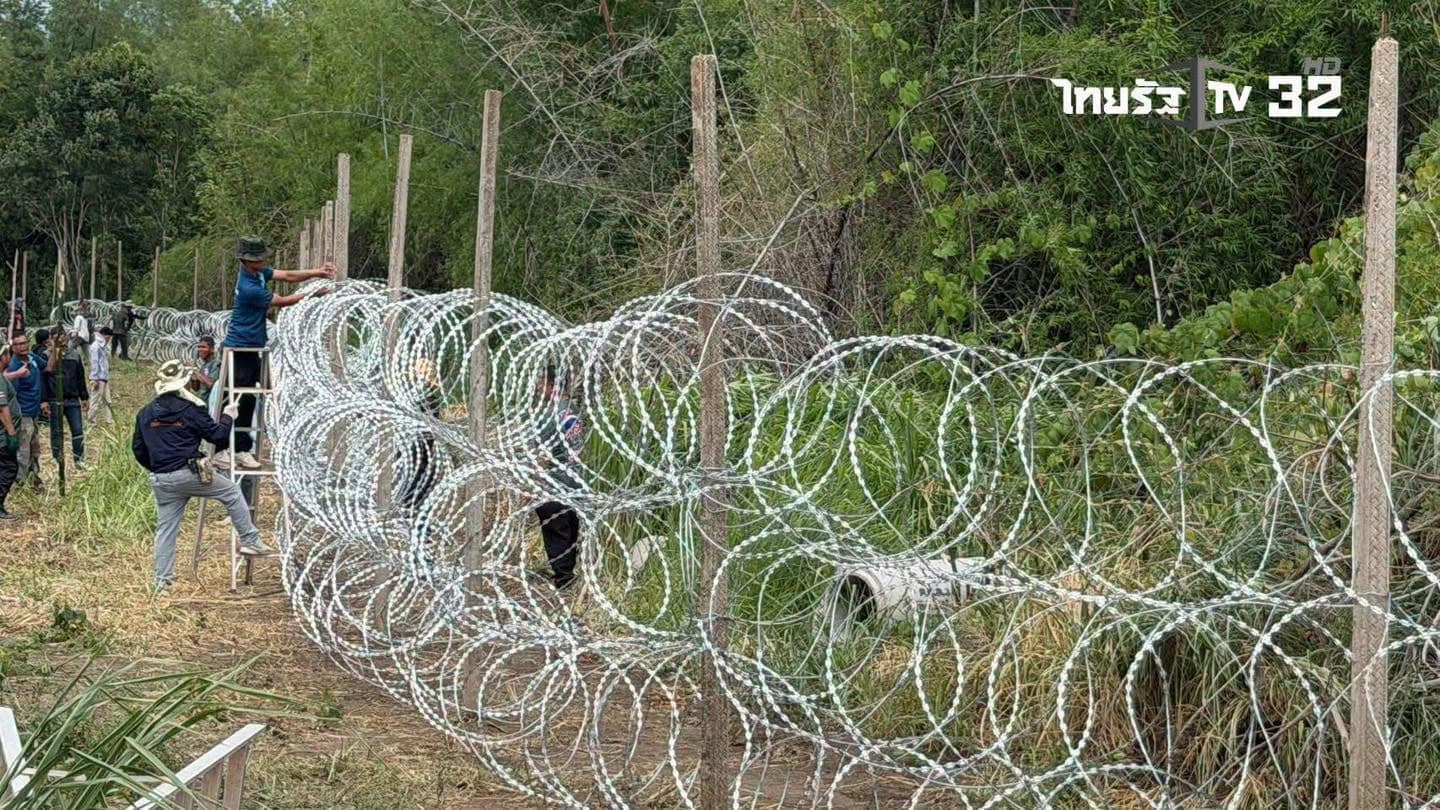
Cambodia Protests Thai Razor Wire Barricades on Border
Cambodia's Ministry of Foreign Affairs has formally protested the installation of razor wire barricades by the Thai military in Preah Vihear and Oddar Meanchey provinces, citing violations of sovereignty. The ministry stated the actions contravene de-escalation measures and a 2000 MOU, demanding immediate cessation.
Cambodia has lodged a formal protest against the Thai military’s installation of razor wire barricades in the “Emerald Triangle” (Mom Bei) area pf Preah Vihear province and the “Chup Run” area in Trapeang Prasat district, Oddar Meanchey province, characterising the moves as continued violations of Cambodia’s sovereignty and territorial integrity. In a July 3 press release, the Ministry of Foreign Affairs and International Cooperation stated that these activities on Cambodian territory occurred on July 2. The ministry emphasised that such actions contradict the tension-reduction measures stipulated in the Joint Statement of the 3rd Special Meeting of the General Border Committee (GBC) dated December 27, 2025. Furthermore, it added that they constitute a violation of Article 5 of the 2000 Memorandum of Understanding between the Royal Government of Cambodia and the Royal Government of Thailand on the Survey and Demarcation of Land Boundary (MOU 2000). Cambodia called on Thailand to immediately cease all such activities, not only in the aforementioned areas but also at other sites that Thai armed forces have illegally occupied since last year, said the release. “Cambodia emphasises that de-escalation is essential to foster mutual trust and facilitate a peaceful and long-lasting resolution to border disputes, aimed at restoring peace, stability, and good-neighbourly relations along the Cambodia-Thailand border,” it added. The ministry reiterated that Cambodia reaffirms its stance that boundary lines must not be altered by force, but must be resolved through peaceful means based on international law and existing agreements.
多角的分析
国境付近での有刺鉄線設置は、直接的な経済活動への影響は限定的であるものの、両国間の緊張の高まりは、国境貿易や物流の遅延、さらには観光客の心理的影響を通じて間接的に経済に悪影響を及ぼす可能性がある。特に、タイとの国境貿易はカンボジア経済にとって重要であり、不安定化はサプライチェーンのリスクを高める。
投資家にとって、国境紛争は地政学リスクの増大と見なされる。カンボジアへの投資を検討している企業や個人は、地域情勢の不安定化を懸念し、投資判断を慎重にする可能性がある。特に、インフラ開発や製造業など、国境地域に近いプロジェクトへの投資はリスク評価の見直しを迫られるだろう。
国境地域に住む住民は、物理的な障壁の設置により、移動の自由が制限されたり、生活必需品の調達が困難になったりする可能性がある。また、両国間の緊張は、国境地域に住む人々の間に不安感をもたらし、日常生活に影響を与えることが懸念される。これにより、地域社会の分断や摩擦が生じる可能性も否定できない。
国境付近の住民は、タイ側からの有刺鉄線設置により、従来通りに往来できていた地域へのアクセスが制限されることに不便を感じている。特に、農産物の運搬や親族との交流において、新たな障壁が生じることが懸念される。政府の公式な抗議声明は、国民の不安を和らげる一方で、事態の長期化への懸念も抱かせている。
背景・歴史的文脈
カンボジアとタイの国境線は、一部で未画定の地域があり、歴史的に領土問題や紛争の火種となってきた。特に、1962年の国際司法裁判所(ICJ)によるプレア・ヴィヒア寺院の帰属問題裁定後も、周辺地域での国境画定作業は難航している。両国は2000年に国境画定に関するMOUを締結したが、実際の作業は遅々として進まず、両軍による越境や施設設置などの事案が散発的に発生している。今回の有刺鉄線設置は、こうした長年の国境問題の文脈の中で発生した、緊張を高める一連の出来事の一つと見られる。
原文ソース
Phnom Penh Post