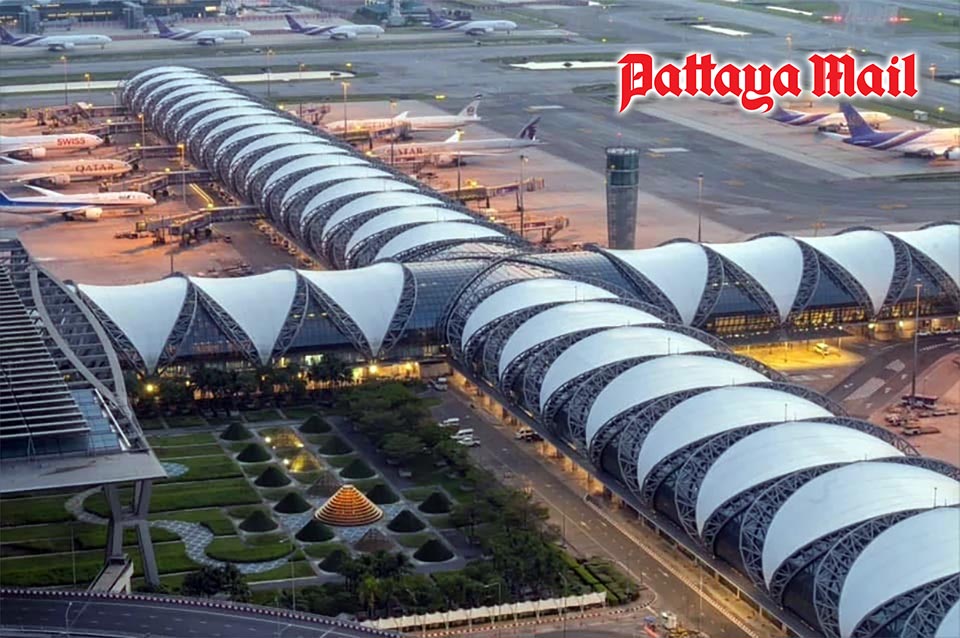
Suvarnabhumi Airport Expansion to Clarify Roles with Other Airports
The Thai Cabinet has acknowledged recommendations from the NACC to enhance transparency in Suvarnabhumi Airport's long-term development, reaffirming that its expansion will not undermine the roles of Don Mueang or U-Tapao airports.
The Thai Cabinet has acknowledged recommendations from the National Anti-Corruption Commission (NACC) aimed at strengthening transparency in the long-term development of Suvarnabhumi Airport, while reaffirming that future expansion must not undermine the roles of Don Mueang Airport or U-Tapao International Airport. Deputy Government Spokesperson Ploytalay Laksameesaengchan stated that the Cabinet, during its June 30 meeting, considered the Transport Ministry’s response to the NACC’s anti-corruption recommendations concerning the Suvarnabhumi Airport Development Project. One of the key recommendations requires Airports of Thailand Plc (AOT) to submit any new or substantially revised Suvarnabhumi Airport Master Plan to the Cabinet for approval. The NACC believes this additional oversight will help ensure the airport’s expansion aligns with national aviation policy and reduce the risk of decisions that could unfairly benefit individual private companies. The government explained that Suvarnabhumi’s master plan is prepared in accordance with international standards set by the International Civil Aviation Organization (ICAO) and the International Air Transport Association (IATA), which mandate that airports review their master plans every five years or when significant changes occur in aviation, economic, or financial conditions. AOT indicated that it has consistently followed these international guidelines. For the fifth edition of the Suvarnabhumi Master Plan, completed in 2025, the company engaged Netherlands Airport Consultants (NACO), a globally recognized firm with experience developing master plans for major international airports such as London Heathrow, Singapore Changi, and Kuala Lumpur International Airport. According to the government, the updated 2025 master plan reflects current aviation trends, projected passenger demand, developments in Thailand’s and the global aviation industry, and future infrastructure requirements. The completed plan has already been submitted to relevant agencies and is currently under review by the Office of Transport and Traffic Policy and Planning before proceeding through the remaining approval process. The Cabinet also acknowledged the NACC’s recommendation to establish a clear national strategy for Suvarnabhumi’s development. This strategy aims to ensure its continued role as the country’s primary international gateway without disrupting the development of Don Mueang Airport, other Bangkok-area airports, or the U-Tapao Airport and Eastern Aviation City Project in the Eastern Economic Corridor (EEC). The government reaffirmed that Suvarnabhumi will remain Thailand’s principal international airport, with a planned maximum capacity of 120 million passengers annually. Officials stressed that its expansion will complement, rather than compete with, Don Mueang and U-Tapao. Future reviews of Suvarnabhumi’s master plan will continue to adhere to Civil Aviation Authority of Thailand (CAAT) and ICAO standards, with clearly defined review timelines and participation from relevant government agencies to ensure transparency, sound planning, and alignment with evolving aviation, technology, and environmental conditions.
多角的分析
スワンナプーム空港の拡張計画は、タイの航空ハブとしての地位を強化し、観光収入と国際貿易を促進する潜在力を持つ。しかし、ドンムアン空港やウタパオ空港との役割分担が不明確なままだと、インフラ投資の重複や非効率が生じ、経済的リターンの最大化を妨げる可能性がある。NACCの勧告は、こうしたリスクを軽減し、国家航空政策との整合性を確保することで、より持続可能で効率的な空港ネットワークの構築を目指すものである。
今回の決定は、タイの航空インフラへの投資家にとって、より明確な見通しを提供する。スワンナプーム空港の拡張が国家戦略に沿って進められ、他の空港との補完関係が維持されることで、AOTおよび関連インフラ企業への投資リスクが低減されると考えられる。特に、ウタパオ空港を含むEEC開発との連携は、長期的な成長ポテンシャルを持つ地域への投資機会を示唆している。
空港拡張は、地域経済の活性化や雇用創出に繋がる可能性がある一方、近隣住民への騒音や交通渋滞などの影響も懸念される。NACCの勧告にある透明性の強化と、国家戦略との整合性は、こうした社会的な懸念に対処し、地域社会との調和を図る上で重要となる。また、空港間の役割分担が明確になることで、国内の移動手段や物流の効率化が進み、国民生活にも間接的な恩恵をもたらす可能性がある。
スワンナプーム空港の拡張は、将来的な航空需要の増加に対応するための必要性がある。しかし、拡張が他の空港の役割を食ってしまうのではないか、あるいは税金が不適切に使われるのではないかという市民の懸念は根強い。NACCの介入と内閣による勧告の承認は、これらの懸念に対して、より透明性の高いプロセスと、国家全体の利益を考慮した意思決定が行われることを期待させる。特に、ウタパオ空港やEEC開発との連携は、タイの地理的優位性を活かした新たな経済圏の創出につながる可能性があり、国民の将来的な生活水準向上に寄与することが期待される。
背景・歴史的文脈
タイの航空インフラ開発は、国家経済成長の重要な柱と位置づけられてきた。スワンナプーム空港は2006年の開港以来、バンコクの主要国際空港として機能してきたが、航空需要の増加に伴い、拡張の必要性が指摘されてきた。一方、ドンムアン空港はLCC(格安航空会社)の拠点として、またウタパオ空港は東部経済回廊(EEC)開発のハブとして、それぞれ異なる役割を担っている。これらの空港間の機能分担と協調は、タイの航空ネットワーク全体の効率性と競争力を左右するため、過去から議論されてきた。NACCによる勧告は、こうした背景を踏まえ、開発プロセスにおける透明性を確保し、国家的な視点からの戦略的な空港開発を促すことを目的としている。
原文ソース
Pattaya Mail