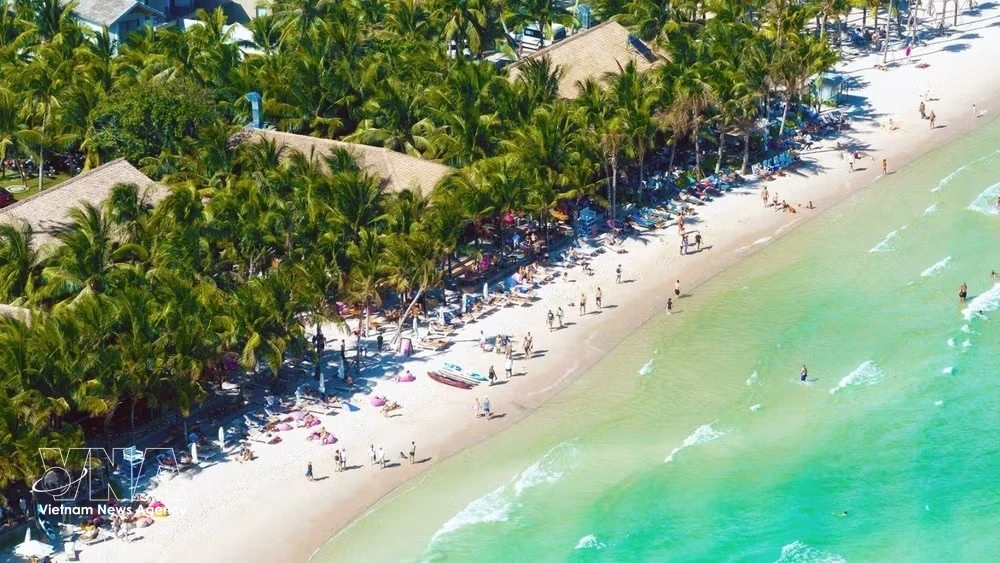
Vietnam's Beaches Shine as Summer Travel Hotspots, Endorsed by Lonely Planet
Vietnam's beach resorts are attracting domestic and international tourists. Lonely Planet recommends Vietnamese beaches as summer travel destinations, with Da Nang and Phu Quoc Island gaining prominence. The growing demand for independent travel (FIT) post-pandemic is also a driving factor.
Vietnam's stunning coastline is drawing significant attention as a summer travel destination for both domestic and international tourists. Lonely Planet has endorsed Vietnamese beaches as recommended summer getaways, highlighting their appeal. Da Nang, a central coastal city, expects to welcome nearly 20 million domestic and international visitors by 2026, solidifying its position as a dynamic and distinctive destination in the region. The city boasts nearly 70 craft villages and around 3,000 craft establishments, many of which have become popular tourist attractions. Phu Quoc Island, a resort island off the southern coast, is emerging as a representative destination with ongoing developments in infrastructure, hospitality, and international cooperation projects, in preparation for events like APEC 2027. The island saw a remarkable growth in visitors, from approximately 1.45 million in 2016 to over 8.1 million in 2025. According to Nguyen Trung Khanh, Director General of the Vietnam National Authority of Tourism (VNAT), independent travel (FIT) has become a defining trend in post-pandemic tourism. Travelers increasingly seek flexibility, personalized experiences, and authentic cultural engagement, prompting destinations worldwide to rethink their tourism products and strategies. Vietnam's tourism performance is a bright spot amidst global challenges, including geopolitical tensions, regional conflicts, slowing economic growth, rising oil prices, and increased travel costs. Notably, Indian arrivals to Vietnam have surged from around 100,000 before 2016 to 750,000 in 2025, driven by expanding direct air routes. Paris Match highlights that Vietnam's allure extends beyond its landscapes and luxury resorts, with its unique blend of nature, history, cultural heritage, and local life offering authentic experiences that make the country increasingly attractive to international travelers. Under Vietnam's one-party system, economic growth is a key priority, and the development of the tourism sector is crucial for foreign exchange earnings and job creation. Diversifying tourist sources also serves to mitigate economic risks amid complex relations with China. Investment in infrastructure development contributes to the revitalization of the local economy and potential improvements in citizens' livelihoods. Source: VietnamPlus English
多角的分析
ベトナムの観光産業は、コロナ禍からの回復期において、同国の経済成長を牽引する重要な柱の一つとなっている。特に、ビーチリゾートへの投資拡大とインフラ整備は、国際的な観光客誘致に不可欠であり、外貨獲得能力の向上に直結する。Lonely Planetのような著名な旅行ガイドによる推奨は、直接的な集客効果に加え、ベトナムの観光ブランドイメージ向上に寄与する。これは、ベトナムがグローバル経済において、製造業だけでなくサービス業でも存在感を高めようとしている戦略の一環と見られる。また、インドからの観光客増加は、従来の主要市場(欧米、東アジア)への依存度を低減させ、経済的レジリエンスを高める効果も期待できる。
ベトナムの観光セクターへの投資は、高い成長ポテンシャルを秘めている。フーコック島のような開発が進む地域では、不動産開発、ホテル・リゾート運営、航空サービスなど、多岐にわたる投資機会が存在する。Lonely Planetの推奨は、これらの地域への関心を高め、さらなる資本流入を促す可能性がある。ただし、インフラ整備の遅れや、地域間の開発格差、環境への配慮といったリスク要因も考慮する必要がある。ベトナム政府は、観光客の多様化と持続可能な観光開発を目指しており、これらを支援する投資家にとっては、長期的なリターンが期待できる市場と言える。
ベトナムのビーチリゾートの発展は、地域経済の活性化と雇用創出に大きく貢献している。ダナンのような都市部では、伝統工芸村が観光資源として活用され、地域文化の保存と経済発展の両立を目指している。一方で、観光客の増加は、地域住民の生活環境への影響や、インフラへの負荷増大といった課題も生じさせる可能性がある。特に、フーコック島のような急速に開発が進む地域では、環境保護や地域社会との調和が重要となる。また、個人旅行(FIT)の増加は、旅行者と地域住民との直接的な交流を促進する一方で、文化的な摩擦や、地域経済への恩恵が一部の事業者や外部資本に集中する可能性も指摘される。
ベトナム市民にとって、国内外からの観光客増加は、地元経済の活性化や雇用機会の増加という形で恩恵をもたらす。特に、ダナンやフーコック島などの観光地周辺に住む人々は、観光関連産業での就労機会が増えることが期待される。また、自国の美しいビーチや文化遺産が国際的に評価されることは、国民の誇りにも繋がる。しかし、観光客の増加に伴う物価上昇や、交通渋滞、環境問題などが、日常生活に影響を与える可能性も懸念される。政府は、持続可能な観光開発を通じて、これらの課題に対処していくことが求められる。
背景・歴史的文脈
ベトナムは、ドイモイ(刷新)政策以降、経済成長を最優先課題として掲げ、特に製造業と観光業の育成に力を入れてきた。2015年頃から、インフラ整備への投資が加速し、フーコック島やダナンなどの観光地では、大規模なリゾート開発が進められてきた。コロナ禍による一時的な落ち込みを経て、2022年頃から観光客が急増しており、政府は2025年までに国際観光客数800万人、2030年までに1,750万人という野心的な目標を掲げている。これは、経済成長の鈍化が懸念される中、観光業を新たな成長エンジンとして位置づけようとする戦略の表れである。
原文ソース
VietnamPlus English