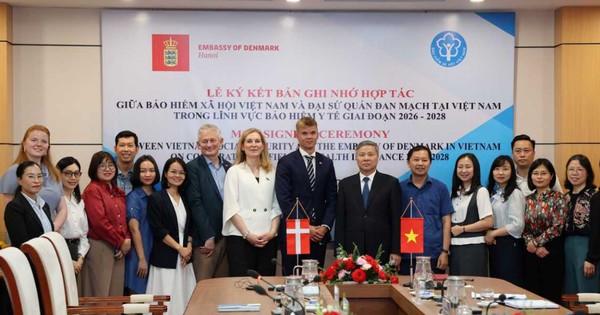
Vietnam, Denmark Renew Partnership on Sustainable Health Insurance
Vietnam and Denmark have agreed to extend their Memorandum of Understanding (MoU) on health insurance cooperation for the 2026-2028 period. The renewed partnership will strengthen collaboration in health economics, digital health, and data utilization to address the rising burden of non-communicable diseases (NCDs).
The Vietnam Social Security (VSS) and the Embassy of Denmark have signed a Memorandum of Understanding (MoU) to extend their cooperation in the field of sustainable health insurance for the period of 2026–2028. This enhanced partnership comes as Vietnam faces a growing burden of non-communicable diseases (NCDs), including diabetes and obesity. The increasing prevalence of NCDs necessitates better utilization of health data to understand disease trends, forecast future healthcare needs, and allocate resources more effectively. Under this new phase of cooperation, both sides will expand their collaboration in health economics, digital health, and the use of health data to support evidence-based policymaking, healthcare planning, and the long-term sustainability of the health insurance system. Lasse Pedersen Hjortshøj, Counsellor at the Embassy of Denmark in Vietnam, stated that universal health coverage and sustainable healthcare financing remain shared priorities for both countries. "Ensuring sustainable healthcare financing and equitable access to quality care require continuous innovation, strong partnerships, and evidence-based policymaking. Through this new phase of our cooperation, we are pleased to share Denmark's experience with Vietnam and work together to transform data into better policy, more effective use of healthcare resources, and ultimately better outcomes for patients," he said. This cooperation, entering its fifth phase since the partnership began in 2018, will encompass policy dialogue, professional exchanges, capacity building, and technical collaboration, with a greater emphasis on data-driven analysis of disease burden, long-term health-economic assessments, and value-based payment approaches. Over the past eight years, the partnership has supported nationwide training programs, technical exchanges, and study visits, with more than 1,900 health insurance assessment officers participating in training activities related to NCD management. The renewed MoU will continue to support professional training and policy dialogue while broadening cooperation in sustainable healthcare financing, digital health, and data-informed policymaking. The partnership also benefits from the technical expertise of Novo Nordisk, which supports knowledge sharing and the exchange of international best practices in NCD prevention and management. Sule Erdim Ersoy, General Manager of Novo Nordisk Vietnam, expressed the company's commitment to supporting scientific dialogue, policy exchange, professional training, and data-driven approaches that can improve disease management, healthcare financing, and long-term system sustainability. By combining Denmark's experience in digital health, health data, and metabolic disease management with Vietnam's ongoing healthcare reforms, the new phase of cooperation aims to provide policymakers with stronger evidence for decision-making, improve patient outcomes, and build a health insurance system that remains accessible and sustainable for future generations. The Memorandum of Understanding between the Embassy of Denmark in Vietnam and VSS, signed in 2018, provided a framework for strategic cooperation in health insurance. Key areas of cooperation included health insurance policy development, NCD management, health economics and financing, digital health, capacity building, and the use of data and evidence to support healthcare decision-making. The 2026–2028 Memorandum marks the fifth phase of this long-standing partnership./.
多角的分析
ベトナムは急速な経済成長に伴い、国民の健康意識と医療サービスへの期待が高まっている。一方で、生活習慣の変化によるNCDの増加は、医療費の増大と医療システムへの負担増をもたらしている。デンマークとの連携による医療経済学やデータ活用の強化は、限られた資源を効率的に配分し、医療保険制度の財政的持続可能性を確保するための重要な一手となる。特に、データに基づいた政策立案は、将来の医療ニーズ予測や予防医療への投資判断をより正確にし、長期的な医療費抑制に繋がる可能性がある。
医療保険制度の持続可能性強化とデータ駆動型アプローチの導入は、ベトナムのヘルスケアセクターへの投資環境を改善する可能性がある。NCD管理の効率化や予防医療への重点化は、関連する製薬会社や医療機器メーカー、デジタルヘルスソリューション提供企業にとって新たなビジネスチャンスを生み出す。また、透明性の高いデータに基づいた政策決定は、投資家にとってリスク評価の精度を高め、より予測可能な投資環境を提供する。
NCDの増加は、ベトナム国民の生活の質に直接的な影響を与える。糖尿病や肥満といった疾患は、個人の健康だけでなく、家族の経済的負担や社会保障制度への圧迫にも繋がる。デンマークとの協力によるデータ活用は、疾病予防策の最適化や、患者一人ひとりに合わせた治療計画の策定に貢献し、最終的には国民全体の健康増進と医療へのアクセス改善に繋がることが期待される。特に、デジタルヘルス分野の進展は、地方や遠隔地の住民にとっても質の高い医療サービスへのアクセスを向上させる可能性がある。
ベトナム国民、特にNCDのリスクが高い層やその家族にとって、医療保険制度の持続可能性は生活の安定に直結する。今回の連携強化は、将来にわたって医療サービスを受け続けられる保証を高めるものと言える。データに基づいた政策決定は、より効果的な疾病予防プログラムや、最新の医療技術・治療法へのアクセス向上につながる可能性がある。しかし、デジタルヘルス化の進展に伴い、情報格差やプライバシー保護への懸念も生じうるため、国民への丁寧な説明と理解促進が重要となる。
背景・歴史的文脈
ベトナムは、1986年のドイモイ政策以降、市場経済化を進め、経済成長を遂げてきた。それに伴い、国民の平均寿命は延び、医療サービスへのアクセスも改善した。しかし、食生活の変化や運動不足などにより、糖尿病、高血圧、心血管疾患といった非感染性疾患(NCD)が急速に増加している。これらの疾患は、個人の健康だけでなく、医療保険制度の財政を圧迫する大きな要因となっている。ベトナム政府は、医療保険制度の持続可能性を確保するため、医療費の効率化、予防医療の強化、そしてデータに基づいた政策決定の重要性を認識している。デンマークは、ユニバーサル・ヘルス・カバレッジの達成や、NCD対策における先進的な取り組みで知られており、ベトナムとは2018年から医療保険分野で協力関係を築いてきた。今回の協力期間延長は、こうした背景を踏まえ、両国が共通の課題解決に向けて連携を深める意思表示である。
原文ソース
Bao Chinh Phu