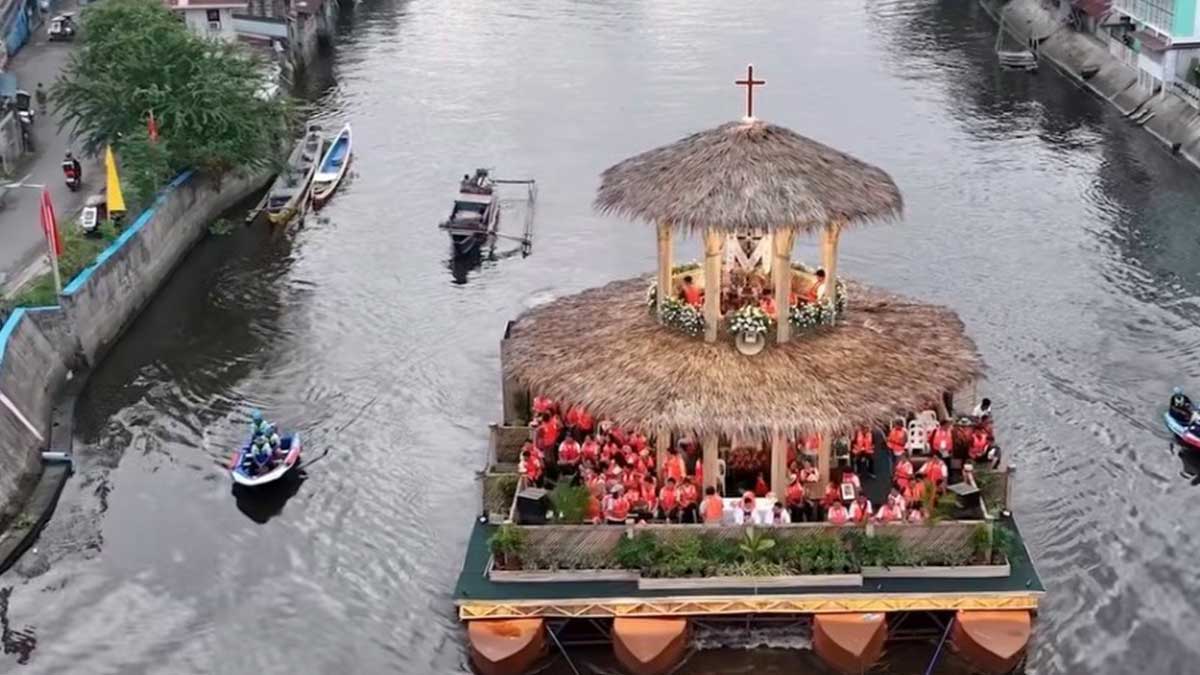
Bamboo Pagoda Sails as Symbol of Unity and Faith in Bocaue Amid Economic Hardship
In Bocaue, Philippines, the annual Feast of the "Krus sa Wawa" (Holy Cross) was observed with a simplified celebration due to economic hardships. A bamboo-inspired pagoda sailed along the river, symbolizing community unity and faith amidst challenging times.
BOCAUE, BULACAN, Philippines — A bamboo-inspired pagoda sailed along the Bocaue River on Sunday as thousands of devotees celebrated the annual Feast of the “Krus sa Wawa” (Holy Cross), with this year’s observance highlighting simplicity, faith and unity amid difficult economic times. Designed in the style of a traditional “bahay kubo,” the pagoda paid tribute to the town’s name, “bukawe,” a native species of bamboo, while reflecting the organizers’ decision to hold a more modest celebration in light of rising costs and the financial hardships faced by many Filipinos. Unlike previous years when a single hermano mayor or major sponsor traditionally shouldered most of the expenses, this year’s feast was made possible through the collective efforts of nearly 10 longtime devotees who served as the fiesta committee. Their collaboration reduced the cost of the pagoda to about P1.5 million. READ: Bulacan town revisits ‘painful’ lessons from pagoda tragedy “We deemed it to be sensitive with the needs of the times. We only wanted a simple celebration because many still experience the hardness of times, including the crisis being experienced by all of us,” committee member Jocelyn Sulit told the Inquirer. She added: “We all became Hermano before and we wanted to continue our faith and devotion to the Mahal na Poon ng Krus sa Wawa.” READ: In Bocaue, Holy Cross fluvial procession brings out devotees amid rain According to Sulit, the bamboo-inspired design also symbolized the strength and unity of the community. “Even if we live simple lives, as long as we remain united in our devotion, we are like bamboo—standing together and growing stronger,” Sulit said. Fr. Manuel Catral of Tuguegarao City, who presided over the concelebrated Mass, reminded devotees that the feast is not merely about colorful festivities or large crowds, but about embracing the true meaning of the Cross. According to Catral, devotion to the Mahal na Krus sa Wawa is one of the enduring expressions of Filipino faith that calls believers to carry their own crosses, just as Christ did. He urged the faithful to remember that Jesus Christ remains at the center of the celebration, inspiring forgiveness, repentance and generosity. “As the Holy Cross, which is God’s gift to us, symbolizes the silent faith of the people, we must also ensure humility, forgiveness, healing of wounds and the removal of the poison in our hearts that distances us from God. Let the gift of love, humility, forgiveness and the removal of poison in our hearts transcend to our own lives wherever we are—in our work and in our homes,” Catral said. He also encouraged the faithful to become responsible stewards of God’s blessings. “We should be good stewards of God’s gifts to us,” he said. Catral added that Christ does not merely watch over people from the riverbank, but walks with them through life’s journey. Bryan San Luis, another member of the fiesta committee, thanked everyone who helped make this year’s celebration successful. “Bocaue is truly blessed with the gift of the Holy Cross, which brings people together,” he said. Parish priest Fr. Mario Jose Ladra said more than 1,600 devotees participated in this year’s Feast of the Mahal na Krus sa Wawa. /cb
多角的分析
今年のボカウエの祭りは、フィリピン全土で広がる経済的困難を反映し、簡素化された祝祭となった。これは、インフレによる物価上昇や、多くの家庭が経験する家計の圧迫といったマクロ経済的要因が、地域レベルの伝統行事の実施方法に直接影響を与えていることを示している。過去の祭りが単一の裕福なスポンサーに依存していたのに対し、今回は共同募金という形をとったことは、経済的逆風下でのコミュニティの連帯とリソース共有の必要性を浮き彫りにしている。150万ペソという費用は、依然として相当な額であるが、共同で賄うことで実現可能となった点は、持続可能な祝祭運営の可能性を示唆している。
今回の祭りの経済的側面は、直接的な投資機会を提示するものではないが、フィリピンの地域社会における消費者の購買力と優先順位の変化を示唆している。祭りの簡素化は、必需品への支出を優先し、娯楽や伝統行事への支出を抑制する消費者の傾向を反映している可能性がある。これは、フィリピン国内市場、特に地方経済に依存する産業(例:伝統工芸品、地域特産品)への投資を検討する際に、マクロ経済状況と地域住民の購買力への影響を慎重に評価する必要があることを投資家に示唆する。また、共同募金による祭りの実施は、地域社会の結束力と相互扶助の精神が、経済的困難を乗り越える上での重要な社会資本となり得ることを示している。
ボカウエの「クルス・サ・ワワ」祭における竹製パゴダの帆走は、経済的逆風下での地域社会の団結と信仰の強さを象徴する出来事となった。参加者たちは、伝統的な「エルマノ・マヨール」制度に頼るのではなく、約10名の長年の信者が委員会を組織し、共同で費用を分担した。この協力体制は、経済的困難を乗り越えるためのコミュニティの連帯感を高めた。また、竹が持つ「共に立ち、より強くなる」という象徴性は、困難な時代における住民間の絆の重要性を強調している。カトラル神父の説教は、祭りの宗教的意義を再確認し、信徒に許し、悔い改め、寛大さといったキリスト教の価値観を日常生活に適用するよう促した。これは、物質的な豊かさよりも精神的な充足と相互支援を重視する社会的な価値観の表れと言える。
今回の祭りの簡素化は、マニラ首都圏だけでなく、ボカウエのような地方都市に住む一般市民にとっても、日々の生活における経済的なプレッシャーを実感させる出来事となった。祭りの費用を共同で賄うという決定は、多くの家庭が依然として物価上昇や経済的困難に直面している現実を反映している。参加者たちは、贅沢な祝祭よりも、信仰とコミュニティの絆を大切にする姿勢を示した。これは、食料品や日用品の価格上昇に直面しながらも、家族や地域社会との繋がりを維持しようとする市民の real life の状況と重なる。祭りの象徴となった竹のパゴダは、困難な状況下でも共に支え合い、困難を乗り越えようとする人々の希望を映し出している。
背景・歴史的文脈
フィリピンの多くの地域社会では、伝統的な祭りは単なる宗教行事にとどまらず、地域経済の活性化やコミュニティの結束を強める重要な役割を担ってきた。「エルマノ・マヨール」制度は、裕福な個人が祭りの費用を負担することで、地域社会への貢献を示す伝統的な慣習であった。しかし、近年の経済的困難、特にインフレと生活費の高騰は、この制度の持続可能性に疑問を投げかけている。ボカウエの事例は、このような伝統的な支援システムが限界に達し、地域住民が共同で資金を調達する新しいモデルへと移行している現状を示している。これは、フィリピン社会における経済的格差と、それを乗り越えようとするコミュニティの適応力を浮き彫りにする。
原文ソース
Inquirer NewsInfo