General articles are free for 24 hours after publish.
The Fading Art of Kulawi's Bark Cloth: Tobani Tiku, the Last Artisan
In Central Sulawesi, Indonesia, 86-year-old Tobani Tiku is the last artisan crafting traditional bark cloth, 'kumu nunu'. Her dedication to this fading cultural heritage highlights a quiet crisis within the local community.
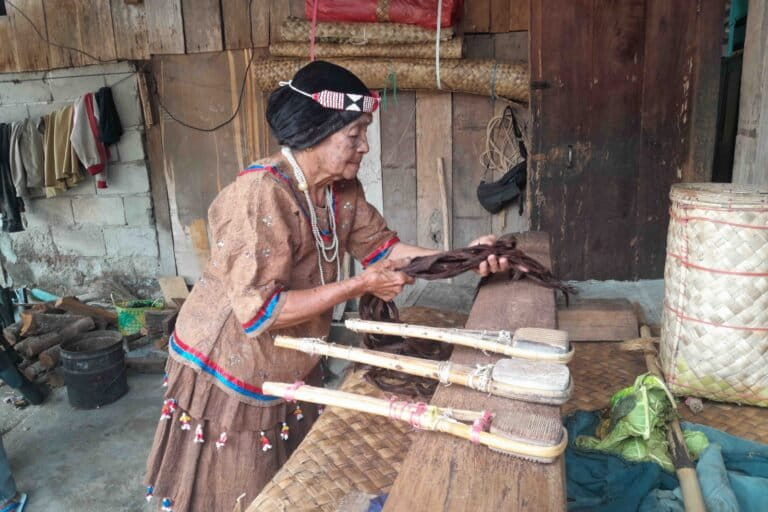
In the village of Mataue, Kulawi District, Central Sulawesi, Indonesia, 86-year-old Tobani Tiku is the last remaining artisan meticulously crafting "kumu nunu," a traditional cloth made from the bark of banyan trees. This ancient practice, passed down through generations, is now at risk of disappearing. Tobani dedicates her days, from morning till evening, to beating the bark of banyan trees behind her home to create the "kumu nunu." She finds solace and purpose in the activity, believing that constant movement prevents her from succumbing to fatigue and back pain. Her routine is only interrupted for meals and prayers. "Kumu nunu" is not just a cloth; it is a significant part of the traditional attire for the Kulawi community. Tobani learned the craft from her mother and grandmother, a skill she has practiced since her teenage years. Traditionally, the creation of "kumu nunu" is exclusively a woman's domain. She recounts with a laugh, "Our elders say if men make it, their intestines will fall." Several banyan trees surround Tobani's home. She primarily uses two types for her craft: the red banyan (nunu lero) and the white banyan (nunu bula), with a preference for "nunu lero." The process of harvesting bark is also steeped in tradition, requiring specific conditions. Branches must be collected during the full moon, and only those growing horizontally or facing the sky are chosen, never those pointing downwards. Tobani's son, Syafrudin, assists her by collecting banyan branches every full moon. However, with Tobani being the sole practitioner of this art form at her advanced age, the future of "kumu nunu" remains uncertain. Her unwavering commitment serves as a poignant reminder of the fragility of cultural heritage and the silent struggle to preserve it.
Original source
Mongabay Indonesia