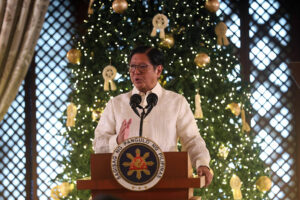
Marcos Unfazed by Fluctuating Satisfaction Ratings, Focuses on Governance
Politics
2026年7月15日
3
BusinessWorld Nation

Marcos Unfazed by Fluctuating Satisfaction Ratings, Focuses on Governance

AI サマリー

Philippine President Ferdinand R. Marcos, Jr. remains unfazed by his latest satisfaction ratings, with a Palace spokesperson stating he is focused on governance rather than electoral numbers as he is not seeking re-election. While ratings show an upward trend, they remain in the "neutral" category.

President Ferdinand R. Marcos, Jr. remains unfazed by his latest net satisfaction ratings, with the Palace saying the President is focused on governance and not electoral numbers as he is not seeking re-election. "Whether they go up or down, the President is not affected [by numbers]," Palace Press Officer Clarissa A. Castro told reporters on Wednesday. "In the first place, he will not run for President in the next [election]. So, the President is just doing his job," she said, referring to the June 2026 Social Weather Station (SWS) report. The SWS survey showed Mr. Marcos’ net satisfaction rating rose to -7, a recovery from his record-low of -15 in March. However, it remained in the "neutral" category, with 38% of adult Filipinos satisfied with his performance, while 45% remain dissatisfied. Public satisfaction ratings in the Philippines serve as barometers that quantify citizen approval, trust, and net satisfaction regarding the overall performance and governance of top national officials. Some surveys also gauge public opinion on issues and services that Filipinos consider most important and in need of government attention. Ms. Castro acknowledged that government officials may look at these figures to determine which programs to push or prioritize, adding that Mr. Marcos is not personally affected by changes in his own figures. "He will just keep on working," she said. — Erika Mae P. Sinaking

多角的分析

経済的影響

マルコス政権は、インフレ率の抑制と経済成長の促進という二重の課題に直面している。支持率の変動は、これらの経済政策に対する国民の評価を反映していると考えられる。特に、海外からの投資を呼び込み、雇用を創出するためには、経済の安定と予測可能性が不可欠である。支持率の低迷は、投資家心理に悪影響を与え、資本流出のリスクを高める可能性がある。政権は、インフレ対策として金融引き締め策を継続する一方、インフラ投資やデジタル化推進といった成長促進策も同時に講じる必要があり、そのバランスが問われている。

投資家心理

マルコス大統領が支持率の変動に動じない姿勢は、短期的な世論よりも長期的な政策目標に注力する意図を示唆している。しかし、投資家は依然として、政権の政策実行能力と国民の支持基盤の安定性を注視している。特に、インフレ抑制や経済成長といったマクロ経済指標の改善は、海外からの直接投資(FDI)を呼び込む上で重要である。南シナ海情勢の緊張や、国内のインフラ整備の遅れといったリスク要因も、投資判断に影響を与える可能性がある。日系企業は、フィリピンの経済成長ポテンシャルを評価する一方で、政治的安定性と規制環境の透明性を重視する傾向がある。

社会的影響

マルコス大統領の支持率が「中立」にとどまっていることは、国民が政権のパフォーマンスに対して期待と懸念の両方を抱いていることを示唆している。特に、物価上昇や雇用機会の不足といった生活に直結する問題は、国民の不満の温床となりやすい。マニラ首都圏の交通渋滞や地方におけるインフラ不足は、多くの市民の日常生活に影響を与えており、これらの課題への具体的な取り組みが求められている。また、海外労働者(OFW)の送金がフィリピン経済を支える重要な要素であるため、彼らの生活や労働環境の改善も、国民全体の満足度向上に繋がる可能性がある。

市民の声

国民の視点からは、大統領の支持率の数字そのものよりも、それが日常生活にどのような影響を与えるかが重要である。インフレによる物価上昇は、食料品や日用品の価格を押し上げ、家計を圧迫している。また、若者層は、質の高い教育機会や、国内での安定した雇用を求めている。海外就労(OFW)という選択肢は魅力的だが、家族との離別や不安定な労働環境といった課題も抱えている。マルコス政権がこれらの「生活実感」にどれだけ応えられるかが、国民の信頼を得る上で鍵となる。

背景・歴史的文脈

フィリピンにおける大統領の支持率は、国民の政権に対する信頼度を示す重要な指標であり、過去の政権においても、支持率の変動は政策遂行の力学に影響を与えてきた。特に、アロヨ政権やドゥテルテ政権時代には、支持率の低下が政権運営の安定性に影響を及ぼした事例がある。マルコス大統領の「次期選挙に出馬しないため支持率に動じない」という発言は、前任のドゥテルテ大統領が次期大統領選への出馬を断念した際の状況とも重なる。公的な満足度評価は、国民の生活実感、特に経済状況や治安に対する懸念を反映する傾向があり、政権はこれらの課題への対応を通じて国民の支持を維持・向上させる必要がある。

原文ソース

BusinessWorld Nation

原文を読む