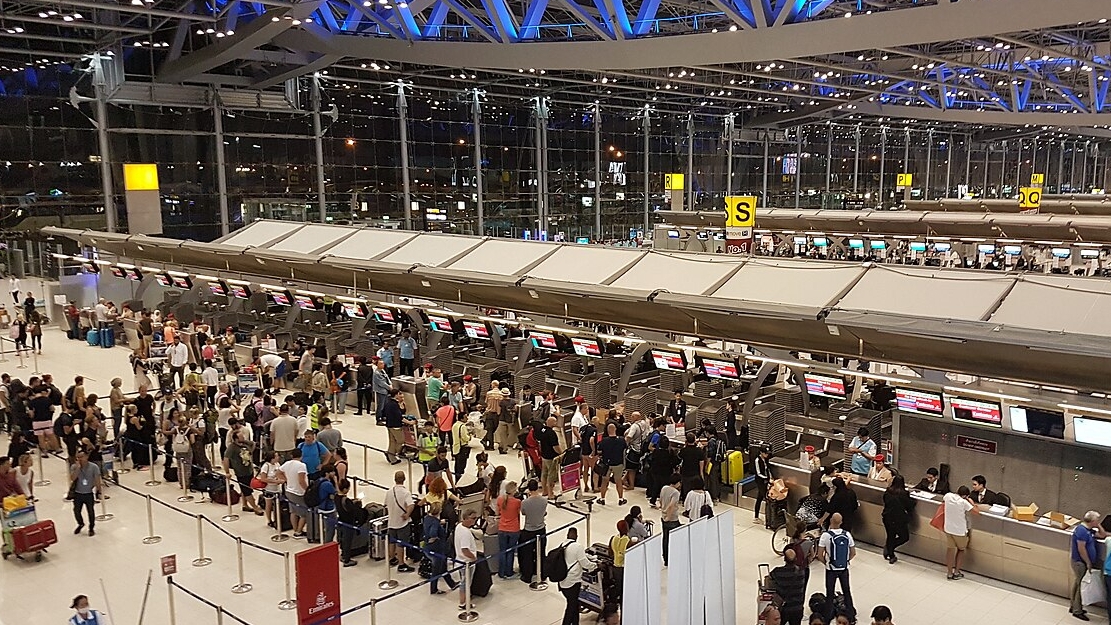
Suvarnabhumi Airport: Crew Member's Luggage Cleared Security Before Australia Heroin Arrest
Suvarnabhumi Airport authorities stated that the luggage of a Thai Airways crew member arrested in Australia for alleged heroin smuggling passed standard security screening before departure. The airport explained that X-ray inspections detected no anomalies.
This article requires PRO
This article is outside the free access window or is a special report. PRO unlocks it and the full archive.
Related articles
- US Navy Carrier Strengthens Ties with Thailand - USS George H.W. Bush Opens for Exchange
The US Navy aircraft carrier USS George H.W. Bush visited Thailand, fostering exchanges with relevant Thai officials. This initiative aims to bolster security cooperation and friendly relations between the US and Thailand, promoting mutual understanding through activities like public ship tours.
- 26 Cambodian Nationals Arrested for Illegal Stay in Sa Kaeo Border Raid
Thai authorities have arrested 26 Cambodian nationals for illegal stay in Sa Kaeo province. Security agencies are intensifying checks on foreign residents to prevent illegal entries and maintain border security.
- Pattaya Mayor Honors Prince of Chumphon at Ceremony for New Sattahip Naval Base Commander
Pattaya Mayor Poramese Ngampichet participated in a homage ceremony for Admiral Prince Abhakara Kiartivongse, the Prince of Chumphon, coinciding with the assumption of command by Rear Admiral Teerakiat Thong-aram as the new Commander of Sattahip Naval Base. The event underscored the connection between the local community and the navy.
- 3 Million Meth Pills Seized at Huai Rai Checkpoint; Ayutthaya-Registered Vehicle Used
Approximately 3 million methamphetamine pills were seized from a hidden compartment in the rear of an Ayutthaya-registered vehicle heading south from Chiang Rai at the Huai Rai checkpoint in northern Thailand, revealing a segment of the drug trafficking route.