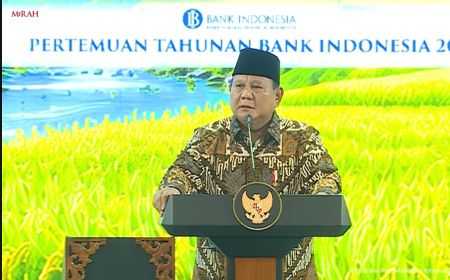
Prabowo Highlights State Expenditure Leaks in Government Procurement, Cites Up to 15x Price Discrepancies for Medicine
Indonesian President Prabowo Subianto has highlighted inefficiencies and expenditure leaks in government procurement, revealing that the same medicine can be purchased at prices up to 15 times higher. He has ordered a fundamental review of goods and services spending, which accounts for about 30 percent of the state budget, and expressed his intention to establish a new procurement system.
Read up to 3 eligible full articles per Japan day (JST) for free
Create a free account to open up to 3 eligible full articles per Japan calendar day (JST). Headlines and summaries remain available across ASEAN 7.
Related articles
- Prabowo Acknowledges Weak Governance, Rampant Corruption in Indonesia
President Prabowo has expressed concern over Indonesia's weak governance and persistent corruption, urging all government institutions to introspect and improve to regain public trust.
- Prabowo to Establish New Agency to Oversee Government Goods and Services Procurement
Indonesian President Prabowo Subianto plans to establish a new agency to regulate government procurement of goods and services. The move aims to standardize procurement processes across ministries and local governments, correct price discrepancies, and prevent budget leakage and corruption.
- Prabowo: Forest Fires Are Man-Made, I Will Not Tolerate Them
President Prabowo Subianto stated that some individuals are attempting to deceive the nation for personal gain. He definitively declared forest fires as man-made and revealed that law enforcement is investigating hundreds of corporations for involvement, while emphasizing the need for businesses to comply with the law.
- President Prabowo Highlights Potential State Budget Leakage, Sees Trillions in Savings from Procurement Efficiency
Indonesian President Prabowo has highlighted a potential 30% leakage in state budget allocations for goods and services, estimating it costs the nation billions. He proposed procurement efficiency, particularly through centralized purchasing, to save up to $21 billion from an estimated $70 billion expenditure.