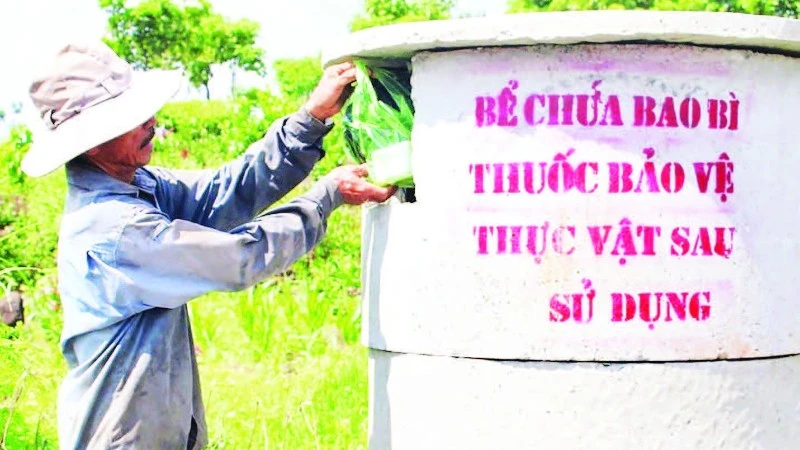
Vietnam Faces Challenges in Pesticide Packaging Waste Management, Over 170 Tons Unprocessed Annually
Environment
2026年7月10日
5
Nhan Dan

Vietnam Faces Challenges in Pesticide Packaging Waste Management, Over 170 Tons Unprocessed Annually

AI サマリー

In Vietnam's Lam Dong province, improper disposal of pesticide packaging poses environmental pollution concerns. While collection and treatment systems are improving, over 170 tons of packaging remain unprocessed annually, necessitating comprehensive solutions.

In Lam Dong province, located in Vietnam's Central Highlands, pesticide packaging is becoming a serious environmental pollution issue. After the use of pesticides essential for agricultural production, a large amount of packaging and empty bottles are being left in the environment without proper treatment. The province has been working to improve its waste collection system, including the construction of concrete collection points along rural roads as part of its rural infrastructure development. As a result, farmers' awareness has gradually increased, and direct dumping into fields and waterways, which was previously common, has decreased. However, due to insufficient capacity of collection points and difficulties in collecting and transporting waste from remote areas, a large amount of waste remains unprocessed. According to statistics from the Lam Dong Department of Agriculture and Rural Development, the province has about 1 million hectares of agricultural land, generating approximately 276 tons of pesticide packaging annually. Although 23 temporary storage facilities and 4,810 collection points are planned to be established by 2025, only about 103 tons (38.6% of the generated amount) have been properly processed so far, leaving over 170 tons of packaging unprocessed each year. Improper disposal not only includes leaving waste in fields, on rural roads, and in irrigation canals but also cases of incineration or landfilling with household waste, increasing the risk of harmful chemical diffusion into the environment. Experts cite reasons such as a shortage of collection points, limitations in collection and treatment costs, low awareness among some residents, and deficiencies in oversight systems. To address this issue, the province is calling for the expansion of collection points and temporary storage facilities, stable budgetary allocation for collection and treatment activities, and enhanced public relations campaigns to raise residents' awareness of their responsibility for environmental protection in agricultural production. The introduction of models that hold pesticide manufacturers and distributors responsible for collection, as well as strict crackdowns on illegal dumping, are also deemed necessary. Under Vietnam's one-party system, environmental initiatives are also advanced under government leadership, but ensuring effectiveness at the local level remains a challenge. In particular, how to enforce environmental regulations and gain the cooperation of industries while prioritizing economic growth will be key to future sustainable development.

多角的分析

経済的影響

農薬容器の未処理廃棄物は、環境汚染による農業生産性の低下、農産物の安全性への懸念、そして将来的な土壌・水質浄化にかかるコスト増大という形で経済的損失をもたらす。特に、ラムドン省のような農業が主要産業の地域では、その影響は直接的かつ深刻である。発生量の38.6%しか処理されていない現状は、経済成長と環境保護のバランスを取る上でのベトナム国内の課題を浮き彫りにしている。

投資家心理

農薬容器の不適切な処理は、ベトナムの農業セクター全体への投資リスクを高める要因となり得る。環境規制の強化や、将来的な汚染対策コストの増加は、農業関連企業や輸出業者にとって不確実性を増大させる。投資家は、企業の環境対策への取り組みや、政府の規制強化の動向を注視する必要がある。

社会的影響

ラムドン省ナムヌン xã の住民、レ・ヴァン・ティン氏は、集積所の過負荷により容器が溢れている状況を証言している。また、バオトゥアン xã のファム・ヴァン・ドゥオン氏は、近隣地域からの農薬汚染が養蚕業に損害を与えていると述べており、これは地域住民の生活と生計に直接的な影響を与えている。容器の不適切な投棄は、単なる環境問題に留まらず、人々の健康と経済活動を脅かす。

市民の声

ラムドン省の農民は、農薬容器の集積所が整備されたことで、以前よりは意識が向上したものの、容器の増加に追いつかず溢れている現状に直面している。また、近隣地域からの農薬汚染が、養蚕業に被害をもたらすといった具体的な影響も受けており、生活環境の悪化に対する不安が募っている。政府や企業による抜本的な対策が求められている。

背景・歴史的文脈

ベトナムでは、経済成長と農業生産の拡大に伴い、農薬の使用量が増加し、それに伴って農薬容器の廃棄物問題が顕在化してきた。特に、2000年代以降の市場経済化(ドイモイ政策)の進展により、農業分野でも化学肥料や農薬の利用が奨励され、生産効率の向上が図られてきた。しかし、その一方で、使用済み容器の収集・処理に関する法規制やインフラ整備は、経済成長のスピードに追いついていないのが現状である。ラムドン省の事例は、全国的な課題の一端を示している。

原文ソース

Nhan Dan

原文を読む