Phnom Penh Water Festival Canceled for Second Year Amid Border Dispute, Resident Support
Phnom Penh has canceled its annual Water Festival for the second consecutive year, prioritizing efforts to resolve an ongoing border dispute with Thailand and assist thousands of residents displaced by recent clashes.
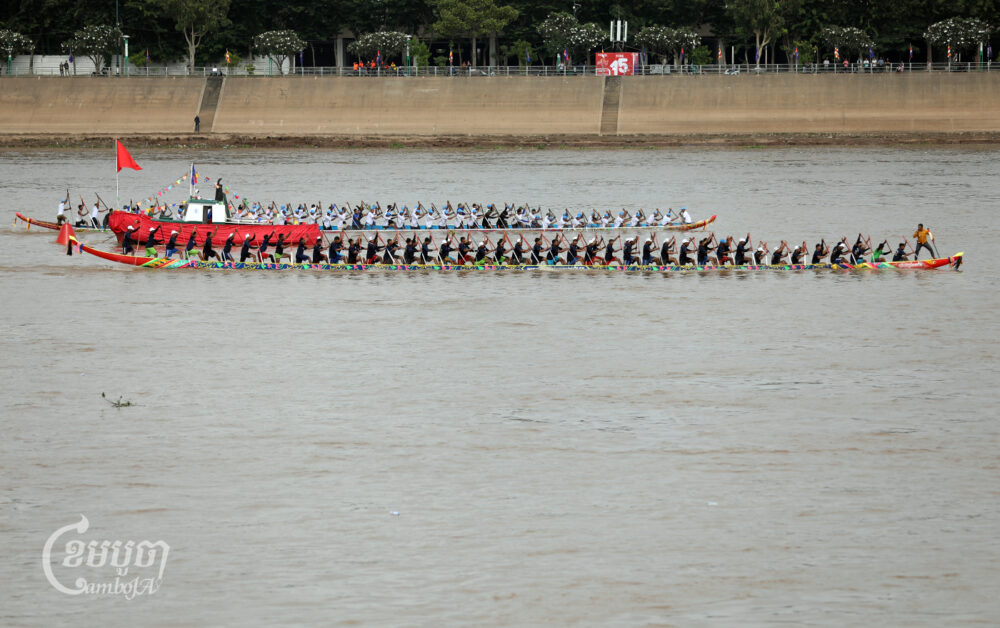
Phnom Penh has canceled its annual Water Festival for the second consecutive year, prioritizing efforts to resolve an ongoing border dispute with Thailand and assist thousands of residents displaced by deadly clashes with the neighboring country last year, according to a directive shared by Prime Minister Hun Manet on Facebook. The festival’s traditional boat races on the Tonle Sap River and full moon ceremonies in the capital have been canceled. The cancellation does not affect celebrations in other provinces. Phnom Penh’s Water Festival celebrations were also canceled last year following the first round of border clashes with Thailand, although Khmer New Year festivities went ahead earlier this year. Civil servants will still receive the Nov. 23-25 public holiday, but government working groups involved in border-related operations, including assistance for displaced residents, returning migrant workers, and military personnel, were instructed to continue their duties. The directive also instructed ministries and local authorities to use the holiday period to help returning migrants find employment, promote local economic activity, prepare for natural disasters, and maintain public security. It was not immediately clear whether the decision was also intended to preserve government funds for communities affected by last year’s border clashes. For some of those displaced by the conflict, the cancellation reflected the continuing hardships facing communities still unable to return home. Voeun Phallin, 40, a displaced resident living in government-built housing in Banteay Meanchey province after losing her home behind Thai barricades last year, called the decision appropriate. “I think it’s the right decision because our country has not yet fully returned to peace. I do miss the Water Festival, but our suffering cannot simply be set aside.” Phallin said she was still adjusting to life after losing her home and does not feel ready to celebrate the holiday. She also cited a lack of access to clean water, saying residents must purchase water for daily use, and urged the government to create jobs near relocation sites. “I hope factories can be built in this area so that I and others can find work because existing workplaces are too far away,” she said. More than 21,000 Cambodians from border provinces remain displaced or living in temporary housing after their villages along the border were occupied by Thai forces, according to the Interior Ministry. Bangkok says the areas are part of Thai territory or frozen frontlines following a ceasefire reached in December. Despite the government’s assertion that it has secured employment for tens of thousands of returnees, many displaced residents and migrant workers returning from Thailand continue to report limited job opportunities and difficult living conditions. Labor Ministry spokesperson Sun Mesa did not immediately respond to a request for comment. Independent political analyst Meas Nee said it was difficult to assess the government’s decision to cancel Water Festival celebrations in Phnom Penh after allowing Khmer New Year celebrations to proceed earlier this year despite the lingering effects of the border conflict. “We can only question the consistency. If the government has a clear reason that the country is facing a border crisis, that the situation has not yet been resolved, and that it is therefore not appropriate to celebrate, then that is a reasonable justification for the government.” He said he hoped the government would resume Water Festival celebrations in the capital next year, expressing concern that repeated cancellations could send an unfavorable signal about preserving Cambodia’s cultural traditions. Since 2010, Cambodia has canceled Water Festival celebrations in Phnom Penh nine times, citing natural disasters, public health emergencies, national and international political developments, and border-related issues.
多角的分析
水祭りの中止は、観光収入や関連産業への短期的な打撃をもたらす可能性がある。しかし、政府が避難民支援や国境問題解決にリソースを集中させることは、長期的な経済安定化に寄与する可能性がある。特に、国境紛争の早期解決は、貿易や投資環境の改善に不可欠である。また、避難民の雇用創出支援は、国内消費の活性化につながる可能性がある。
水祭りの中止は、観光関連セクターへの短期的な投資センチメントを冷やす要因となり得る。しかし、政府が国境紛争の解決と国内の安定化を優先する姿勢は、長期的な投資環境の改善につながる可能性がある。特に、タイとの国境問題の平和的解決は、地域全体の経済活動の活性化と予測可能性の向上に寄与すると考えられ、これが投資家にとってより重要な要素となる。
水祭りの中止は、多くのカンボジア市民、特にプノンペン市民にとって、伝統文化の継承やコミュニティの結束を象徴する機会の喪失を意味する。避難民のヴォエン・ファリンさんの証言は、紛争による生活再建の困難さと、祭りの華やかさよりも安全と安定を求める切実な声を示している。また、清潔な水へのアクセス問題や、移転先での雇用機会の不足は、避難民が直面する具体的な生活課題であり、政府の支援策の実効性が問われている。
プノンペン市民は、2年連続での水祭り中止により、伝統行事への参加機会を失い、都市の活気が失われることへの落胆を感じているだろう。一方で、国境紛争で故郷を追われた人々や、タイからの帰還労働者たちは、祭りの華やかさよりも、生活再建や安定した雇用、安全な住環境といった、より切実な問題への政府の対応を求めている。避難民のファリンさんのように、安全と平和が最優先されるべきだと考える市民も少なくない。
背景・歴史的文脈
カンボジアとタイの間には、長年にわたり国境線が確定していない地域が存在し、これが両国間の緊張の原因となってきた。特に2008年以降、プレア・ビヒア寺院周辺を巡る紛争を契機に、国境問題が再燃し、散発的な武力衝突が発生している。昨年(2023年)にも国境付近で衝突が発生し、多数のカンボジア国民が避難を余儀なくされた。水祭りはカンボジアの主要な祝祭の一つであり、首都プノンペンでは盛大に開催されるのが通例だが、過去にも自然災害や政治情勢を理由に中止・縮小された例が複数回ある。
原文ソース
CamboJA News