Vietnam Reaffirms Commitment to Peaceful Maritime Dispute Resolution, Urges Adherence to International Law
Vietnam's Foreign Ministry Spokesperson reiterated the nation's commitment to peaceful resolution of maritime disputes and adherence to the 1982 UN Convention on the Law of the Sea (UNCLOS). The remarks, made on the 10th anniversary of the Philippines-China arbitral tribunal ruling, underscored the importance of international law in settling such conflicts.
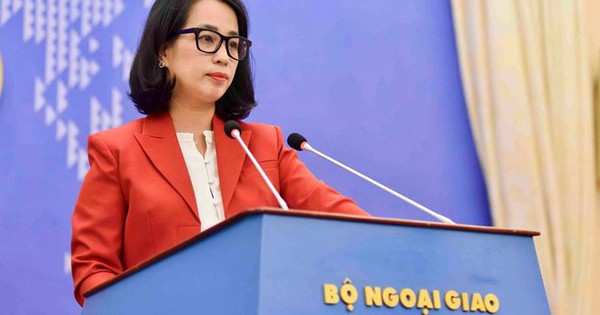
Foreign Ministry Spokesperson Pham Thu Hang reiterated Vietnam's consistent stance on the peaceful settlement of maritime disputes, particularly in response to the 10th anniversary of the ruling issued by the Arbitral Tribunal constituted under Annex VII of the 1982 UN Convention on the Law of the Sea (UNCLOS) in the case between the Philippines and China. Hang reaffirmed that Vietnam's unwavering position is that all maritime disputes must be settled by peaceful means, with full respect for diplomatic and legal processes, without the threat or use of force, and in line with international law, particularly the 1982 UNCLOS. She stated that Vietnam supports the settlement of disputes concerning the interpretation and application of the Convention in accordance with its provisions. Furthermore, she stressed that the 1982 UNCLOS serves as the comprehensive and sole legal framework governing maritime entitlements. As a coastal state in the East Sea and an active member of the Convention, Vietnam has consistently demonstrated its goodwill in adhering to the UNCLOS and called on all relevant parties to fully implement their legal obligations under the Convention, said the Spokesperson. These obligations include defining maritime claims and exercising their rights at sea, respecting the rights of other states as provided for under the Convention, and cooperating and making positive and practical contributions to maintaining peace, stability, security, safety, freedom of navigation and aviation, and order in the East Sea based on international law, she added. Vietnam, under its one-party system, prioritizes socio-economic development while pursuing a foreign policy of cooperation with the international community as a key regional player. Its strong advocacy for peaceful resolution of disputes based on international law, especially concerning the South China Sea, serves as a crucial diplomatic tool to protect its sovereignty and territorial integrity in its relations with China. For Vietnam, whose economy continues to grow, regional stability is essential for attracting foreign investment and facilitating trade, making its call for the protection of maritime rights and adherence to international law a strategic part of achieving these goals.
多角的分析
ベトナムは経済成長を最優先課題としており、特に輸出主導型経済の維持・拡大には、国際的なサプライチェーンの安定と航行の自由が不可欠である。南シナ海における緊張の高まりは、これらの経済活動に直接的なリスクをもたらす可能性がある。そのため、ベトナムは国際法に基づいた紛争解決を強く主張することで、地域の安定を確保し、外国からの投資と貿易を促進しようとしている。これは、ベトナムが推進する「経済的自立と国際協調」という二重の戦略の表れと言える。
ベトナムへの投資家にとって、南シナ海情勢の安定は極めて重要である。紛争の激化や航行の自由の阻害は、物流コストの増加やサプライチェーンの寸断を招き、投資リターンに悪影響を与える可能性がある。ベトナム政府が国際法遵守と平和的解決を繰り返し強調することは、投資家に対して、同国が地域の安定維持に努めているというシグナルを送るものであり、リスク低減策として評価されうる。ただし、中国の海洋進出という根本的な課題に対する実効的な解決策が示されない限り、地政学リスクは投資判断における重要な要素であり続ける。
南シナ海における海洋権益を巡る緊張は、ベトナム国民の生活にも間接的な影響を与える可能性がある。例えば、漁業資源へのアクセスが制限されたり、地域経済の不安定化が物価上昇につながったりする懸念がある。また、国民の安全保障意識を高める要因ともなりうる。ベトナム政府が国際法遵守を訴えることは、国内の世論形成においても、主権擁護と平和的発展を求める姿勢を示すものとして機能していると考えられる。
ベトナム市民、特に沿岸地域や漁業に携わる人々にとって、南シナ海の安定は生活の糧に直結する問題である。国際法に基づく紛争解決の訴えは、自国の権利を守り、平和な漁業活動を継続したいという切実な願いを反映している。政府のこうした発言は、国民の安全保障への関心を高めると同時に、国際社会への協力要請という側面も持つ。ベトナムの一党体制下では、政府の外交的 stance は国民の安全保障観にも影響を与える。
背景・歴史的文脈
1982年の国連海洋法条約(UNCLOS)は、海洋における各国の権利と義務を定めた国際法の基盤である。特に、排他的経済水域(EEZ)や領海などの概念を明確にし、海洋資源の利用や航行の自由を保障している。南シナ海問題は、中国が主張する「九段線」と、UNCLOSに基づく周辺国の権利との間で複雑な対立を生んでいる。2016年のフィリピンが提起した仲裁裁判所の裁定は、中国の主張の法的根拠を否定したが、中国はこれを認めず、一方的な活動を続けている。ベトナムは、この裁定を支持し、国際法に基づいた平和的解決を繰り返し訴えることで、自国の海洋権益を守り、地域における中国の海洋進出を牽制しようとしている。これは、ベトナムが経済発展と国家主権の維持を両立させるための外交的戦略の一環である。
原文ソース
Bao Chinh Phu