Vietnam's DNA Forensics: Reconnecting Families with Fallen Soldiers
Technology
2026年7月16日
5
VnExpress
Relations
🇻🇳Vietnam🇺🇸United States

Vietnam's DNA Forensics: Reconnecting Families with Fallen Soldiers

AI サマリー

Vietnam's Academy of Science and Technology is undertaking a critical mission to extract DNA from the remains of fallen soldiers, many unidentified for decades, to determine their identities. This endeavor aims to bring solace to bereaved families and reconstruct the nation's historical memory.

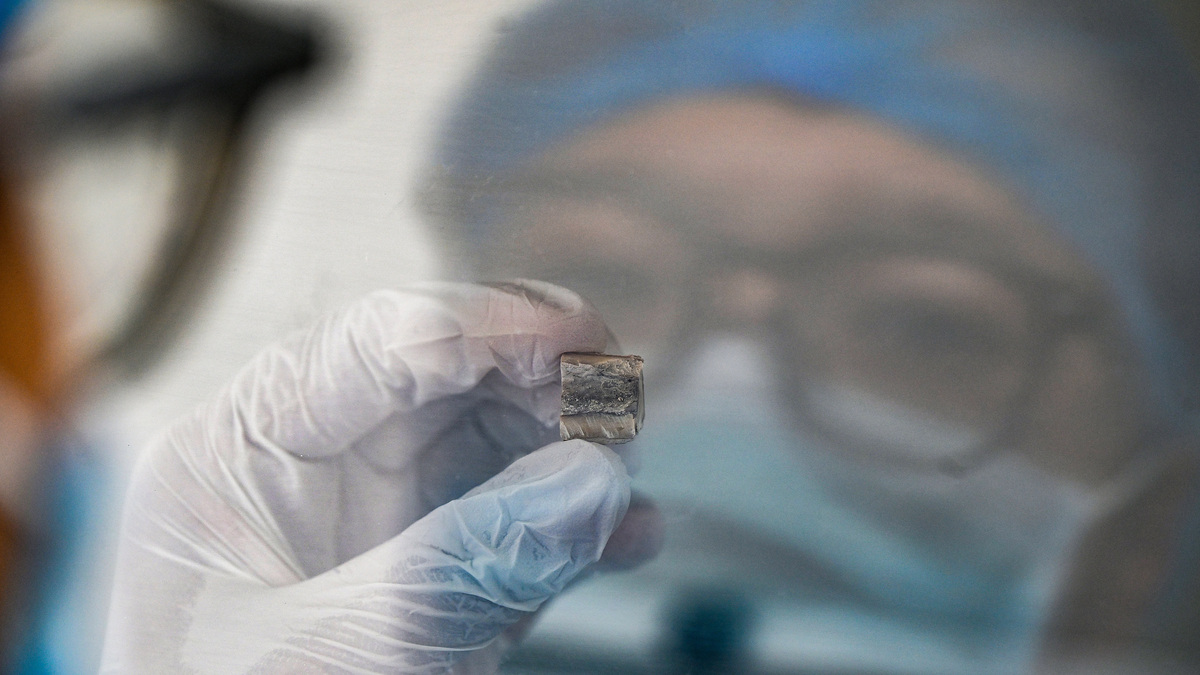
Vietnam's Academy of Science and Technology is engaged in the arduous task of extracting DNA from the remains of fallen soldiers, many of whom have remained unidentified for decades, to determine their identities. This endeavor is crucial for bringing solace to bereaved families and reconstructing the nation's historical memory. The Academy is one of five units responsible for DNA identification of unidentified remains within the ongoing "500-day, 270-day Campaign." Initially tasked with over 6,600 samples, the number requiring verification has now surpassed 10,000. Thousands of bone samples are meticulously preserved in a dedicated sample storage room. According to experts, the establishment of a gene bank is a vital step, enabling the screening and narrowing down of samples over a wide area, thereby shortening the time required for identification. Mr. Tran Trung Thanh, Director of the DNA Identification Center at the Institute of Biology (Vietnam Academy of Science and Technology), stated that the center is carrying out three main tasks: sample storage and preservation, routine DNA identification, and the implementation of a capacity-building project for identification, funded by the US Government through the International Commission on Missing Persons (ICMP). The "500-day, 270-day Campaign," running from March 15, 2026, to July 27, 2027, aims to search for and gather approximately 7,000 sets of remains of fallen soldiers, collect samples from unidentified graves nationwide, and identify about 18,000 bone DNA samples. Samples are transferred to the DNA Identification Center and stored in the Sample Storage Room. This room houses thousands of bone and tooth samples collected from war cemeteries across the country. Members of the quality management team must work in sterile cleanrooms to ensure the integrity of the bone samples. Absolute accuracy is a mandatory standard for every identified sample. Mr. Nguyen Hoang Vu, a member of the quality management team, explained that before DNA extraction, bone samples undergo rigorous surface treatment to eliminate contamination risks. "Bones that have been underground for decades often become calcified or contaminated by soil and bacteria. We have to meticulously grind away the outer layer, using only the purest inner core to ensure the identification results are not inaccurate," Mr. Vu said. After cleaning, the bone samples are ground into a fine powder. From here, scientists embark on a process likened to "searching for a needle in a haystack" – extracting DNA from remains that have lain underground for 50 to 70 years. Following preparation, the samples are processed through a series of steps including DNA extraction, DNA quantification, gene library construction, sequencing, and bioinformatics analysis. In the final step, the DNA data of the remains is compared with samples from relatives to determine kinship. To prevent mix-ups, the DNA Identification Center has developed a fully digitized sample management system. Each received bone sample is assigned a unique identification code, accompanied by an image of its current state and all technical parameters. This system allows for the traceability of the entire sample processing journey, from receipt, bone grinding, DNA extraction, to gene sequencing and result notification. Bone samples are currently being placed into an automated DNA extraction machine. After sample lysis, the lysate is centrifuged and fed into this system for DNA extraction and recovery. The sequencing system receives DNA samples that have undergone library construction and target DNA enrichment using specialized chemical kits. This technology enables the sequencing of degraded, short DNA fragments, while also analyzing thousands of genetic markers across the entire human genome, thereby enhancing the ability to determine kinship, even with distant relatives. While the Academy is responsible for identifying bone samples, the Ministry of Public Security conducts identification of relative samples for inclusion in the data bank. After results are obtained from both sides, the Ministry of Public Security will proceed with matching and send them back to the specialized units for a final conclusion report, which will serve as the basis for local authorities to notify the families of the fallen soldiers. Source: VnExpress

多角的分析

経済的影響

このDNA鑑定事業は、直接的な経済的収益を生むものではないが、国家の歴史的記憶の維持・再構築という観点から、長期的な社会安定に寄与する。また、米国政府からの技術支援や、最先端のDNA鑑定技術の導入は、ベトナムの科学技術分野全体の能力向上につながる可能性がある。これは、将来的なバイオテクノロジー産業の発展に向けた布石とも考えられる。

投資家心理

このニュースは直接的な投資機会を示すものではない。しかし、ベトナム政府が過去の戦争犠牲者への敬意と遺族への配慮を重視していることを示唆しており、これは社会的な安定性や長期的な政策の一貫性といった、投資環境の評価において間接的にプラスに働く可能性がある。また、科学技術分野への投資や協力の可能性を示唆する側面もある。

社会的影響

このDNA鑑定事業は、長年消息不明であった戦没者の身元を特定することで、遺族に深い安らぎと区切りをもたらす。これは、戦争の傷跡を癒し、国民の精神的な統合を促進する上で極めて重要である。また、この事業を通じて、若い世代が国の歴史や、戦争で犠牲となった人々の犠牲を理解する機会が生まれる。特に、遺族にとって、亡き家族との繋がりが科学的に証明されることは、計り知れない意味を持つ。

市民の声

この取り組みは、多くのベトナム市民、特に戦争で家族を亡くした遺族にとって、長年の悲願を叶えるものである。長年、誰にも知られることなく眠っていた家族の遺骨が、科学の力で「名前」を取り戻すことは、遺族に深い慰めと、ある種の区切りをもたらすだろう。これは、過去の犠牲への敬意を示すものであり、国民全体の歴史認識にも影響を与える可能性がある。

背景・歴史的文脈

ベトナム戦争(アメリカ戦争)をはじめとする数々の紛争を経て、ベトナムには未だに数多くの戦没者の遺骨が身元不明のまま眠っている。これらの遺骨の身元特定は、長年の国民的課題であり、戦争の記憶を継承し、遺族に慰安をもたらすための重要な取り組みと位置づけられている。2013年には、ベトナム政府は「戦没者遺骨の身元特定と管理に関する国家プロジェクト」を開始しており、今回の「500日・270日作戦」はその一環として、より集中的かつ迅速な鑑定を目指すものである。米国からの技術支援は、過去の対立関係を乗り越え、人道的な課題における協力関係を築く上での象徴的な意味合いも持つ。

原文ソース

VnExpress

原文を読む