General articles are free for 24 hours after publish.
Hagonoy Residents Protest Against Delayed Flood Solutions
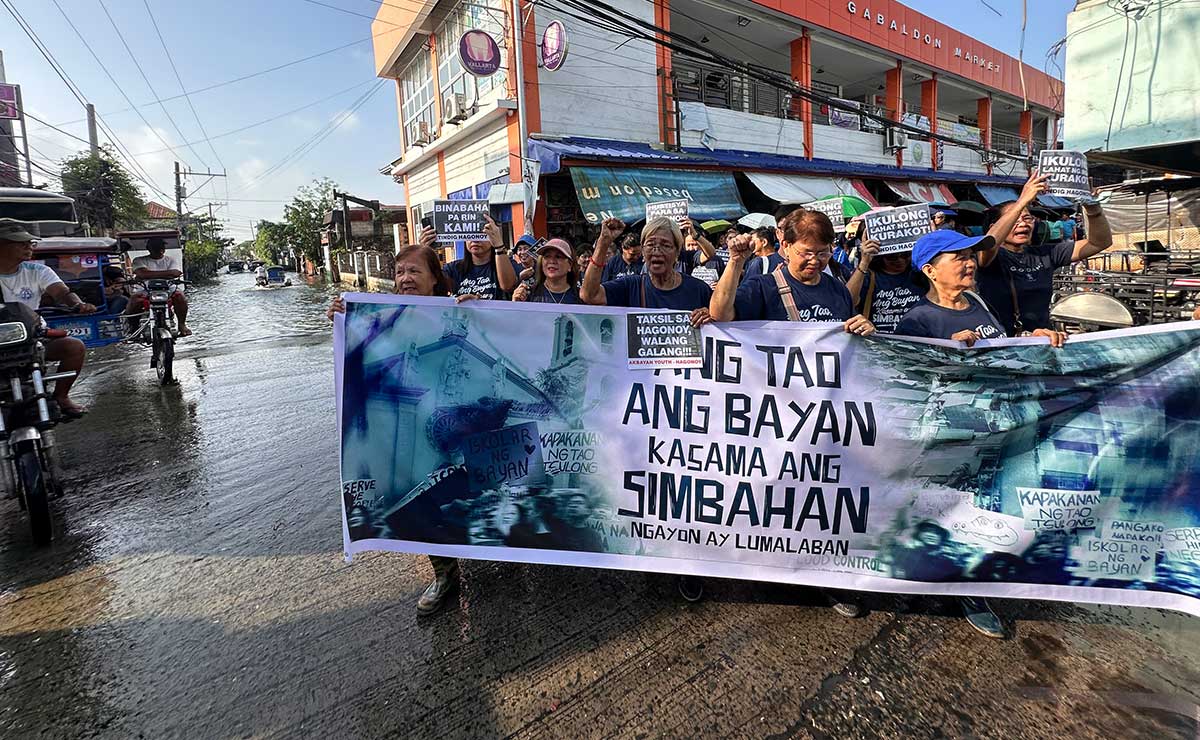
In Hagonoy, Bulacan, Philippines, church groups and residents protested the delayed flood control measures and alleged government corruption. They questioned the national government's capacity to address the perennial flooding issue.
HAGONOY, BULACAN, Philippines — Church groups and residents in this flood-prone town took to the streets to question the national government’s ability to solve the perennial flooding problem amid the persistent corruption. Fr. Rodel Ponce, parish priest of the National Shrine of St. Anne in Hagonoy, joined a protest march by civic movement Tindig Hagonoy. Hagonoy, a low-lying municipality in Bulacan province, is frequently inundated by floodwaters, particularly during the typhoon season and monsoon rains. Residents have long complained about the inadequacy of flood control infrastructure and the slow pace of government response. The protest highlights the deep-seated frustration of the community over the recurring floods, which disrupt daily life, damage property, and threaten livelihoods. The call for solutions is amplified by accusations of corruption, which many believe diverts funds and resources away from essential public services like flood management. Civic movements like Tindig Hagonoy play a crucial role in amplifying the voices of citizens and holding public officials accountable. Their involvement in the protest underscores the community's determination to seek tangible results and effective governance in addressing the critical issue of flooding. The national government has previously announced various infrastructure projects aimed at mitigating the impact of floods in vulnerable areas. However, the continued protests suggest that the effectiveness and implementation of these measures are still perceived as insufficient by the affected communities. This situation in Hagonoy is emblematic of broader challenges faced by many flood-prone areas in the Philippines, where the interplay of geographical vulnerability, climate change impacts, and governance issues creates a persistent cycle of disaster and recovery.
Original source
Inquirer NewsInfo