General articles are free for 24 hours after publish.
Mayon Volcano's SO2 Emissions Surge, Raising Concerns of Renewed Eruptive Unrest
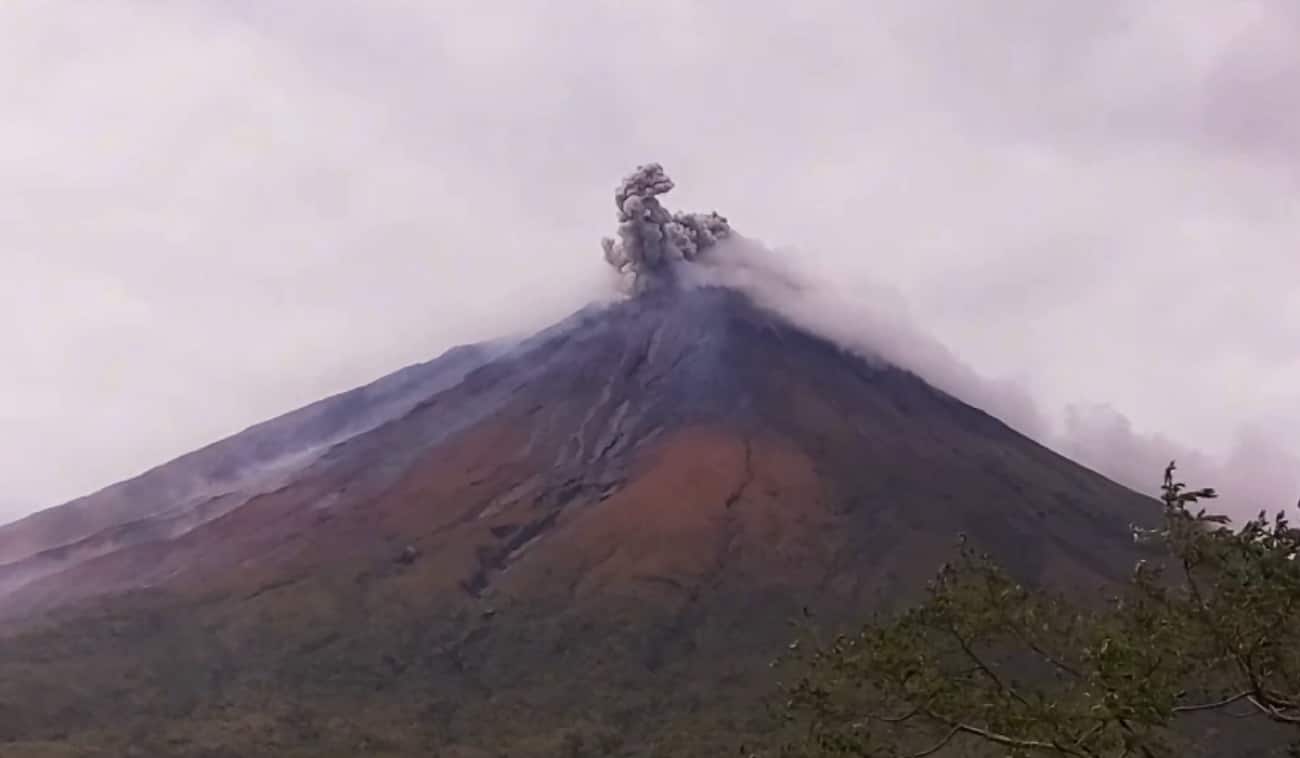
The Philippine Institute of Volcanology and Seismology (Phivolcs) reported a significant surge in sulfur dioxide (SO2) emissions from Mayon Volcano, reaching some of the highest levels recorded in months. Coupled with an increase in volcanic earthquakes and ground deformation, there are renewed warnings of potential eruptive unrest.
MANILA, Philippines — Mayon Volcano recorded its second-highest sulfur dioxide (SO2) emission since volcanic gas concentrations began declining in July, prompting state seismologists on Friday to warn of the possibility of renewed eruptive unrest. In an advisory, the Philippine Institute of Volcanology and Seismology (Phivolcs) said SO2 emissions from Mayon’s summit crater reached 8,165 tonnes per day on Thursday, based on averaged measurements from stationary ultraviolet spectrometry. This was significantly higher than the volcano’s average SO2 emission of 4,196 tonnes per day since its alert status was lowered to Alert Level 2 on Aug. 5. The increase was accompanied by a slight rise in low-frequency volcanic earthquakes (LFVQs), which Phivolcs attributed to volcanic degassing. As of noon this Friday, four LFVQs had been recorded by the Mayon Volcano Network, although real-time seismic energy release remained at background levels. Phivolcs also noted a short-term swelling or pressurization trend in the northern and eastern sectors of Mayon’s edifice based on readings from electronic tilt deformation stations. “Nonetheless, elevated volcanic SO2 emissions could forewarn of a potential shift to renewed eruptive activity at the summit crater,” Phivolcs said. The agency warned that a renewed eruption could generate life-threatening hazards, including pyroclastic density currents or uson, rockfalls, ballistic fragments, and extensive ashfall that could affect communities downwind of the volcano. Mayon remains under Alert Level 2, indicating a moderate level of unrest, but Phivolcs said there are new possibilities of eruptive unrest recurring. READ: Taal Volcano sulfur dioxide emissions log significant increase The public was reminded to stay out of the six-kilometer Permanent Danger Zone around the volcano. Communities and local governments within areas identified as vulnerable to pyroclastic density currents were also urged to prepare for a possible escalation to Alert Level 3. Phivolcs also advised increased vigilance against lahars and sediment-laden streamflows along channels draining the volcano, particularly during sustained heavy or intense rainfall. Civil aviation authorities were likewise urged to advise pilots to avoid flying close to Mayon’s summit, as ash and ballistic fragments from a sudden eruption could pose hazards to aircraft. —RENDELL IVAN MANUEL, INQUIRER.NET TRAINEE
Original source
Inquirer NewsInfo