Thailand's 'Cannabis Legacy': Eroding Global Trust and Worsening Domestic Issues
Thailand's cannabis legalization policy is facing international scrutiny, with accusations of it becoming a source for drug smuggling, leading to a loss of global trust. Domestically, concerns are rising over increased mental health issues and societal costs, highlighting the urgent need for a policy overhaul.
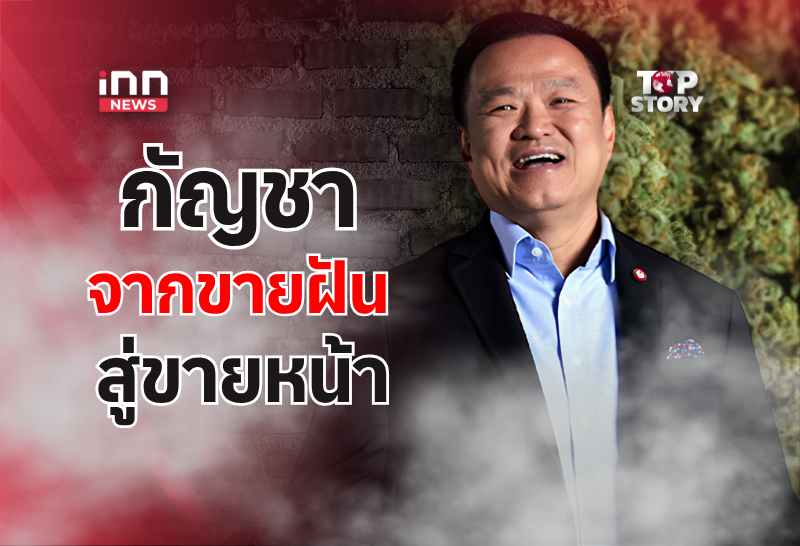
The Thai government is facing increased international scrutiny regarding drug issues, particularly following the arrest of a flight attendant in Australia for heroin smuggling. The United Kingdom has specifically pointed to Thailand as a source for cannabis smuggling that is causing international concern. Previously, Japan seized over 1.5 tons of cannabis from Thailand in 2025, a more than threefold increase from the previous year. Indonesia also recently dismantled a major cannabis bud smuggling network, identifying Thailand as the origin. This has been a significant blow to the Thai government, especially to the Bhumjaithai Party, led by Deputy Prime Minister Anutin Charnvirakul, which championed cannabis decriminalization as a flagship policy during the 2019 general election, successfully pushing for its passage in 2022. During that campaign, Anutin and the Bhumjaithai Party had promised that "growing six cannabis plants at home would be an economic hope, selling for 70,000 baht per kilogram." The "cannabis policy," once touted as a boon for medical use and pushed by politicians without sufficient foresight, has now become a major factor in Thailand being targeted for international drug issues, severely damaging its positive global image. Beyond damaging Thailand's reputation, the cannabis policy is also impacting the nation's future. Data from 2025 shows a continuous rise in psychiatric patients due to cannabis use, with new cases admitted to the public health system at a rate of 12.14 per 100,000 population. This significantly affects youth and creates a substantial burden on healthcare costs, representing the price society pays for a policy rushed for political gain rather than carefully designed for public protection. Deputy Prime Minister Anutin recently stated that those who smuggle cannabis out of the country will face consequences, attempting to distance himself from the issue by saying, "I drive policies based on government data and do everything within the law and constitution. If it's not good, I'm ready to shut it down, but all dimensions must be considered." While this is a principled response, the origins of the cannabis liberalization policy were a "flagship policy" for the Bhumjaithai Party's election campaign. Now, when damage occurs, the party cites "acting on government data," seemingly to absolve itself of responsibility. In reality, the political side, the Bhumjaithai Party, was the driving force that pushed for cannabis to be removed from the narcotics list on June 9, 2022, without adequate control laws in place, leading to a prolonged legal vacuum. Chayapong Champatat, the Minister of Public Health from the Bhumjaithai Party, affirmed that the government's cannabis policy strictly emphasizes medical and health purposes, unequivocally opposing recreational use. He stated that the situation has not been neglected as alleged and that the government is pushing for legislation to definitively close loopholes and solve long-term problems, namely the Cannabis and Hemp Act B.E. ..., which has completed public hearings and will include stricter criminal penalties for misuse. This cannabis liberalization crisis is not merely a drug problem, a public health issue, or a matter of national image. It is a test of the political ethics of those who championed the policy. If the outcomes prove that this policy has caused harm, the first step should be to acknowledge the truth, apologize to the public, urgently address legal loopholes, compensate those affected, and take responsibility for the consequences of a policy their party used for campaigning, rather than shifting blame to permanent officials. Source: INN News
多角的分析
大麻合法化政策は、当初、医療用途での経済効果や新たな産業創出が期待されたが、規制の不備から国際的な薬物密輸の温床となったことで、タイ経済への負の側面が顕著になっている。輸出入における薬物関連のリスク評価が上昇し、国際的なサプライチェーンにおけるタイの信頼性が低下する可能性がある。また、国内での精神疾患患者増加は、長期的に医療費の増大を招き、経済的負担となる。
タイにおける大麻政策の混乱は、外国人投資家にとってリスク要因となる。特に、規制の不透明性や国際的な薬物問題への関与は、タイへの直接投資や、大麻関連産業への投資判断を慎ぐ可能性がある。過去の「経済特区」や「観光振興」といった政策が、しばしば期待先行で実施され、その後の法整備や実効性が伴わなかった事例を想起させるため、慎重な姿勢が取られるだろう。
大麻合法化政策は、当初、医療用途や経済的恩恵を期待する声もあったが、規制の不備により、若年層を中心に精神疾患患者が増加しているという深刻な社会問題を引き起こしている。これは、教育現場や家庭にまで影響を及ぼし、社会全体の厚生を損なう可能性がある。また、国際的な薬物密輸の発生源と見なされることは、タイ国民の誇りやアイデンティティにも影響を与えかねない。
タイ国民、特に若年層やその保護者にとっては、大麻政策の混乱は直接的な健康被害と将来への不安をもたらしている。本来、医療や経済の活性化に繋がるはずだった政策が、薬物犯罪の温床となり、精神疾患の増加を招いた現実は、政策決定者への不信感を生んでいる。特に、公約として掲げられた期待と、現在の負の結果との乖離は大きい。
背景・歴史的文脈
タイにおける大麻政策は、2019年の総選挙でプラチャラート・タイ党が「一世帯6本の植栽、キログラムあたり7万バーツ」という公約を掲げ、医療目的での利用を推進したことに端を発する。同党は、大麻の非犯罪化を主要政策とし、2022年6月9日に大麻を麻薬リストから除外した。しかし、この決定は、法規制の整備が不十分なまま行われ、娯楽目的での乱用や国際的な密輸の温床となる懸念が指摘されていた。当初の期待とは裏腹に、国内では精神疾患患者の増加が報告され、国際社会からは薬物密輸の発生源としての批判が高まっている。
原文ソース
INN News