General articles are free for 24 hours after publish.
Ho Chi Minh City Council Considers 38 Resolutions to Implement Urban Development Law
Ho Chi Minh City's People's Council has convened a special session to deliberate 38 resolutions aimed at implementing the Urban Development Law. These include provisions for new areas such as urban planning, underground space management, and resettlement support.
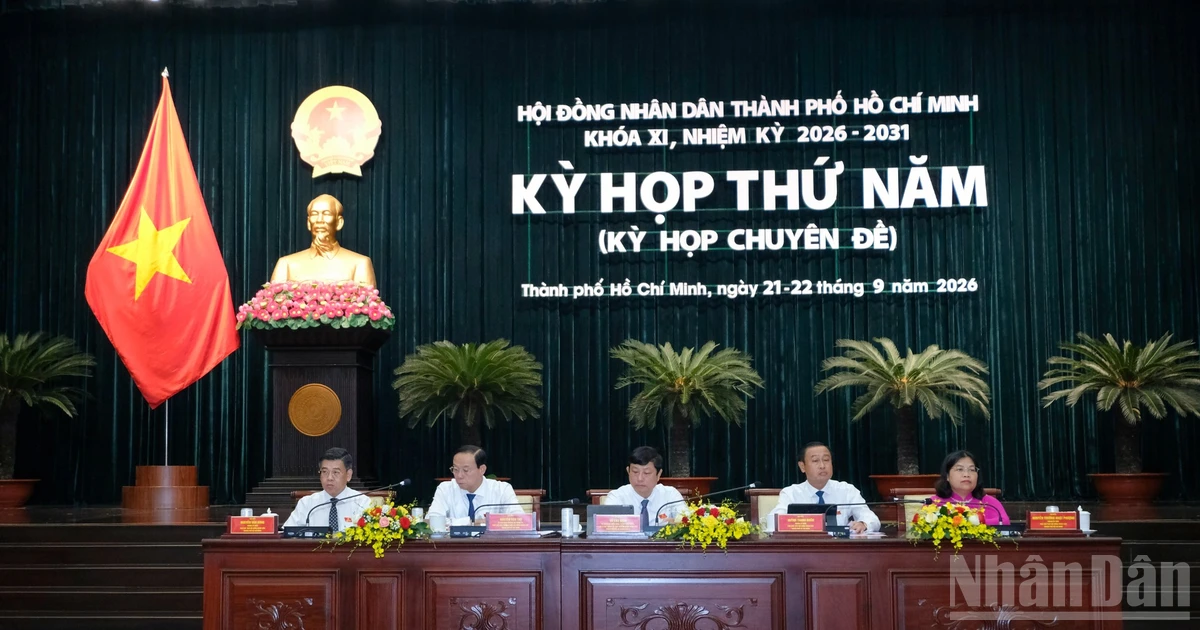
Ho Chi Minh City's People's Council convened the opening of its 5th special session for the 11th tenure (2026-2031) on September 21. This session is critically deliberating numerous contents to concretize the "Urban Development Law" of Vietnam, establishing policies and mechanisms tailored to the city's practical conditions and synchronized with related fields like planning, investment, land, construction, transportation, and housing. The council is set to review and decide on 38 items, comprising 29 draft resolutions of a normative legal character and 9 individual resolutions. Notably, 24 draft resolutions are dedicated to implementing the Urban Development Law, covering a wide scope and introducing many new issues that are not yet precedented and relate to many very important fields. Specifically, deliberations include draft resolutions on the city's master plan, urban and rural planning, architectural planning, underground space planning, transit-oriented development area planning, management and exploitation of underground works, and criteria, conditions, procedures for compensation, support, and resettlement projects prior to approving investment policies. These resolutions are vital for organizing future urban development spaces, efficiently managing and utilizing land resources and infrastructure, and shaping urban development methods. Additionally, the council will consider policies for education and training, medical cost support for vulnerable groups, support for healthcare workers and blood donors, expanding eligible participants and mechanisms for electricity trading, promoting science, technology, innovation, digital transformation, and entrepreneurship, and regulating training and professional development expenses for city officials and employees within the city's management scope. Furthermore, alongside resolutions implementing the Urban Development Law, the session will also review draft resolutions concerning national target programs (new rural construction, sustainable poverty reduction, socio-economic development for ethnic minorities and mountainous areas for the 2026-2030 period) within the city, meal support for boarding school students, urban upgrading projects in the southern bank of the Doi Canal, infrastructure development for the Northwest Solid Waste Treatment Complex, assigning competent agencies to implement the Rach Doi bridge construction project, forest land conversion for the Ben Thanh-Can Gio railway line, and the renovation and expansion of Nguyen Van Linh Street in Con Dao Special Zone. Speaking at the opening, Mr. Vo Van Minh, Chairman of the City People's Council, emphasized that these new policies must "create practical changes for residents and businesses." He stated that the session is taking place at a time when the city is focusing on implementing new policies and improving institutions, aiming to create a favorable environment to exploit potential, leverage advantages, and effectively mobilize resources for rapid and sustainable development. He stressed that a key task for Ho Chi Minh City is the urgent implementation of the Urban Development Law, which took effect on October 1, 2026. This is not only a legal requirement but also an opportunity for the city to innovate its management thinking and governance, effectively mobilize and use resources, and proactively and creatively solve practical issues arising from the development of a special, large-scale city that serves as the economic locomotive of the country. Mr. Minh urged delegates to thoroughly study each draft resolution, focusing on core issues, particularly the necessity of enacting policies, their scope and target audience, resource requirements, implementation feasibility, and their specific impacts on residents, businesses, and the city's development. He posed critical questions: "Does the policy address the practical issues that are and will arise? Does it have the superiority to resolve bottlenecks and maximize resource mobilization and utilization? Does it create additional room, momentum, and new vitality for the city's continuous development? Does it create practical changes in socio-economic life that residents and businesses can feel?" Regarding projects, delegates were asked to assess necessity, urgency, investment efficiency, resource balancing, progress, implementation plans, and impact on residents' lives before the council makes decisions. For support policies, fairness, transparency, and practical feasibility were emphasized, ensuring they reach the right beneficiaries and achieve their objectives. With a spirit of innovation, practicality, and high responsibility to voters and the city's people, Mr. Minh expressed confidence that delegates would leverage their wisdom and experience, engage in frank and constructive discussions, and focus on contentious issues, high-impact matters, new content, or areas needing further refinement. This aims to ensure that each resolution passed not only meets legal requirements but also addresses practical issues, contributing to the city's immediate and long-term development tasks. The session is expected to last 1.5 days, concluding on the morning of September 22. Source: Nhan Dan
Original source
Nhan Dan