General articles are free for 24 hours after publish.
US Arms Bottleneck Delays Hit Taiwan and Japan
Delays in US arms shipments are impacting East Asian allies like Taiwan and Japan. US munitions stockpiles are strained by support for Ukraine and the conflict in Iran, leading to uncertain delivery timelines. This raises concerns about maintaining defense capabilities amid escalating Chinese military pressure.
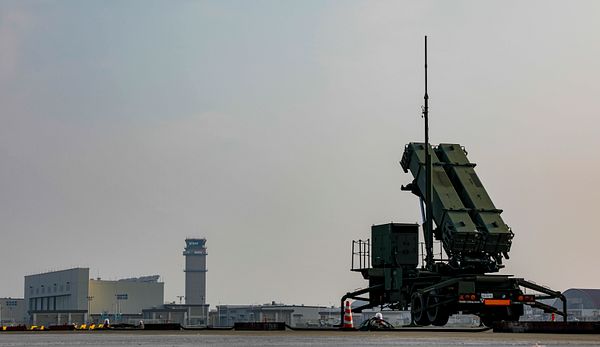
Read The Diplomat, Know The Asia-Pacific Taiwan’s Patriot missiles, and Japan’s Tomahawks are competing in the same queue as Ukraine and the Iran replenishment. But there are solutions. Service members with the Japan Air Self-Defense Force (JASDF) 2nd Air Defense Missile Group, set up the MIM-104 Patriot missile system during Patriot Advanced Capability-3 (PAC-3) deployment training at Marine Corps Air Station Iwakuni, Japan, Aug. 29, 2017. In May, Taiwan was offered no less than four different explanations for the delays in receiving a $14 billion arms package of Patriot PAC-3 interceptors and NASAMS air defense systems. Acting Navy Secretary Hung Cao testified to senators that the United States was “doing a pause” on the arms sale to Taiwan “in order to make sure we have the munitions we need for Epic Fury,” the U.S. military operation in Iran. U.S. Secretary of State Marco Rubio then claimed that the sale was under review, not “paused.” Secretary of Defense Pete Hegseth said it wasn’t about Iran at all: “our stockpiles are more than suited… both there [in Iran] and around the globe.” Meanwhile, U.S. President Donald Trump said the arms sales were “a very good negotiating chip” with China, suggesting a purely political motivation for the delay. Beyond the problem of conflicting explanations, none of these statements provided the answer Taipei really wants: a delivery date. Taiwan is not alone in waiting for promised U.S. weapons. The U.S. government informed Japan that delivery of 400 long-awaited Tomahawk cruise missiles would be delayed two years to meet drawdown demands from the current war in Iran. The problem is obvious: the U.S. has finite supplies of these missiles, and a growing need. Taiwan and Japan are queuing up, in the same line, behind Ukraine and behind resupplies for the Iran war. Lockheed Martin exceeded their production record with over 500 interceptors in 2024. But the U.S. military itself shot nearly 1,500 Patriot interceptors in the Iran war. In the fiscal budget for next year, the U.S. Army asked for over 2,700 interceptors, a large jump from the 357 it previously funded. Taiwan’s order of 102 interceptors sits somewhere within that request. Japan’s order does too. The U.S. requirement for 2,700 interceptors merely scratches the surface of the problem. The United States is facing depleted assets of its own while also tasked with supporting vital allies through arms deliveries. If the United States spent 1,500 interceptors in a matter of months on Iran, what will Taiwan require to defend itself? Certainly, more than the 102 systems that currently only exist on paper. In evaluating the strength of U.S. deterrence, Chinese military and political leaders will consider whether or not they can deplete U.S. and allied stocks more rapidly than they can replenish them. Beijing doesn’t have to guess if the United States can sustain a major war in the Indo-Pacific; the U.S. fiscal budget request, the contracts awarded, and the backlog of arms sales are all public information. U.S. allies aren’t blind to this. Chen Yi-fan of Tamkang University wrote that even if the deal was opened up for bidding immediately it would take four to five years for a Patriot system to arrive in Taiwan – and that’s the exact timeframe during which American and Taiwan planners believe a crisis could occur. Meanwhile, the AUKUS initiative was retooled in May due to the realization that the United States would be unable to produce new submarines for Australia. Allies know what that means. You can’t ramp up factories, suppliers, machine shops, and skilled labor immediately. Even when Congress appropriates budgets, production capacity slotted to come online in 2030 isn’t going to deter Beijing in 2027. Funding the U.S. munitions supply chain is no longer the bottleneck. The challenge is accelerating the construction timeline for new production capacity. The normal sequence is government demand first, then new capacity being developed. Contracts are awarded before firms invest in facilities, machines, and the people who will do the work. Flipping that model on its head could shorten the time between a shortage and the production to address it by years. Some private firms are rapidly building capacity and production, before contracts are even awarded. They’re putting their own money where their mouths are and betting on guaranteed future demand. One of the leaders in that race is Hadrian, recently valued at nearly $8 billion in its latest funding round. In March, the private manufacturer opened Factory 4: a 2.2 million square foot machine shop in Cherokee, Alabama making parts for the Virginia- and Columbia-class submarines, the most relevant vessels to a potential war in the western Pacific. Under AUKUS, the United States was supposed to provide Australia with a new Virginia-class submarine before production constraints forced it to settle for in-service subs instead. Hadrian’s move seeks to directly address one of the largest challenges facing the United States’ Navy and its Indo-Pacific presence. This approach is the one which should be replicated: they invested over $1.5 billion in private capital before receiving a roughly $900 million contract from the Navy. The same model could expand the capabilities needed by Taiwan and Japan. In December, Lockheed Martin signed an MOU with Hadrian to co-locate a machine shop and inspection facility within Lockheed’s factory that produces the PAC-3 MSE and THAAD interceptors. To be clear: this is an arrangement, not a production deal. The company claims their Opus manufacturing system can have new production facilities operational in less than six months and new technicians operating at full productivity in 30 days. These are not vetted performance metrics, just internal targets. That said, Hadrian has already been producing parts for Anduril’s autonomous weapons since 2023. Anduril says it has decreased delivery times up to 50 percent. Scaling up machine shops is no longer a pipe dream. Part of the solution will also come from other countries. Japan currently produces PAC-3 interceptors under license at Mitsubishi Heavy Industries at a rate of about 30 interceptors per year, with the potential to double production. In November, Japan successfully exported its first domestically manufactured PAC-3 interceptors to the United States. Production is bottlenecked by the Boeing seeker; the new seeker production lines won’t be running until 2027. However, Japan and the United States are negotiating joint production of the PAC-3 MSE. Japan could expand production of its own seekers, avoiding the bottleneck for itself but also for every other Patriot user in the area. Taiwan cannot manufacture Patriots under license, but it can ramp up manufacturing for drones, naval mines, and shore-based missiles. These conversations might not make headlines, but they would contribute more to Japan and Taiwan’s defense than one more extended det
Original source
The Diplomat Indonesia