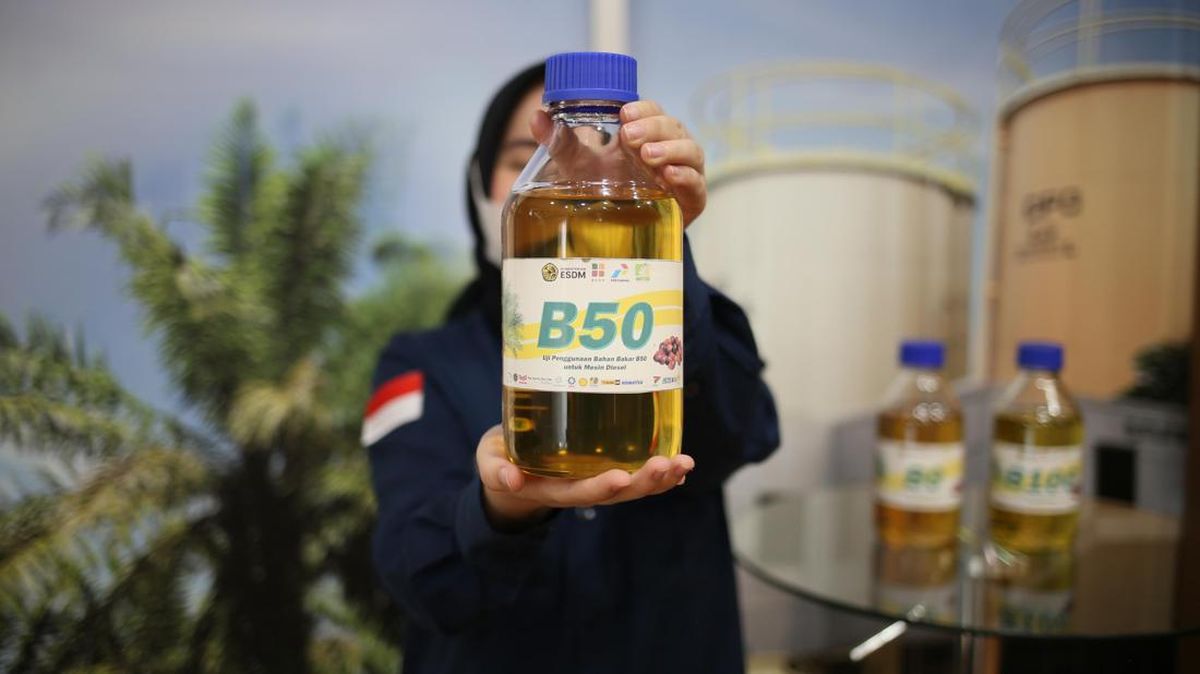
President Prabowo to Officially Launch B50 Biodiesel on July 9, 2026
Indonesia officially begins implementing B50 biodiesel (50% palm oil blend with diesel) on July 1, 2026. President Prabowo is slated to formally launch it on July 9. This policy aims to diversify energy sources and reduce reliance on fossil fuels.
This article requires PRO
This article is outside the free access window or is a special report. PRO unlocks it and the full archive.
Related articles
- Indonesia to Launch B50 Biodiesel on July 9, 2026
Indonesia is set to launch its B50 biodiesel blend, incorporating 50% bio-content, on July 9, 2026, as part of its energy transition strategy. This initiative aims to enhance domestic energy self-sufficiency and reduce environmental impact.
- Indonesia Gears Up for B50 Biodiesel Rollout, Pertamina Confirms Infrastructure Readiness
PT Pertamina (Persero) has confirmed its infrastructure is fully ready to distribute the new B50 biodiesel fuel. The state-owned company awaits government directives on the launch and implementation timeline, assuring nationwide supply readiness.
- Indonesia Commences B50 Biodiesel Rollout at 29 Fuel Terminals
Indonesia has begun supplying biodiesel with a 50 percent blend (B50) at 29 major fuel terminals nationwide, a move aimed at enhancing energy self-sufficiency and reducing reliance on fossil fuels.