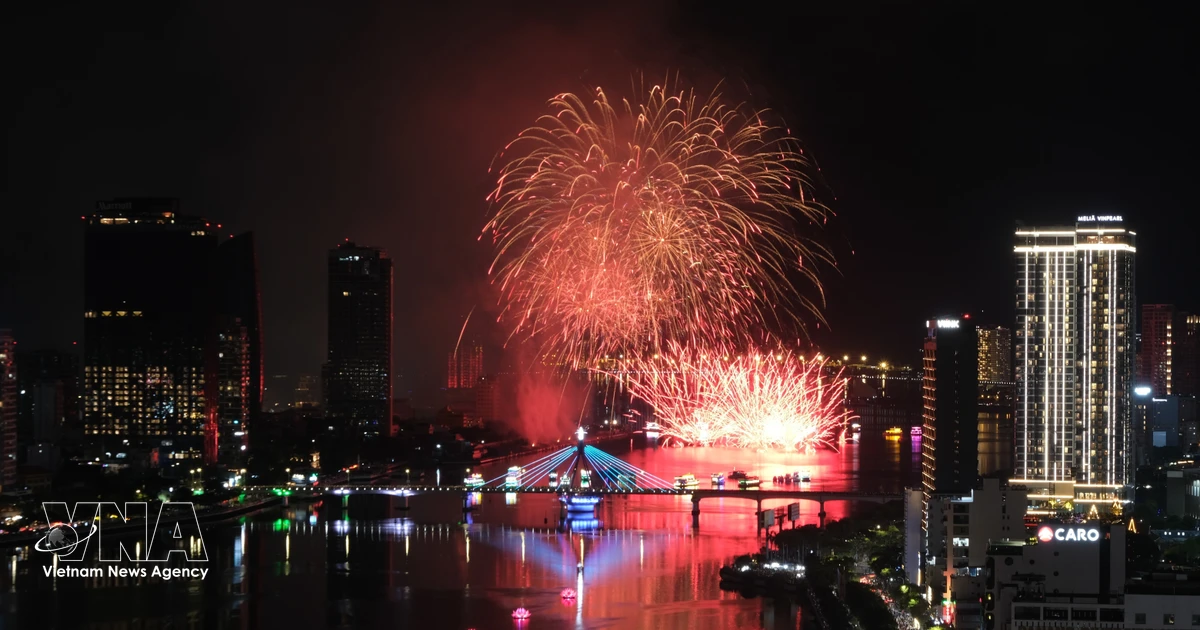
Fireworks and Culture Drive Vietnam's Tourism Growth in Southeast Asia
Culture
2026年7月6日
4
VietnamPlus English

Fireworks and Culture Drive Vietnam's Tourism Growth in Southeast Asia

AI サマリー

Vietnam's tourism sector is experiencing robust growth, driven by diverse attractions like the Da Nang International Fireworks Festival. The country is solidifying its position as a premier destination in Southeast Asia, attracting increasing international attention.

Three competition nights in, DIFF 2026 is reinforcing its position as Southeast Asia’s premier fireworks festival and a top summer destination in Asia. Themed "Vision," the two teams brought the festival's qualifying round to a spectacular close with performances that combined artistic storytelling, synchronised music and cutting-edge pyrotechnic techniques. The two teams were selected by the the jury of DIFF 2026 after the qualifying rounds, based on criteria including concept and theme, creativity, pyrotechnic effects, synchronisation between music and fireworks, overall performance quality, and audience impact. Da Nang is home to nearly 70 craft villages and traditional craft villages, along with around 3,000 craft establishments; many of these have become popular tourist attractions. The country received around 1.7 million international visitors in June alone, an increase of 14.7% from the same month last year, despite the month traditionally being part of the low travel season. Vietnam’s tourism performance has been widely regarded as a bright spot at a time when the global tourism industry continues to face significant challenges, including geopolitical tensions, armed conflicts in several regions, slowing global economic growth, rising oil prices and higher travel costs. According to Biba Magazine, Vietnam's regional culinary diversity, fresh ingredients and refined cooking techniques have elevated its cuisine far beyond iconic dishes such as pho and spring rolls, making it one of the country's most memorable attractions for international visitors. According to Nguyen Trung Khanh, Director General of the Vietnam National Authority of Tourism (VNAT), FIT has become one of the defining trends in post-pandemic tourism. Increasingly, travellers are seeking flexibility, personalised experiences and authentic cultural engagement, prompting destinations worldwide to rethink their tourism products, services and marketing strategies. In less than a decade, Phu Quoc has grown from around 1.45 million visitors in 2016 to more than 8.1 million in 2025. In the same year, Sa Pa welcomed around 4.3 million visitors, while tourism revenue increased more than 11 times compared with the period before synchronised investment was introduced. With strong growth momentum, strategic investment in quality tourism, upgraded infrastructure and increasingly diversified source markets, Vietnam is steadily reinforcing its position as one of Southeast Asia’s most dynamic and promising tourism destinations. On a weekend morning, the “5 Cua O” (Hanoi Five Gates) heritage train pulled out of Hanoi Railway Station to the strains of “xam tau dien” - a traditional folk music echoing through a community carriage. Outside the window, the bustle of the Old Quarter gradually receded and the iron span of the historic Long Bien Bridge slid into view. Located about 80km from downtown Ho Chi Minh City, Dinh Mountain stretches across Tan Hai, Long Huong, and Chau Pha wards. As the first airline to operate scheduled nonstop flights between Phu Quoc and Chengdu, Sun PhuQuoc Airways is also introducing launch offers of up to 20% off fares, complimentary Sun World Hon Thom Cable Car tickets, and exclusive privileges across the integrated Sun Group ecosystem. By combining modern entertainment with local cultural and ecological experiences, Ho Chi Minh City's coastal destinations are seeking to offer visitors more diverse and memorable holidays this summer Indian arrivals to Vietnam have risen sharply from around 100,000 before 2016 to 750,000 in 2025, 4.5 times higher than in 2019, driven by expanding direct air routes. The number of Vietnamese visitors to India has also maintained an average annual growth rate of 17–20%. Affordable hotels, direct flights, easy visas and breathtaking landscapes are making Vietnam one of the most sought-after international destinations for Indian travellers looking for value and unforgettable experiences. Located between Voi (Elephant) Cave and Ma Da Lake in the Ma Da Valley, within the park’s strictly protected zone, the cave measures about 3,000 metres in length and 70 metres in average width, with several chambers extending beyond 100 metres. It has two entrances leading to separate branches. While the main entrance covers about 5 sq.m, the exit is narrow, allowing passage for only one adult at a time. The Public Transport Management Centre under the city's Department of Construction said on June 25 that the new non-subsidised route (DL06) will connect Saigon Bus Station and Binh Trung. The service will be operated by World Travel Trading JSC using 60-seat open-top double-decker buses. An unexplored cave with a nearly 70-metre-wide entrance and striking multicoloured stalactites has been discovered in the Bac Huong Hoa Nature Reserve in the central province of Quang Tri. Did you know that Vietnam is home to an island where three attractions have been recognised by Guinness World Records? That destination is none other than Phu Quoc, recently named by Travel + Leisure among the top two islands in Asia-Pacific in 2026. Da Nang’s appeal has been further strengthened after being ranked second on Lonely Planet’s list of Asia’s most attractive summer destinations. The recognition underscores the city’s growing role as a tourism and leisure hub in the region. According to the Vietnam National Authority of Tourism, Con Son, the largest island in the Con Dao archipelago, is renowned for its dramatic granite cliffs, pristine beaches and crystal-clear waters off Vietnam’s southeastern coast. The publication said Hanoi often leaves visitors with an immediate impression of energy and vitality, marked by its busy streets and constant movement. Beneath the bustling urban rhythm, however, lies a city rich in history and culture, featuring iconic landmarks such as the Temple of Literature, Hoan Kiem Lake, the Hanoi Opera House, the Ho Chi Minh Mausoleum and the One Pillar Pagoda. Copyright, VietnamPlus, Vietnam News Agency (VNA) Editor-in-chief, Mr. Tran Tien Duan.

多角的分析

経済的影響

ベトナムの観光産業の成長は、国際的な観光客の回復と国内消費の活発化に支えられている。花火フェスティバルなどの大規模イベントは、直接的な観光収入だけでなく、関連産業(宿泊、飲食、交通、小売)への波及効果も大きく、地域経済の活性化に貢献している。特に、パンデミック後の旅行者のニーズ変化(柔軟性、体験重視)に対応した多様な観光商品の開発が、持続的な成長の鍵となっている。これは、ベトナム経済がサービス業、特に観光業への依存度を高めている現状を示唆している。

投資家心理

ベトナムの観光セクターへの投資は、高い成長ポテンシャルを秘めている。特に、インフラ整備が進むリゾート地や、ユニークな文化体験を提供できる地域への投資が注目される。国際的な航空路線の拡充や、ビザ緩和といった政府の支援策は、海外からの投資を呼び込む追い風となる。ただし、グローバル経済の不確実性や、地域間の開発格差といったリスク要因も存在するため、慎重な市場分析が求められる。

社会的影響

ダナン国際花火フェスティバルは、地域住民にとっても誇りとなるイベントであり、都市の国際的なイメージ向上に寄与している。一方で、観光客の増加は、交通渋滞、インフラへの負荷、文化遺産への影響といった課題も生じさせる可能性がある。特に、観光客と地元住民との間の摩擦や、観光収入の地域間・階層間での分配の公平性などが、今後の社会的な課題として問われることになるだろう。また、伝統工芸村のような地域文化の保護と観光開発の両立も重要である。

市民の声

ベトナム国民にとって、花火フェスティバルのような国際的なイベントは、国内のエンターテイメントの選択肢を広げ、生活に彩りを与えるものとなっている。また、外国人観光客の増加は、雇用機会の創出や、地域経済の活性化を通じて、生活水準の向上に貢献する可能性がある。しかし、観光地の混雑や物価の上昇は、地元住民の日常生活に影響を与えることも考えられる。特に、ハノイやホーチミン市のような大都市では、公共交通機関の利用者の増加も無視できない。

背景・歴史的文脈

ベトナムの観光産業は、1986年のドイモイ(刷新)政策以降、市場経済化が進む中で徐々に発展してきた。特に2000年代以降、政府は観光を国家的な戦略産業と位置づけ、インフラ整備やプロモーションに力を入れてきた。2015年のビザ緩和以降、外国人観光客は増加傾向にあったが、2020年からのパンデミックで一時的に打撃を受けた。しかし、2022年後半からの経済再開とともに、急速な回復を見せている。ダナン国際花火フェスティバルは、2008年に始まり、ベトナム中部地域の観光振興の象徴的なイベントとなっている。これは、ベトナムが単なる製造拠点から、多様な魅力を持つ観光デスティネーションへと進化しようとする国家戦略の一環である。

原文ソース

VietnamPlus English

原文を読む