Thai Economy Slows in Q2 as Energy Costs and Travel Disruptions Hit Tourism
Economy
2026年7月31日
6
Thai Enquirer

General articles are free for 24 hours after publish.

Thai Economy Slows in Q2 as Energy Costs and Travel Disruptions Hit Tourism

Share
AI Summary

Thailand's economy slowed in the second quarter as higher energy prices and travel disruptions linked to the Middle East conflict weakened tourism, household spending, and manufacturing, according to the Bank of Thailand. While some indicators improved in June, the full-year growth forecast remains at 2.3%.

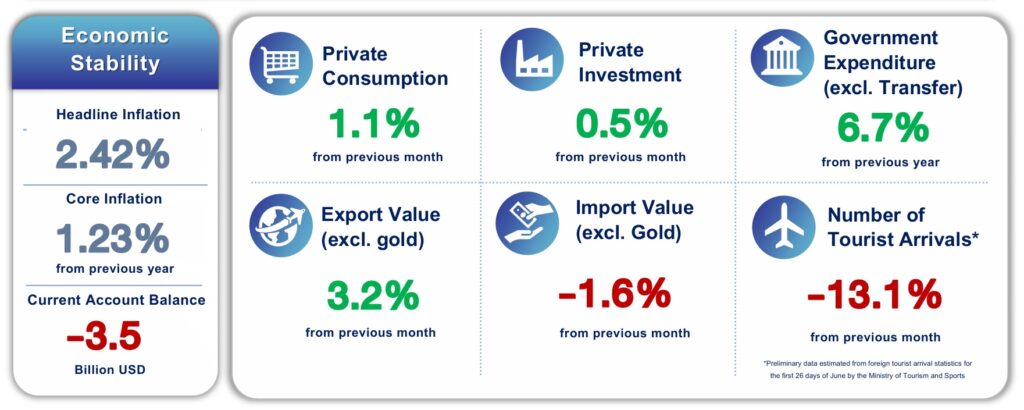
Thailand’s economy slowed in the second quarter of 2026 as higher energy prices and travel disruptions linked to the Middle East conflict weakened tourism, household spending and manufacturing, the Bank of Thailand (BOT) said. Economic conditions broadly stabilised in June. After seasonal adjustment, private consumption rose 1.1% from May, private investment increased 0.5%, and merchandise exports excluding gold climbed 3.2%. Imports excluding gold declined 1.6%, while government expenditure excluding transfers expanded 6.7% from a year earlier. Tourism remained the principal drag. Seasonally adjusted foreign tourist arrivals fell 13.1% from May, while the tourism-receipts index dropped 12.8%. The arrivals figure was based on preliminary data covering the first 26 days of June. Arrivals declined particularly from the Middle East, Europe, China, India and South Korea as elevated energy costs weakened demand and reduced flight services. Malaysian arrivals also fell after an unusually long holiday period boosted travel in May. The downturn weighed on hotels, restaurants and passenger transport. Private consumption declined over the second quarter as higher living costs constrained households, although government measures helped drive June’s monthly improvement. Spending on consumer goods rose, while passenger-car and motorcycle sales benefited from greater demand for electric vehicles. Manufacturing production declined because of refinery maintenance and weaker output of chemicals, non-electric vehicles and electrical appliances. Alternative indicators based on manufacturers’ tax filings nevertheless suggested stronger sales among electronics and machinery producers. Technology remained a bright spot. Electronics and other technology-related exports expanded in line with the global electronics upcycle and data-centre investment. Imports of electronic parts and machinery also increased, highlighting the sector’s reliance on imported inputs. Headline inflation stood at 2.42% year on year in June, while core inflation was 1.23%. Lower energy, meat and vegetable prices reduced headline inflation from May, but the gradual pass-through of business costs pushed up prices for prepared food and personal-care products. The current account recorded a US$3.5 billion deficit in June. The deficit narrowed from the previous month as the services, income and transfers balance improved following the end of the seasonal profit and dividend repatriation period. The trade deficit was broadly unchanged because increased gold imports largely offset lower fuel imports. Government spending grew from a year earlier, supported by pension, personnel and medical payments, infrastructure disbursements and carry-over stimulus projects. Capital spending by state-owned enterprises declined. Labour-market conditions remained broadly stable in June and improved slightly over the quarter. The BOT cautioned that manufacturing employment required close monitoring because of weaker production, higher costs and intensifying competition from imports. The central bank forecasts economic growth of 2.3% in 2026, with average headline inflation of 2.8%. It said key risks included the Middle East conflict, U.S. trade policy, the tourism recovery, elevated household and business costs, the effectiveness of government support and El Niño conditions. The post Thai Economy Slows in Q2 as Energy Costs and Travel Disruptions Hit Tourism appeared first on Thai Enquirer.

0

Original source

Thai Enquirer

原文を読む