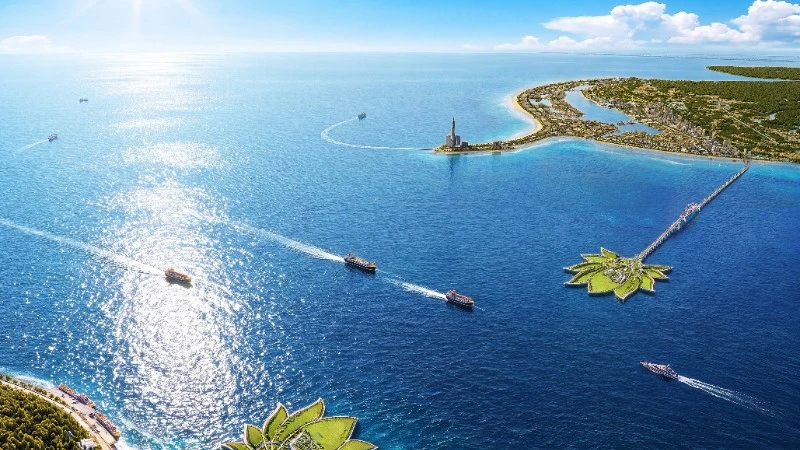
Ho Chi Minh City Bridges the Sea: Can Gio-Vung Tau Coastal Bridge Construction Begins
Ho Chi Minh City has commenced construction on a nearly 14km sea-crossing bridge connecting Can Gio and Vung Tau. This project, costing over 93 trillion VND (approximately $5.2 billion USD), features Vietnam's first undersea tunnel and is one of the country's largest infrastructure endeavors. Upon completion, it is expected to significantly reduce travel time and boost economic development and tourism in the coastal region.
Ho Chi Minh City has commenced the construction of a groundbreaking sea-crossing bridge connecting Can Gio and Vung Tau, a project poised to significantly expand the city's development space towards the sea. In commemoration of the 50th anniversary of Saigon-Gia Dinh City being renamed after President Ho Chi Minh (July 2, 1976 – July 2, 2026), Ho Chi Minh City has simultaneously launched eight key projects spanning multiple sectors, from infrastructure to culture, history, and landscape. Among these, the Can Gio-Vung Tau sea-crossing bridge project stands out as crucial for advancing the city's maritime development strategy. The project will span approximately 14.06 kilometers, starting from Can Thanh-Long Hoa Avenue within the Vinhomes Green Paradise megacity in Can Gio District and terminating at the intersection with 30/4 Street in Vung Tau City. The estimated total investment exceeds 93 trillion VND (approximately $5.2 billion USD). According to the developer, Vingroup, this is a special-grade transportation infrastructure project requiring complex technical specifications, with an anticipated construction period of three years. Upon completion, travel time between Can Gio Island and the renowned tourist destination of Vung Tau will be reduced from the current 30-45 minutes by ferry to just 10 minutes. The bridge will feature six lanes, allowing for speeds of 80 km/h. Notably, the project includes over 8 kilometers of bridge sections, a 3.85-kilometer undersea tunnel, and approximately 2.15 kilometers of approach roads, making it Vietnam's first and largest sea-crossing road and tunnel project. Furthermore, the bridge boasts a unique design, with giant lotus flower motifs adorning both tunnel entrances, symbolizing a bloom rising from the ocean. The tunnel entrances will also house amenities for travelers, including dining, essential services, EV charging stations, and modern seaside promenades. This distinctive route will not only serve as vital transportation infrastructure but also evolve into a unique tourist attraction. The Can Gio-Vung Tau sea-crossing bridge is expected to unlock development potential along the coast, invigorate the regional marine economy, tourism, and logistics, thereby enhancing Ho Chi Minh City's position within the maritime economic zone. The project clearly demonstrates Ho Chi Minh City's proactive and decisive approach to implementing economic and social development tasks. It is set to generate new momentum and drive, propelling the city into a phase of rapid and sustainable growth, befitting its honor of bearing the name of President Ho Chi Minh, the great leader of the Vietnamese nation. Source: Nhan Dan
多角的分析
この連絡橋プロジェクトは、ホーチミン市と近隣のブンタウ市を結ぶことで、物流コストの削減と移動時間の短縮に大きく貢献する。これにより、両地域間の経済活動が活性化し、特に沿岸部の観光業、水産業、そして将来的な工業団地の開発が促進されると見込まれる。総額93兆ドン(約5200億円)という巨額の投資は、ベトナム経済の成長戦略におけるインフラ投資の重要性を示しており、特に海洋経済の発展に焦点を当てた国家的な優先事項を反映している。Vingroupのような民間企業の積極的な参画は、PPP(官民連携)モデルの成功例となり得る。
このプロジェクトは、ベトナムのインフラ開発、特に交通網の近代化への投資機会を示唆している。総投資額の大きさは、長期的な視点でのインフラ投資のポテンシャルを示唆する一方、建設期間の短さと技術的な複雑さは、リスク評価において重要な要素となる。Vingroupのような大手デベロッパーの関与は、プロジェクトの実行能力に対する信頼性を高めるが、為替リスクや建設資材価格の変動、環境規制への対応などが投資家にとって考慮すべき点となる。完成後の地域経済への波及効果は、不動産開発や観光関連産業への投資を呼び込む可能性がある。
カンザー島は現在、フェリーでのアクセスに依存しており、日常生活や物資の輸送に不便が生じている。この連絡橋の開通は、カンザー住民の移動の自由度を大幅に向上させ、医療や教育へのアクセス改善、雇用機会の拡大につながる可能性がある。一方で、開発の進展に伴う環境への影響や、地域社会の生活様式の変化への適応が課題となる。また、トンネル入口に設けられる商業施設や遊歩道は、地域住民だけでなく観光客にとっても新たな交流の場となることが期待される。
カンザー住民にとって、この橋は生活を劇的に変える可能性を秘めている。これまで不便だった移動が格段に容易になり、ホーチミン市中心部やブンタウへのアクセスが飛躍的に向上する。これにより、仕事の選択肢が増えたり、より質の高い医療や教育を受けやすくなったりすることが期待される。また、観光客の増加は地域経済に恩恵をもたらす可能性があるが、同時に、生活環境の変化や物価の上昇といった懸念も生じるだろう。特に、島特有の自然環境が開発によって損なわれないかという不安も存在する。
背景・歴史的文脈
ベトナムは、経済成長の加速と国際競争力の強化を目指し、インフラ開発を国家戦略の柱として位置づけている。特に、ホーチミン市は経済の中心地として、その周辺地域との連携強化が不可欠である。カンザー地域は、ホーチミン市から地理的に孤立しており、開発のポテンシャルを十分に活かしきれていなかった。この橋の建設は、2016年に発表されたホーチミン市の「海洋経済開発戦略」の一環であり、カンザーを新たな経済・観光拠点として発展させるための重要な一歩となる。ベトナム政府は、一党体制下での強力なリーダーシップのもと、大規模インフラプロジェクトを推進しており、これはその典型例と言える。
原文ソース
Nhan Dan