Ho Chi Minh City Offers Free Bus Rides to Boost Public Transport Use
Ho Chi Minh City has made all 134 bus routes free of charge starting July 1st. This initiative is part of the city's long-term strategy for sustainable urban development, aiming to encourage public transport adoption and promote urban greening.
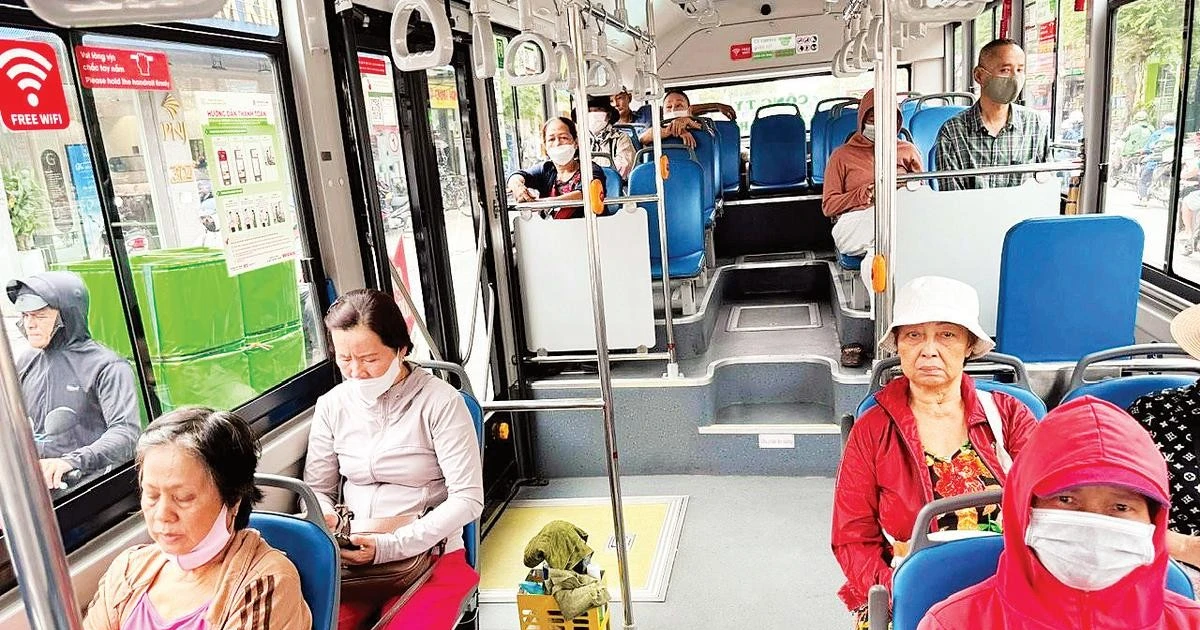
Ho Chi Minh City has taken a significant step towards sustainable urban development and promoting public transportation by making all 134 intra-city bus routes free of charge starting July 1st. This initiative is crucial for the city's goal of building a civilized, green urban area and establishing public transport as a pillar of its long-term development strategy. Buses serve as a vital "lifeline," connecting with the metro network and other transport modes, making travel more convenient and safer for citizens. On the first day of the free fare policy, many residents utilized the service. For instance, Ms. Nguyen Thi Lanh, residing near Hoa Hung Market, used route 65 (Ben Thanh - An Suong) to visit her daughter and grandchildren. She commented, "The bus is comfortable with air conditioning, and it's even better today because it's completely free. As a senior citizen, I usually travel for free anyway, but it's great that everyone can now." Following the fare abolition, an increase in passenger numbers has been observed on many routes. During peak hours, key routes such as route 14 (Mien Dong Bus Station - Mien Tay Bus Station), route 152 (Trung Son Residential Area - Tan Son Nhat Airport), route 50 (Bach Khoa University - Vietnam National University), and route 61-70 (New City - Ben Cat City) have seen full occupancy. Tran Tri, a student from Bach Khoa University using route 50, noted, "Since the fare became free, the buses feel newer, cleaner, and the air conditioning is always on. Even with a long commute, I feel healthy and safe." Additionally, the Public Transport Management Center has launched the "MultiGo" app, allowing passengers to track bus routes, stops, and fares on their smartphones, thus aiding in scheduling study and work. According to the Public Transport Management Center, passenger numbers increased by approximately 25% in the first three days of the free fare implementation. While identity verification is not mandatory until September 30th, it will be required from October 1st to December 31st, 2026, using methods like citizen ID cards, the VNeID app, bank cards, e-wallets, or the MultiGo app. Mr. Pham Ngoc Dung, Director of the Public Transport Management Center, stated that an online command center has been established to monitor and manage bus operations in real-time. The electronic ticketing system is operational on 135 routes, with card readers installed in a majority of vehicles. Integration with Metro Line 1 allows for diverse payment options, including bank cards and e-wallets. The MultiGo app has successfully registered over 17,500 students, forming a basis for promotional programs and efficient passenger management. Improvements to bus stops and shelters are also underway. Future plans include enhancing pedestrian connectivity between bus stops and metro stations, as well as installing covered waiting areas in high-demand zones. The Saigon Bus Terminal has also undergone modernization. Mr. Dung highlighted that optimizing bus routes, improving service quality, and greening the bus fleet are priorities. Currently, 180 routes operate within the city, with 1,649 buses (67.8%) running on environmentally friendly fuels like electricity or CNG. This shift aims to further attract citizens to the public transport system.
多角的分析
ホーチミン市のバス無料化は、短期的な運賃収入の喪失という経済的影響をもたらす一方で、長期的には交通渋滞の緩和による経済損失の削減、大気汚染の改善による医療費の抑制、公共交通機関の利用促進による関連産業(バス車両製造・メンテナンス、燃料供給など)への波及効果が期待されます。また、市民の可処分所得の増加は消費を刺激する可能性もあります。この政策は、都市インフラへの投資と市民生活の質の向上を両立させるという、ベトナムの経済成長戦略における「持続可能性」へのシフトを象徴しています。
今回のバス無料化政策は、直接的な投資機会を創出するものではありませんが、ホーチミン市の都市インフラ、特に公共交通システムへのコミットメントを示すものです。投資家にとっては、公共交通機関の利便性向上は、都市の魅力を高め、不動産開発や商業施設の集積を促進する可能性があります。また、環境に配慮した車両への転換は、EV関連企業や再生可能エネルギー分野への間接的な投資機会を示唆するかもしれません。ただし、運賃収入の減少がバス事業者の財務に与える影響は、今後の補助金政策や運営効率化の進捗を注視する必要があります。
ホーチミン市におけるバス無料化は、高齢者や学生など、これまで移動に費用を負担していた層にとって大きな恩恵となります。特に、グエン・ティ・ランさんのような高齢者は、無料化により移動の自由度が増し、家族との交流や社会参加の機会が広がる可能性があります。また、トラン・トリさんのような学生は、通学費用の負担が軽減されることで、学業に集中しやすくなります。しかし、公共交通機関の利用者が増加することで、混雑や遅延といった新たな課題が生じる可能性も指摘されており、市民生活への影響は多岐にわたると考えられます。バス停周辺のインフラ整備や、アプリを通じた情報提供の充実が、市民の満足度向上に不可欠です。
ホーチミン市では、バス無料化により、これまでバスを利用しにくかった市民、特に高齢者や学生の移動のハードルが下がりました。グエン・ティ・ランさんのように、孫の世話のために気軽にバスを利用できるようになったという声は、政策の直接的な効果を示しています。また、トラン・トリさんのように、快適な車内環境(エアコン、清潔さ)は、長距離移動の負担を軽減し、通学の質を向上させています。一方で、利用者の増加による混雑は、特にラッシュアワーにおいて、快適性を損なう可能性も指摘されています。MultiGoアプリの導入は、市民が自身の移動をより計画的に行えるようにする一方で、デジタルデバイドを持つ層への配慮も求められます。
背景・歴史的文脈
ベトナムの一党体制下では、政府は社会の安定と国民生活の向上を重視しており、公共交通機関の整備は都市開発戦略の重要な柱です。ホーチミン市のような大都市では、急速な経済成長に伴う交通渋滞や環境問題が深刻化しており、公共交通機関へのシフトは喫緊の課題でした。過去にも、一部の高齢者や学生に対する運賃割引は実施されていましたが、今回のような全市民対象の無料化は、公共交通機関の利用を根本的に変えようとする意欲の表れです。これは、ベトナムが直面する都市化の課題と、持続可能な発展を目指す国家的な方向性との関連で理解されます。
原文ソース
Nhan Dan